Open Theism

Worship Sunday – This is the Air I Breathe

This is the air I breathe by Mercy Me

Lyrics:

This is the air I breathe
Your holy presence
Living in me

This is my daily bread
Your very word
Spoken to me

And I… I’m desparate for you
And I… I’m lost without you

This is air I breath
This is air I breathe
Your holy presence
Living in me

This is my daily bread
Your very word
Spoken to me

And I… I’m desparate for you
And I… I’m lost without you (eh hey, yeah)
And I… I’m desparate for you
And I… I’m lost without you

And I… I’m desparate for you
And I… I’m lost without you
I’m lost without you
I’m lost without you (father)
I’m lost… without you

This is the air I breathe

Boyd on Romans 8:28

From Reknew:

This isn’t to say that God can’t bring good out of evil. Scripture teaches that “in all things God works for the good of those who love him…” (Rom 8:28). As I read this passage, the phrase “works for” (sunergēo) is all important. In the Greek, “sun” is a prefix meaning “with” or “alongside of.” “Ergēo” means to work to bring something about (we get the word “energy” from it). So the term literally means to work with or along side other things or other people to bring something about. So, it seems that in this passage God is promising to work with us and alongside the circumstances he finds us in to bring good out of evil.

But think about this. If “all things” were already an expression of God’s will, because God is supposedly behind everything, why would God have to work with us and alongside circumstances to bring good about? If all things are already an expression of God’s will, there’s nothing outside of God’s will for him to work with or alongside of.

In this light, I suggest the passage is teaching us not that all things happen for a divine purpose, as though God wills all that comes to pass, but that all things happen with a divine purpose. Whatever comes to pass, however much against God’s will it may be, God works to brings a good purpose to it.

Answered Questions – The Problem of Evil

From the official GodisOpen Facebook group:

As Open Theists how do you reconcile the problem of evil?

God did not create the world to micromanage. When we have children, if we ensure they would never feel pain we would be defective parents. Good parents allow their children to branch out, even being hurt at times, even allowing them to hurt others. Evil exists because God did not want to create robots. God wanted relationships with real people.

Verse:

Isa 45:18 For thus says the LORD, Who created the heavens, Who is God, Who formed the earth and made it, Who has established it, Who did not create it in vain, Who formed it to be inhabited: “I am the LORD, and there is no other.

Apologetics Thrusday – Answering Geisler Part 3

By Christopher Fisher

At the end of Norman Geisler’s book Creating God in the Image of Man?, he lists “12 objections to a finite God”. It will be shown that Geisler focuses on extra-Biblical arguments and ignores the witness of the Bible when formulating his objections. This post will discuss questions 9-12:

9. How can anyone worship a God who is so helpless that he not only does not control what happens in the world but he cannot even “call the whole thing off”? Is not such a God so paralyzed as to be perilous?

In Genesis 6, God enacts a global reset. God’s strong regret in making mankind leads to the destruction of all living flesh save a family whose patriarch found grace in the “eyes of God”. No Open Theist would doubt that God could “call the whole thing off”. In fact, God got extremely close to doing just that.

The God of the Bible is not “paralyzed”. When God has regrets, He performs powerful acts to quell those regrets.

10. How can a God who is identical with the world (in his actuality) be genuinely personal when he is identical with us?

Geisler’s obsession with Greek philosophy leads him to questions on God’s “actuality”. Geisler’s philosophy equates a God that can change with being “identical with us”. Such are the strange ramblings of Platonism.

God, while dynamically attempting to convince the people to change and save themselves, argues that “His thoughts are not our thoughts” and “His ways are not our ways” (Isa 55:8). This is the exact opposite of saying God is immutable. God is saying that He has thoughts and ways (in Geisler’s terminology: “God has potentiality”). While God is not like mankind, it is in the understanding of magnitude (not type). God obviously compares to man in the sense that both have thoughts and ways and power, but none can compete with God.

11. How can a God be morally perfect when he is engaged in a self-character-building activity at our expense in his efforts to overcome evil?

God created the world for mankind, not for some character building activity:

Isa 45:18 For thus says the LORD, Who created the heavens, Who is God, Who formed the earth and made it, Who has established it, Who did not create it in vain, Who formed it to be inhabited: “I am the LORD, and there is no other.

God made man for the same reason that people have children: relationships. Geisler, being a Platonist, obsesses about self-glory. In his mindset, the only utility of creation is God’s own glory. That is not a Biblical concept.

12. How can one avoid making individual evil illusory by saying that victory over evil is really God’s vicarious triumph in us?

God can have victory over evil in a myriad of ways. But because God made the world for man, “defeating evil” is not the primary goal of creation. This is another Platonist invention. The purpose of “defeating evil” is so that God’s relationship with man can be better. “Victory over evil” doesn’t even have to be attributed to anyone (that is another Platonistic concept).

Conclusion:

Geisler’s 12 Objections to a finite God show Geisler’s obsession with Platonic philosophy and his manifest departure from the Bible.

Pinnock on Compatibilism

From The Openness of God:

In an attempt to preserve the notion of God’s power as total control, some advocate what they call biblical compatibilism, the idea that one can uphold genuine freedom and divine determinism at the same time. This is sleight of hand and does not work. Just the fact of our rebellion as sinners against God’s will testifies it is not so. The fall into sin was against the will of God and proves by itself that God does not exercise total control over all events in this world. Evils happen that are not supposed to happen, that grieve and anger God.

Schaeffer on Before the Beginning

From the Genesis of Space and Time:

Although Genesis begins, ‘In the beginning.’ that does not mean that there was not anything before that.  In John 17:24 Jesus prays to God the Father, saying, ‘Thou lovedst me before the foundation of the world.’  Jesus says thy God the Father loved him prior to the creation of all else.  And in John 17:5 Jesus asks the Father to glorify him, Jesus himself, ‘with the glory which I had with thee before the world was.’

There is, therefore, something that reaches back into eternity-back before the phrase ‘in the beginning.’ Christ existed, and he had glory with the Father, and he was loved by the Father before ‘in the beginning.’  … Thus, before ‘in the beginning’ something other than a static situation existed.  A choice was made and that choice shows forth thought and will. ‘ ….

Pinnock on Timelessness

From The Openness of God:

However, timelessness presents many difficulties from a theological standpoint. First, it is hard to form any idea of what timelessness might mean, since all of our thinking is temporally conditioned. A timeless being could not make plans and carry them out. Second, it creates problems for biblical history, which portrays God as One who projects plans, experiences the flow of temporal passage and faces the future as not completely settled. How can a timeless God be the Creator of a temporal world? Why is God described as being involved in temporal realities? Third, it seems to undermine our worship of God. Do we not praise God, not because he is beyond time and change but because he works redemptively in time and brings about salvation? Fourth, if God did not experience events as they transpire, he would not experience or know the world as it actually is. If God’s eternity were timeless, God could not be related to our temporal world. In actual fact, though, the biblical symbols do not speak of divine timelessness but of God’s faithfulness over time. Though we wither and die, God abides and is not threatened or undone by time. We need an understanding of God’s eternity that does not cancel or annihilate time but stands in a positive relation to it, which is for us not against us.

TC Moore on Greek Influence

From TC Moore’s post on immutability:

Just that easily, the royal announcement of a crucified God, the Lord Jesus of Nazareth, foolishness to Greeks and a scandal to Jews, was transformed into a “respectable doctrine.” Tired of being labled “babblers” (as Paul was called in Athens) or “atheists” as the Roman Empire considered them, or other ignoble epitaphs, Christians began to compromise the Gospel in a quest for legitimacy and respectability.

Pinnock on Suffering

From The Openness of God:

The suffering or pathos of God is a strong biblical theme-God’s love, wrath, jealousy and suffering are all prominent. God suffers when there is a broken relationship between humanity and himself. In this context, God agonizes over his people and says: “My heart recoils within me, my compassion grows warm and tender” (Hosea 11:8 RSV). God is not cool and collected but is deeply involved and can be wounded. The idea of God’s impassibility arises more from Plato than from the Bible.

King David – the Open Theist Poet

By Christopher Fisher

Act 13:22 And when He had removed him, He raised up for them David as king, to whom also He gave testimony and said, ‘I HAVE FOUND DAVID THE SON OF JESSE, A MAN AFTER MY OWN HEART, WHO WILL DO ALL MY WILL.’

King David was beloved by God. King David was seen as having a clear connection to God and God had a special relationship with David. When King David speaks about God, it would behoove Christians to read and understand what King David is communicating.

King David wrote at least 73 of the 150 Psalms. In the pages of the Psalms are some of the most clearly stated Open Theist claims about how God operates in relation to man.

David praises God for God’s power.

David believed that God was both powerful and could overcome all obstacles. David’s prayers are filled with depictions of a God who can act to overcome adversaries. David does not assume God is a being that controls all things, but instead God is a being that uses His power to overcome competing forces in specific instances.

Psa 18:2 The LORD is my rock and my fortress and my deliverer; My God, my strength, in whom I will trust; My shield and the horn of my salvation, my stronghold.
Psa 18:3 I will call upon the LORD, who is worthy to be praised; So shall I be saved from my enemies.

Psa 20:6 Now I know that the LORD saves His anointed; He will answer him from His holy heaven With the saving strength of His right hand.

David calls on God to act.

David calls on God to use God’s power. In David’s trials and tribulations, David prays earnestly to God for God to act, to intervene. David believed God would hear David’s prayers and be stirred to action. David did not believe the future was closed. David believed that his actions changed God’s actions and caused God to act in a way that God would not have otherwise acted. David also shows that he does not believe God is always proactive. God sometimes sits passive until called upon to act:

Psa 5:2 Give heed to the voice of my cry, My King and my God, For to You I will pray.

Psa 7:6 Arise, O LORD, in Your anger; Lift Yourself up because of the rage of my enemies; Rise up for me to the judgment You have commanded!

Psa 22:11 Be not far from Me, For trouble is near; For there is none to help.

Psa 17:1 Attend to my cry; Give ear to my prayer which is not from deceitful lips.
Psa 17:2 Let my vindication come from Your presence; Let Your eyes look on the things that are upright.

David moves God to action.

When God did act, David often attributes it to David’s own prayers. David believed not only that he could “move” God, but that also his prayers changed what would have happened without the prayers. David believed his prayers influenced God, spurred God’s mind and shaped His action.

Psa 66:17 I cried to Him with my mouth, And He was extolled with my tongue.

Psa 66:19 But certainly God has heard me; He has attended to the voice of my prayer.
Psa 66:20 Blessed be God, Who has not turned away my prayer, Nor His mercy from me!

Psa 3:4 I cried to the LORD with my voice, And He heard me from His holy hill. Selah

Psa 6:8 Depart from me, all you workers of iniquity; For the LORD has heard the voice of my weeping.
Psa 6:9 The LORD has heard my supplication; The LORD will receive my prayer.

David believes that God abandons him at times.

At times in David’s life, David felt abandoned by God. David was not under the impression that God had no propensity to be anything other than active, faithful, and true. Abandonment was a real threat, a threat that David strives to avoid. David shapes his prayers to continually ask for God’s faithfulness. When David feels oppressed, he wonders where God is.

Psa 13:1 How long, O LORD? Will You forget me forever? How long will You hide Your face from me?
Psa 13:2 How long shall I take counsel in my soul, Having sorrow in my heart daily? How long will my enemy be exalted over me?
Psa 13:3 Consider and hear me, O LORD my God; Enlighten my eyes, Lest I sleep the sleep of death;

Psa 22:1 My God, My God, why have You forsaken Me? Why are You so far from helping Me, And from the words of My groaning?
Psa 22:2 O My God, I cry in the daytime, but You do not hear; And in the night season, and am not silent.

Psa 55:1 Give ear to my prayer, O God, And do not hide Yourself from my supplication.
Psa 55:2 Attend to me, and hear me; I am restless in my complaint, and moan noisily,

David bargains with God.

In order to convince God to remain faithful, David often bargains with God. David offers to God positive arguments as to why God should preserve him. David’s offer is that if God will protect him, then David will live, praise God, and proselytize for God.

Psa 9:13 Have mercy on me, O LORD! Consider my trouble from those who hate me, You who lift me up from the gates of death,
Psa 9:14 That I may tell of all Your praise In the gates of the daughter of Zion. I will rejoice in Your salvation.

Psa 22:21 Save Me from the lion’s mouth And from the horns of the wild oxen! You have answered Me.
Psa 22:22 I will declare Your name to My brethren; In the midst of the assembly I will praise You.

[An unattributed Psalm] Psa 119:17 Deal bountifully with Your servant, That I may live and keep Your word.

David praises God for remaining faithful.

Because God did act in a manner to save David, David often praises God for remaining faithful. David does not assume that God has no choice but to remain faithful. David believes that God could have abandoned him. Part of the praise for “faithfulness” is to show gratitude, fulfill David’s side of the bargains, and to encourage future faithfulness in God.

Psa 13:5 But I have trusted in Your mercy; My heart shall rejoice in Your salvation.

Psa 55:22 Cast your burden on the LORD, And He shall sustain you; He shall never permit the righteous to be moved.

Psa 56:12 Vows made to You are binding upon me, O God; I will render praises to You,
Psa 56:13 For You have delivered my soul from death. Have You not kept my feet from falling, That I may walk before God In the light of the living?

Psa 57:8 Awake, my glory! Awake, lute and harp! I will awaken the dawn.
Psa 57:9 I will praise You, O Lord, among the peoples; I will sing to You among the nations.
Psa 57:10 For Your mercy reaches unto the heavens, And Your truth unto the clouds.

David believes God tests individuals.

But God may not remain faithful, especially if David or Israel fails God’s tests. Throughout the Psalms and the Bible, God’s blessings are intricately tied to people remaining righteous. If people forsake God, God will, in turn, forsake them. God tests people to learn if they will continue to follow him.

Psa 17:3 You have tested my heart; You have visited me in the night; You have tried me and have found nothing; I have purposed that my mouth shall not transgress.

Psa 26:2 Examine me, O LORD, and prove me; Try my mind and my heart.

Psa 139:23 Search me, O God, and know my heart; Try me, and know my anxieties;
Psa 139:24 And see if there is any wicked way in me, And lead me in the way everlasting.

Psa 11:5 The LORD tests the righteous, But the wicked and the one who loves violence His soul hates.

David portrays God as rewarding those who choose to love Him.

David is clear that God blesses those who choose God and curses those who hate God. That is God’s criteria. If someone wants to be a part of God’s people, all the person needs to do is follow God. God does not have a master plan of everyone ever to be His chosen people. People choose God and God chooses those people back.

Psa 15:1 Who may dwell in Your holy hill?
Psa 15:2 He who walks uprightly, And works righteousness, And speaks the truth in his heart;
Psa 15:3 He who does not backbite with his tongue, Nor does evil to his neighbor, Nor does he take up a reproach against his friend;
Psa 15:4 In whose eyes a vile person is despised, But he honors those who fear the LORD; He who swears to his own hurt and does not change;
Psa 15:5 He who does not put out his money at usury, Nor does he take a bribe against the innocent. He who does these things shall never be moved.

Psa 18:24 Therefore the LORD has recompensed me according to my righteousness, According to the cleanness of my hands in His sight.

David portrays God in Heaven.

To David, God watched the world from heaven. God watched and tested man so that God can learn about their actions. David was not under the impression that God had inherent knowledge of all future events. David believed God gathered knowledge through perception.

Psa 11:4 The LORD is in His holy temple, The LORD’s throne is in heaven; His eyes behold, His eyelids test the sons of men.

David explains how God is always with him.

David believed that God had a special relationship with him. This makes sense because God anointed David and worked saving works throughout his life. David praises God for always being faithful and always staying by his side. The purpose of pointing this out was because it was special. If David’s point was that God is physically located everywhere always, it ruins the special meaning for what David is trying to praise God. God is with David (as opposed to others), and this shows David that David has a special relationship with God.

Psa 16:8 I have set the LORD always before me; Because He is at my right hand I shall not be moved.

Psa 139:7 Where can I go from Your Spirit? Or where can I flee from Your presence?
Psa 139:8 If I ascend into heaven, You are there; If I make my bed in hell, behold, You are there.

God has deep emotions

Additionally, a consistent theme in the writings of David is God’s strong emotions. God shows strong hate, strong love, pleasure. God is stirred to these emotions due to the actions of man. God reacts in real time.

Psa 30:5 For His anger is but for a moment, His favor is for life; Weeping may endure for a night, But joy comes in the morning.

Psa 51:19 Then You shall be pleased with the sacrifices of righteousness, With burnt offering and whole burnt offering; Then they shall offer bulls on Your altar.

Psa 5:5 The boastful shall not stand in Your sight; You hate all workers of iniquity.

David points out that God gloried in man and gave man power.

God has these strong emotions over man, because man was created by God as a special creature, gloried above even the angels. God gave man power over everything. As such, it truly matters to God what happens to human beings and how they act.

Psa 8:4 What is man that You are mindful of him, And the son of man that You visit him?
Psa 8:5 For You have made him a little lower than the angels, And You have crowned him with glory and honor.
Psa 8:6 You have made him to have dominion over the works of Your hands; You have put all things under his feet,

Conclusion

These are not isolated verses. The themes are strong and constant throughout all the writings of King David and the rest of the Psalms. The Psalms are devastating towards the classical depiction of God. The Psalms portray the living God of the Bible.

King David was not a Closed Theist, but an Open Theist. David believed God was capable, could be influenced to act, and could choose otherwise. David believed God responded to prayers and genuinely changed His thoughts and actions based on those prayers.

To King David: God was not in an eternal now. God was not immutable. God did not have a set future.

To King David: God was present and active. God was emotional and responsive. God was dynamic in history.

King David, a man after God’s own heart, should not have his witness degenerated with Greek philosophy. Christians should not assume King David did not know or describe God as God really is. Christians should use King David as great illustration of a healthy outlook on God coupled with a healthy prayer life.

Worship Sunday – Everything Glorious

Everything Glorious by David Crowder Band

Lyrics:

The day is brighter here with You
The night is lighter than its hue
Would lead me to believe
Which leads me to believe

You make everything glorious
Yeah, You make everything glorious
And I am Yours
What does that make me?

My eyes are small but they have seen
The beauty of enormous things
Which leads me to believe
There’s light enough to see
Oh, that

From glory to glory
You are glorious
You are glorious
From glory to glory
You are glorious
You are glorious
Which leads me to believe
Why I can believe

From glory to glory
You are glorious

VOTD Deutoronomy 34:10-12

Deu 34:10 But since then there has not arisen in Israel a prophet like Moses, whom the LORD knew face to face,
Deu 34:11 in all the signs and wonders which the LORD sent him to do in the land of Egypt, before Pharaoh, before all his servants, and in all his land,
Deu 34:12 and by all that mighty power and all the great terror which Moses performed in the sight of all Israel.

McCormick on Presentism

John McCormick on the Open Theism Facebook page:

(1) Rather than saying that God chose to leave the future open, I think it would be better to say that He did not create a future. In other words, God created only the “present”, and no past or future exist–not even in some meta-time that only God can see.

This is called Presentism, and it is compatible both with Scripture and physics.

Indeterminism is a central feature of quantum physics. My own study of time and physics indicates that there is no such thing as “time”, but only a constantly-changing “now”. I have personally verified this with physicists, including one of the leading physicists in time research.

Scripture supports Presentism through as many as 11,000 verses that indicate that there are things God does not know. (I’d be happy to supply you with a representative sample of those verses, or all of them if you want.) Yet we know for other reasons that God necessarily must have all power and all knowledge (many Open Theists would disagree…but they are all dorks…just kidding), so if it appears that He does not know a thing, then it means that things simply cannot be known–like a square circle, which is nonsense.

Pinnock on Creation

From The Openness of God:

God wanted a world where personal relations and loving communion could occur. It would be a world not wholly determined but one peopled with creaturely free agents. Without having to do so metaphysically, God seeks fellowship with us, out of grace and overflowing love. Sovereign and free, God chooses to be involved with us 2′ He does not remain in spendid isolation but enters into relationship with his creatures

Answered Questions – Basic Open Theism Questions

From the Facebook group Open Theism:

1. Is the future of necessity open, or did God choose to leave it open? Or to state it another way could God have known the future?
2. I notice the group description says that God is everlasting but not timeless. By everlasting I assume that to mean He always has been and always will be. Is there any other entity other than God that is everlasting?
3. Whatever your view on creation/evolution, do you believe God is the ultimate cause and designer of all that is? I can see that this question is related to question #2 but it’s a bit different.
4. Is God’s power limited by anything other than His choice not to exercise it? As an analogy a sovereign king may grant his subject a certain amount of freedom yet he remains sovereign.

Adam Ross’ response:

1. Being that God is described as love by John, the description of love in 1 Cor. 13 is a character description of God Himself. Among the things 1 Cor. 13 says is that “loves does not insist on its own way.” So yes, God chose to limit himself in this way.

2. To say that God is everlasting is to use terminology that comes to us from Scripture itself. To describe God as timeless is to describe Him according to Greek philosophical categories. The experience of the Trinity as the movement of love between the Persons in eternity indicates that our experience of time as movement is analogous to something which God experiences, some form of eternal progression or eternal time of which our time is but a copy.

3. God is the source and ultimate designer of all that is. Ancient Near East scholar John Walton has suggested the term “ba’ra” for create is actually closer to “establishing purpose and function” than it is “to bring from nothing” as we moderns would understand it. All life comes from God, was shaped by Him, and He built the various telos (intentions, ultimate purposes, meaning) into creation, and He will accomplish all His ends regarding creation.

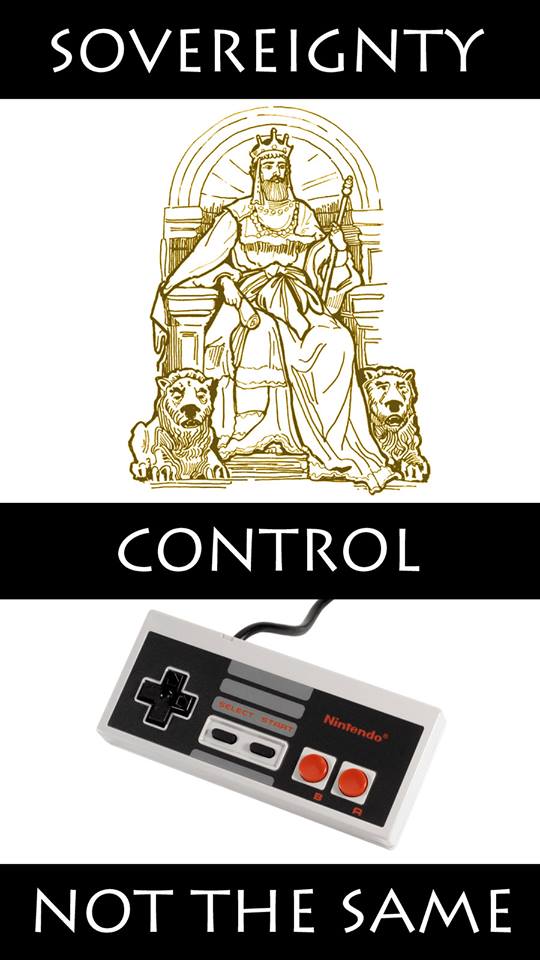
4. Your analogy is sound. Sovereignty and control are two different categories often confused with one another. God’s power is weakness itself (1 Cor. 1-2), so yes, His gracious limiting of Himself is the only reason we have free will. He is bound by nothing but His own decision.

Unanswered Questions – Thought to Do

For those who believe God knows the future:

Jer 18:7 The instant I speak concerning a nation and concerning a kingdom, to pluck up, to pull down, and to destroy it,
Jer 18:8 if that nation against whom I have spoken turns from its evil, I will relent of the disaster that I thought to bring upon it.

What does “thought to bring” mean?

What would a casual reader believe it means?

Apologetics Thrusday – Answering Geisler Part 2

By Christopher Fisher

At the end of Norman Geisler’s book Creating God in the Image of Man?, he lists “12 objections to a finite God”. It will be shown that Geisler focuses on extra-Biblical arguments and ignores the witness of the Bible when formulating his objections. This post will discuss questions 5-8:

5. How can a limited God who does not control the actual events of this world provide any real assurance that there will be grow of value?

This question is loaded with faulty assumptions. Reality is not based on what an individual wants to be true or reasons to be “better” than other things. Reality is based in fact. Why does this question assume that there necessarily needs to be “growth in value”? Based on what?

Why does Geisler’s question, likewise, just assume a powerful (but not meticulously controlling) God cannot increase the value in this world? In the Bible, God does not control everything but God gains significant pleasure from those who serve Him. The Bible even describes God so enamored with man, that God exults man. It sounds like value is increasing to God.

6. What value to present individuals is a promise of serial appearance of the maximal amount of value? This is like promising a million dollars to a family over the next 1,000 generations.

Why does Geisler think this is a real question? Why must individuals have “present value” which leads to “maximal value”. The concepts are ill defined and smell of Platonism. Again, nothing necessitates that things have to move to better or even maximal value.

7. How could such a God be given “absolute admiration” (cf. Hartshorne) as retainer of all past value when: (a) This stored value is not experienced by any actual entity and (b) This is mere preservation without any assurance of progress?

Again, Geisler’s questions are based on ill defined logic and a host of faulty assumptions. How does one define “stored value” and why must God be given that stored value? The Bible does not describe such nonsense. This question reeks of Platonism.

8. How can a finite God be morally worthy who allows all the pain of this world in order ot enrich his own aesthetic value? Is all this evil worth it merely for beauty’s sake?

Does God allow pain to enrich “his own aesthetic value”. Because Platonists like Geisler are obsessed with glory, they fail to see God has God describes Himself in the Bible. God sings to man in the Bible. God is not concerned about hording all known value for Himself. God’s purpose in man was not to “increase his own aesthetic value”. God’s purpose was to have a relationship.

Merritt Calls Neo-Calvinism Isolated

By Jonathan Merritt:

One of the markers of the neo-Calvinist movement is isolationism. My Reformed friends consume Calvinist blogs and Calvinist books, attend Calvinist conferences, and join Calvinist churches with Calvinist preachers. They rarely learn from or engage with those outside their tradition. (My feeling is that this trend is less prevalent among leaders than the average followers.)

The most sustainable religious movements, however, are those which are willing to ask hard, full-blooded questions while interacting with more than caricatures of other traditions. When neo-Calvinists insulate and isolate, they hyper-focus on those doctrines their tradition emphasizes and relegate other aspects to the status of afterthought. The Christian faith is meant to be lived and not merely intellectually appropriated. This requires mingling with others who follow Jesus, are rooted in Scripture, and are working toward a restored creation.

Pinnock on Immanence

From The Openness of God:

The analogy cannot capture the intimacy and penetration of God’s indwelling the world, though, for in a much greater way God, though ontologically distinct from created forms, creates a world external to himself and chooses to be present and immanent within it. On the one hand, God is sovereign and free and does not need the world; on the other hand, God has decided not to be alone but uses his freedom to establish communion with creatures and to exist in openness to the unfolding world.

Pinnock on I AM

From The Openness of God:

A striking example of this is the way they distorted the divine self-ascription “I AM WHO I AM” (Ex 3:14). This text, which points to the living God of the exodus, was transmuted into a principle of metaphysical immutability, as the dynamic “I AM” of the Hebrew text became the impersonal “being who is” of the Greek Septuagint (LXX), enabling theologians like Philo and Origen to link a changeless Greek deity with the God who acts in history.

Boyd on God being Personal

From the ReKnew blog:

The implications of this for our understanding of ourselves is, I think, enormous. It means, that God knows you — perfectly (better than you know yourself). It means that God loves you — perfectly (more than you love yourself). And it means that God cares about your suffering and moral convictions — perfectly (more than you care about them yourself).

It also means that it makes sense to begin inquiring about what relationship our Creator wants with us. What are His purposes for our lives? What does He want with us? What can we know about Him? Has He revealed Himself to us at any point? These questions follow naturally once we understand that God is already personally involved in our lives.

Worship Sunday – My Savior My God

My Savior My God by Aaron Shust

Lyrics:

I am not skilled to understand
What God has willed what God Has planned
I only know at his right hand
Stands one who is my Savior

I take him at his word and deed
Christ died to save me this I read
And in my heart I find the need
Of him to be my Savior

That he would leave his place on high
And come for sinful man to die
You called it strange so once did I
Before I knew my Savior

[x2:]
My Savior loves
My Savior lives
My Savior’s always there for me
My God he was
My God he is
My God he’s always gonna be

Yes living, dying let me bring
My strength my Solace from the Spring
That he who lives to be my king
Once died to be my Savior

That he would leave his place on high
And come for sinful man to die
You called it strange, so once did I
Before I knew my Savior

[x2:]
My Savior loves
My Savior lives
My Savior’s always there for me

My God he was
My God he is
My God he’s always gonna be

[Pause]

[x3:]
My Savior loves
My Savior lives
My Savior’s always there for me
My God he was
My God he is
My God he’s always gonna be

My Savior lives
My Savior loves
My Savior lives
My Savior loves
My Savior lives

Geisler on Impassibility

From Norman Geisler’s Creating God in the Image of Man? :

God is without passion. For passion implies desire for what one does not have. But God, as an absolutely perfect being, has everything. He lacks nothing. For in order to lack something he would need to have a potentiality to possess it. But God is pure actuality, as we have said, with no potentiality whatsoever. Therefor, God has no passion for anything. He is completely and infinitely perfect in himself.

Morrell Defines TULIP

From Jesse Morrell’s blog Biblical Truth Resources:

TULIP is the system of Calvinism. It is an acronym for their doctrines:

T: Total Depravity – the total inability of a sinner to repent and believe. No free will

U: Unconditional Election – In eternities past God chose a few for salvation (not because they repented and believed) and consequently chose most for damnation (not because they sinned). Eternal election and reprobation is not conditional upon what man does, but upon God’s eternal decree. Since man is totally incapable of choosing to repent and believe, God must choose who to give repentance to and who to keep in impenitence.

L: Limited Atonement – Jesus only died for those whom God elected for salvation. He did not die for everyone. If He died for everyone, they argue, everyone would be saved because the atonement is automatically and unconditionally saving in its nature.

I: Irresistible Grace – those whom God has chosen and for whom Christ died are drawn by the irresistible grace of God. They cannot help but to come to Christ.

P: Perseverance of the Saints – those whom God has unconditionally elected, who are automatically saved by the atonement, who are drawn by the irresistible grace of God, will necessarily persevere unto the end. They cannot help but to remain saved. If someone falls away from the faith, that means that they were never truly in the faith to begin with – they were never truly saved.

Unanswered Questions – Christ’s Nature

From Will Duffy on God is Open:

Calvinists and Arminians claim that something perfect cannot change. Yet Christ changed as a Man, as He grew in wisdom and stature. Their answer to this is that Christ changed in His human nature, not His divine nature. I disagree with their argument, of course, but set that aside for a second. Are they saying Christ’s human nature was not perfect, since it changed?

Answered Questions – Knowing Words Beforehand

From Ben on Thomas J Oord’s post concerning Paths to Open Theism:

“Psalm 139:4 Even before a word is on my tongue, behold, O LORD, you know it altogether.”

As an honest question, how does open theism describe this verse? It seems that the author of this verse insists that God “knows”- “before” human action takes place. Before he speaks “a word is on my tongue” ‘O Lord, you know it altogether’. Here, it seems that the future (before human action occurs) can be known by God.

Answer – Psalms 139 is a chapter describing King David’s special relationship with God. It would be a mistake to read this out of context, diluting the meaning. To say that all statements in Psalms 139 applies to all people or even all Christians defeats the point that King David is trying to stress: “That King David has a special and unique relationship with God.”

It is in this context that David says “before a word is on my tongue, you Lord, know it.” The meaning is that God knows David so well that God knows what David is going to say. Just like in the modern world, people state that some couples finish each other’s sentences. This does not mean each one can see the future, but that they know each other so well that their words can be anticipated.

For this statement to mean “God sees the future and as a result knows people’s words”, this would also defeat the meaning trying to be communicated. There is nothing special or relational about just merely using mundane powers to see things that will happen in order to know them. There is something special about knowing someone so well that their future free choices can be anticipated.

In other words, Psalms 139:4 only makes sense in light of Open Theism.

Apologetics Thrusday – Answering Geisler Part 1

By Christopher Fisher

At the end of Norman Geisler’s book Creating God in the Image of Man?, he lists “12 objections to a finite God”. It will be shown that Geisler focuses on extra-Biblical arguments and ignores the witness of the Bible when formulating his objections. This post will discuss the first 4:

1. How can a finite (limited) God achieve a better world? The fixity of physical laws and the persistence of evil over the thousands of years of human history argues against this kind of God ever achieving a better world than the present one.

Answer. If God wanted to create a better world, certainly He is capable enough to achieve it. In Genesis 6, we see God completing a global reset. This is just one of the countless avenues open to God. God has legions of angels, some of which can kill countless people by themselves. In Revelation 9:16, 4 angels kill a third of mankind. In 2 Kings 19:35, one angel kills 185,000 people overnight. In addition to this global reset and the amazing power of angels, God has available to Him countless other options that are not readily apparent to myself (and obviously not Geisler). For Geisler to consider this a real question, he is investing absolutely zero integrity in representing that which he wants to critique.

2. Given his limitations, why did this finite God who could not overcome evil engage in such a wasteful attempt as this world?

Who says this “attempt” was wasteful. In James 2:23, Abraham is represented as a “friend of God”. If God’s goal was a relationship, it was at least achieved through Abraham if not countless other individuals in history. What Geisler avoids at all costs in Genesis 6, wherein God entertains the idea of killing all mankind due to unforeseen wickedness. After the flood, God resolves to never again destroy all of mankind, and God’s reason is the exact same reason that God destroyed man in the first place “that man’s heart was evil from his youth”. This is God changing His tolerances and what He expects out of humankind. Compare:

Gen 6:5 Then the LORD saw that the wickedness of man was great in the earth, and that every intent of the thoughts of his heart was only evil continually.
Gen 6:6 And the LORD was sorry that He had made man on the earth, and He was grieved in His heart.

And

Gen 8:21 And the LORD smelled a soothing aroma. Then the LORD said in His heart, “I will never again curse the ground for man’s sake, although the imagination of man’s heart is evil from his youth; nor will I again destroy every living thing as I have done.

This does not make sense in light of what Geisler would have the reader believe about God. Only in light of an Open God does this make sense.

3. How can evil be absorbed into the nature of God? Isn’t this strange, dualistic combination of good and evil in God inherently incoherent?

This is an inherently incoherent question. What evil is being “absorbed” into the “nature” of God? What does “absorbed” mean as used? What would be wrong about “absorbing” evil, in the first place? Because theologians go down black holes with their incoherent theology, questions like these are the output.

4. How can a finite God accomplish a better world by way of the cooperation of human beings when the vast majority of them seem almost totally unaware of his purposes?

God, in the Bible, tries several routes. God in Genesis begins by reaching out to all mankind. God walks and talks with Adam. But things go awry. God then ties a global reset in Genesis 6, but still that does not seem to work. God then chooses one man through whom God would bless the nations (Gen 18:18). But that also fails. In Romans 9, Paul describes the graphing in of the Gentiles to “provoke the Jews the jealousy”. In short, Geisler rejects the Bible witness of God’s various attempts (mostly failed) to cooperate with human beings. But God is innovative and continually strives to reach out and find new opportunities to cooperate. After all:

We work all things together with God, after the console of His will.

Atheist on Unfulfilled Prophecy

From evangelicalrealism.com:

The free will defense does more than compromise God’s omnipotence, however. It also compromises His omniscience. Why predict a future that you know will never happen? If you’re an all-seeing, all-knowing God who controls the future or at least understands what it’s going to be, wouldn’t your prophetic air-time be better spent on predictions that were actually going to come true? Or does God not understand the human heart well enough to anticipate the degree to which man’s cooperation will be present or absent?

McCormack on Open Theism

Tom Belt shares a summary of a chapter by Bruce McCormack. An excerpt:

Underneath it all, open theism is a rather narrowly defined project. What open theist theologians are interested in is two things: the will of God as it relates to free rational creatures and the question of what God knows and when he knows it. So open theism has to do above all with the doctrines of providence and divine foreknowledge. It is to a large degree parasitic upon classical theism in that it draws its life from the negations it registers over against aspects of the latter.
The basic intuition is that the future is ‘open’ not only to us but also for God—‘open’ because God has chosen not to control the decisions made by free rational creatures. Open theists hold that an exhaustive divine foreknowledge is logically incompatible with human freedom, and so they conclude that God’s foreknowledge is limited. What is most basic to open theism is not its position with regard to divine foreknowledge but rather its take on the divine concursus. The doctrine of consursus, or “cooperation,” is that aspect of the doctrine of providence which addresses itself to the question of how God interacts with rational creatures in order to ensure that his will is done. The result is a view of God’s providence which is quite similar to that found among process theists; God’s will is a work-in-progress.
Other implications include the rejection of divine timelessness and impassibility. But this is sufficient introduction. What we need to do now is examine how open theists seek to support these conclusions with arguments drawn from the spheres of biblical studies, systematic theology, and philosophy.

Calvinists on Arminians

Wesleyan Arminian rounds up some good quotes by Calvinists against Arminians. A few:

Charles Spurgeon: And what is the heresy of Arminianism but the addition of something to the work of the Redeemer? Every heresy, if brought to the touchstone, will discover itself here. I have my own private opinion that there is no such thing as preaching Christ and Him crucified, unless we preach what nowadays is called Calvinism. It is a nickname to call it Calvinism; Calvinism is the gospel, and nothing else.

John Piper: Here’s my rule of thumb: the more responsible a person is to shape the thoughts of others about God, the less Arminianism should be tolerated. Therefore church members should not be excommunicated for this view but elders and pastors and seminary and college teachers should be expected to hold the more fully biblical view of grace.

Author Claims Abraham was Confused

Classical Theist Andrew Emmanuel Davis argues God never commanded Abraham to kill his son:

So human sacrifice was the norm in the area which Abraham lived.

Satan caused these negative influences to infiltrate his mind.

God told Abraham to offer up Isaac to Him, as a burnt offering.

Abraham, being negatively influenced by the cultures and rituals that took place around him, interpreted this instruction from God, very wrongly.

Abraham should have remembered that God is the one who gave the instruction. He should have remembered the nature of God, and understood that God would not request something like that of him or anyone else.

God never told Abraham to walk with wood or a knife; never told him to light a fire for the offering. All of that was Abraham’s own worldly reasoning, based on what Satan infiltrated into his mind.

As we saw in the account of Jephthah and his daughter, a “burnt offering”, when referring to a human being, is a complete commitment and devotion of oneself to God.

All God asked of Abraham, was to put his son to serve and commit himself to God, for the rest of his life.

This is what “burnt offering” means in this context.

Worship Sunday – Flood

Flood by Jars of Clay

Lyrics:

Rain, rain on my face
It hasn’t stopped raining for days
My world is a flood
Slowly I become one with the mud

[Chorus:]

But if I can’t swim after forty days
and my mind is crushed by the thrashing waves
Lift me up so high that I cannot fall
Lift me up
Lift me up – when I’m falling
Lift me up – I’m weak and I’m dying
Lift me up – I need you to hold me
Lift me up – Keep me from drowning again

Downpour on my soul
Splashing in the ocean, I’m losing control
Dark sky all around
I can’t feel my feet touching the ground

[Chorus]

Calm the storms that drench my eyes
Dry the streams still flowing
Cast down all the waves of sin
And guilt that overthrow me

[Chorus]

Lift me up – when I’m falling
Lift me up – I’m weak and I’m dying
Lift me up – I need you to hold me
Lift me up – Keep me from drowning again

Fisher on Jesus being Lower than the Angels

Christopher Fisher provides commentary on Hebrews 2:9:

Heb 2:9 But we see Jesus, who was made a little lower than the angels, for the suffering of death crowned with glory and honor, that He, by the grace of God, might taste death for everyone.

The entire thrust of the whole passage is to prove to his audience that Jesus was superior to the angels. Jesus would be in charge of the apocalypse, not the angels. Apparently, in the time of the author there were rumors that Jesus a powerless messenger. Hebrews counters that idea. One would think that if the author was trying to communicate the strange idea that Jesus was “setting aside” his Godhead to make himself “lower than the angels” that this point would be explicit as to heighten the overall point of the chapter. Instead, what is present is a desperate attempt to show that Jesus, although less powerful than the angels, would be superior to them in the coming apocalypse. The context does not fit an Augustinian understanding.

Because Godhood is not synonymous with omnipotence, omnipresence, omniscience or any other Greek concept, Jesus can be lower than the angels yet be divine. As Will Duffy pointed out to me, the entire passage undermines the basic concept of immutability, the heart of the Augustinian concept of God. The Augustinian obsession with extra-Biblical attributes forces them into strange interpretations of these texts.

Rice on God’s Temporary Anger

From The Openness of God:

Abraham Joshua Heschel, a Jewish theologian, notes the striking contrast between God’s anger and love as the two are described in the Hebrew Scriptures.”‘ He points out a profound difference in their duration. God’s anger is temporary, his love is permanent: “His anger is but for a moment; his favor is for a lifetime” (Ps 30:5 NRSV); “In overflowing wrath for a moment I hid my face from you, but with everlasting love I will have compassion on you”

Questions Answered – Culpability and Inaction

From the Facebook group God is Open:

What’s the difference between a God who foreknows evil will exist but still creates vs a God who currently allows evil to exist and lets it run rampant?

It seems to me that consistent open theists would be atheists. If you’re repulsed by the idea that God foresees and allows evil, which you describe as God desiring the development of sin and wickedness, then it would be consistent to also be repulsed by the idea that God currently desires the presence of sin and wickedness.

Christopher Fisher responds:

Is there a difference in your mind between seeing evil and not stopping it and doing actions that have no alternative but to result in evil?

Sometimes as a parent I see my children fighting, sometimes physically. Would a benevolent parent always intervene? I know sometimes, I let it go. Does that mean I approve of physical violence? Does that make me not “benevolent”. Myself, I do not see inaction as “not caring” or “not loving”. I believe the same concept applies with God.

…but another interesting thing to note is that we have examples in the Bible of God killing people because they were so evil. In the closed world view, this makes no sense. Why didn’t God kill them before they became so wicked to make Him kill them? Why wait until after the evil has happened? The fact that God steps in from time to time to stop evil proves the future is open.

VOTD Exodus 20:5

Exo 20:5 you shall not bow down to them nor serve them. For I, the LORD your God, am a jealous God, visiting the iniquity of the fathers upon the children to the third and fourth generations of those who hate Me,
Exo 20:6 but showing mercy to thousands, to those who love Me and keep My commandments.

Unanswered Questions – Day is like a Year

A question for those you believe God is outside of time:

This are song lyrics from a secular song:

What a year this day has been
What a day this year has been

What do they mean?

Likewise, Peter makes a similar statement.

2Pe 3:8 But, beloved, do not forget this one thing, that with the Lord one day is as a thousand years, and a thousand years as one day.

What does this mean?

Question logic: The closed view takes 2 Peter 3:8 as some sort of metaphysical claim and adherents do not usually allow for the possibility of a figure of speech. If you ask them about a parallel secular statement, it will be a lot harder for them to make their claim with a straight face.

Apologetics Thursday – Christ Died for His People

By Christopher Fisher

An exchange on ChristianForums.com:

Originally Posted by FreeGrace2:
But there are NO verses that teach that Christ died ONLY for some, whatever you’d like to call that group.

Apologetic_Warrior responds:
There are plenty of verses take Matt 1:21 for example:

Matthew 1:21 She will bear a son, and you shall call his name Jesus, for he will save his people from their sins.”

Notice “will save” not might or possibly, and notice “his people”, in the context of the Gospels “his people” are the “sheep”, not the goats.

If Christ came to make a general sacrifice for sins, making it possible for anyone, then why do we read that “HE will save”. It doesn’t add up to insert notions of Jesus, coming to die for everyone but saving his people….meaning he died equally for those who are not his people, for those burning in hell. So where does that leave the efficacy?

Calvinist Apologetic Warrior believes that Jesus died only for the election. He believes that Matthew 1:21 is evidence of this fact. But this is not what “Jesus’ people” implies or means in Matthew. The Jews were expecting a Messiah to save Israel (not Gentiles and not “certain elect”). Here is Zacharias’ prophecy:

Luk 1:67 Now his father Zacharias was filled with the Holy Spirit, and prophesied, saying:
Luk 1:68 “Blessed is the Lord God of Israel, For He has visited and redeemed His people,
Luk 1:69 And has raised up a horn of salvation for us In the house of His servant David,
Luk 1:70 As He spoke by the mouth of His holy prophets, Who have been since the world began,
Luk 1:71 That we should be saved from our enemies And from the hand of all who hate us,
Luk 1:72 To perform the mercy promised to our fathers And to remember His holy covenant,
Luk 1:73 The oath which He swore to our father Abraham:

So God is saving “his people” (whose father is Abraham) from the hand of their enemy (as predicted by prophets) in order to fulfill the covenant. This was the covenant to David and Israel (not the gentiles). The prophets predicted a rise in Israel’s fortune (not shared promise with Gentiles). Absolutely none of Zacharias’ prophecy fits the context of Jesus dying for a select few elect including a mixture of Jews and Gentiles. It fits the context of Jesus coming to save Israel.

In fact, the term “his people” always refers to corporate Israel, both the saved and the damned. Paul connects “God’s people” with “Israel”, some of whom are rejected:

Rom 11:1 I say then, has God cast away His people? Certainly not! For I also am an Israelite, of the seed of Abraham, of the tribe of Benjamin.

Here is Paul’s point: because God is cutting off Israel, this does not mean He is casting off all of Israel. God still gets to fulfill His promises. Paul clarifies:

Rom 11:5 Even so then, at this present time there is a remnant according to the election of grace.

So a remnant of a larger body of God’s people is saved. This counts as God saving “his people”. A striking note is that Paul has to explain this to his reader. This was not common knowledge.

Here again Paul differentiates between Gentiles and “God’s people”:

Rom 15:10 And again he says: “REJOICE, O GENTILES, WITH HIS PEOPLE!”

When Matthew 1:21 states that Jesus will save “his people” from their sins, this is corporate Israel. The context indicates this, Jesus’ ministry to the Jews illustrates this, and later authors also point this out.

The Pope Says Jesus has a History

The Pope points out that God is defined by his personal history and His relationship with us:

“Jesus Christ did not fall from the sky like a superhero who comes to save us. No. Jesus Christ has a history. And we can say, and it is true, that God has a history because He wanted to walk with us. And you cannot understand Jesus Christ without His history. So a Christian without history, without a Christian nation, a Christian without the Church is incomprehensible. It is a thing of the laboratory, an artificial thing, a thing that cannot give life,” Francis said.

Elseth on the Problem of Evil

Howard Elseth writes in Did God Know:

He assumes that if God is all powerful and all knowing of past, present, and future events, then it is logical to assume God created a world knowing with certainty the end result would be evil. If God created the world in such a way that evil was to come about, then we can only conclude that God desired the development of sin and wickedness.

Let us put it another way. If I load a gun and give it to my child and I know with absolute certainty (knowledge with such exactness that nothing different can happen than what I know) that my child will go and shoot one of his playmates, it would be reasonable to assume that I desired the end result of the event. It is useless to argue that my child had a free will or free choice. If I could foresee the result of my child’s choice with certainty and I set in motion the situation which provided for the shooting, it is I, not my child, who would be responsible.

Thus if God creates a man who God knows is going to be evil and will ultimately kill, rape, and steal, then we can only reason that God desired that man to come into existence and God desired the evil resulting from that man’s life. As Russell points out, it is useless and pointless to argue that the man was free to choose whether or not to kill, rape, or steal. Whether or not such free will exists makes no difference. If God knew at the time He created man what such free choices would be, then the so called free choices had only one possible outcome in God’s mind. Whether God determined the choices or whether He knew with absolute certainty the outcome of the free choices of man, the result is the same, certainty or fixity.

Sanders on Philo and Repentance

From The Openness of God:

Philo is well aware of the many texts that say that God repents (changes his mind) or feels anger. In Philo’s mind such texts are not to be taken literally; rather, they are anthropomorphisms for the benefit of the “duller folk” who cannot understand the true nature of God. “For what greater impiety could there be than to suppose that the Unchanging changes?” Philo leans on Numbers 23:19, which in the Septuagint reads: “God is not as man.”39 Because God is not like us, he cannot change his mind. Moreover, since God foreknows all that will happen, divine repentance is impossible. Consequently, though Philo struggled against a static conception of immutability, in the end, the Greek metaphysical understanding of divinity ruled his interpretation of the biblical texts that describe God as genuinely responsive.

Reasons to Remain a Calvinist

User gmm4Jesus of http://www.christianforums.com lists 5 reasons to remain a Calvinist. Abbreviated:

1. If becoming an Arminian would really be a temptation to boast for you, then please remain a Calvinist.

2. If you think that God empowering people to accept or reject Jesus somehow makes Him weak, impotent, or powerless, then you really should continue in your Calvinism.

3. If you actually think that God cannot remain sovereign without dictating the minutia of every event that occurs, then by all means, remain a Calvinist.

4. If you actually believe that accepting a freely-given gift of salvation somehow would make you your own “co-savior,” then please don’t abandon your Calvinism.

5. If adopting an Arminian view of salvation would somehow make you really feel that salvation is “man-centered” rather than “God-centered,” then for God’s sake, hold on to your Calvinism.

HT: The Contemporary Calvinist

Fisher on the Exodus 32 Narrative

From the Hellenization of Christianity Thesis paper:

Exodus 32 is one such counterexample, simultaneously proving false almost every single tenet of Calvinism. Exodus 32 recounts a situation in which Moses actually converses with God. Israel, having just been delivered from the Egyptians and en route to the Promised Land, made camp at the base of Mount Sinai. This was God’s mountain. God himself would be physically dwelling on it during Moses’ stay. After Israel established camp, the Lord commanded Moses to climb Mt. Sinai to engage in a private audience with God. Moses would speak “face to face” with God as he did multiple times throughout his life. But before Moses went up, he was instructed to set a perimeter around the mountain so that no other person would enter the mountain ; Moses would be the only Israelite holy enough to meet God, and the only Israelite Holy enough to receive and carry the Ten Commandments.

After Moses failed to return for some time, the people grew tired of waiting and began to turn to other gods. Aaron, the brother of Moses and Moses’ mouth to the people, directed the construction of a golden calf which the people would worship instead. All of Israel then pitched in their valuables to be melted in order to form this idol. They would praise this statue as the god who led them out of Egypt.

God must have been furious. Here is a people he had just saved from Egyptian bondage, a people for whom he decimated the Egyptian army, a people he led and fed on the way to a special Holy Land set apart for only them, and they have the audacity to turn from God within 40 days of setting up camp. God, seeing the corruption of his chosen people, became angry and said to Moses: “Exo 32:10: Now therefore let me alone, that my wrath may wax hot against them, and that I may consume them: and I will make of thee a great nation.”

Notice that God decided to scrap his original plan of using the whole of Israel for Abraham’s descendants, and instead decided to fulfill his promise through Moses, also a decedent of Abraham. God himself declares his anger and desire to kill those who were unfaithful, and because of their unfaithfulness, God decided to revoke his promise to them. He next proceeds to command Moses to not speak to him and to let him sit in anger. It appears that God does not want Moses to intercede on Israel’s behalf as he had done in the past.

But, Moses still loved his people and did not wish for their destruction. So Moses begged God to change his mind. Moses did not even stop to consider that God was unchanging or that he knew the entire future and thus was choosing the best course of action. Moses was no Calvinist. Instead, Moses tried to reason with the Holy of Holies:

Exo 32:11 And Moses besought the LORD his God, and said, LORD, why doth thy wrath wax hot against thy people, which thou hast brought forth out of the land of Egypt with great power, and with a mighty hand?
Exo 32:12 Wherefore should the Egyptians speak, and say, For mischief did he bring them out, to slay them in the mountains, and to consume them from the face of the earth? Turn from thy fierce wrath, and repent of this evil against thy people.
Exo 32:13 Remember Abraham, Isaac, and Israel, thy servants, to whom thou swarest by thine own self, and saidst unto them, I will multiply your seed as the stars of heaven, and all this land that I have spoken of will I give unto your seed, and they shall inherit it for ever.
Exo 32:14 And the LORD repented of the evil which he thought to do unto his people.

This example shows that God changes his mind based on the actions of his creatures. God, unless he was lying, told Moses he would consume his people. Moses, knowing God’s character because he had a personal relationship with him, understood that he can reason with God and change God’s mind. So Moses proceeded to set up a logical argument why God should not destroy his people: the Egyptians would mock God, and Israel was God’s chosen people. God then weighed the costs (justice against the unrighteous and fulfillment of religiousness) versus the benefits (to please Moses and not give occasion for mocking), and decided that he should take mercy on this people.

Did the people proceed to repent and follow God the rest of their lives? One would expect a God who controlled or merely knew the future to understand who he was saving. Just as the when Hezekiah rebelled shortly after God extended his life, every Israelite present at this event died in unbelief in the wilderness, save Caleb who was righteous in God’s eyes. Israel continued to rebel against God even after the incident in Exodus 32 until God ultimately revoked his promise to them and denied them access to the Promised Land. The Calvinist must believe that God spared Israel knowing full well that they would again rebel when next given a chance to do so. Why would God seek after Israel’s repentance if he knew they would ultimately reject him?

Calvinist Claims not to be a Fatalist

From Shane Kastler:

Fatalism is the belief that since all things are pre-determined, it matters not what man does. At it’s root, fatalism is more of a secular, or even pagan notion. A belief that “fate” has determined the outcome of all things and thus nothing can be changed. While a Calvinist does indeed believe that God ordains whatever comes to pass, the attributing factor is clearly seen as being different from what a fatalist would say. Calvinists don’t attribute anything to a blind fate, but rather an all-seeing God. The Bible tells us that God “works all things after the counsel of His will” (Ephesians 1:11); so ultimately we see God as the sovereign creator, ordainer, sustainer, and author of all life and history. What we do with this knowledge determines whether or not we are fatalistic.

For full post, click here.

HT: The Contemporary Calvinist

Mccabe on the Bible implying Free Will

In The Foreknowledge of God, and Cognate Themes in Theology and Philosophy, L. D. McCabe writes:

It is remarkable how constantly it is implied, or assumed, in the Scriptures, that God does not foreknow the choices of free beings while acting under the law of liberty. As for example, the words of Jehovah to Moses, “I am sure the King of Egypt will not let you go.” The angel of the Lord called to Abraham out of the heavens, and said, “Lay not thou a hand on the lad, neither do thou any thing to him; for now I know that thou fearest God seeing thou hast not withheld thy son, thine only son, from me.” These words imply that up to that point God did not absolutely know what the final decision of Abraham would be. If he did foreknow it, a seeming falsity, or pretense, is assumed, and a deception practiced upon the reader. “Now I know that thou fearest God.” Of Solomon God promised, saying, “I will be his father, and he shall be my son. But if he commit, iniquity, I will chasten him with the rod of iron.” “He led thee these forty years in the wilderness, to humble thee, to prove thee, to know what was in thine heart whether thou wouldst keep his commandments or no.” And the Lord said, “It repenteth me that I have made man.” Moses said, “It repented the Lord that he had made man, and it grieved him at his heart.” These words seem to imply a heart-felt regret on the part of God, and that he had not foreknown with certainty the fall of man. For, if he had foreknown the wickedness of man, why did he grieve after its occurrence more, than before? And if he grieved equally before he made Adam, at the sight of his future sinfulness, why did he not decline his creation? If he foreknew the fall, not merely as a contingent possibility, but as an inevitable fact, then this mournful declaration makes him appear inconsistent. And then who can sympathize with him in his grief for having created man? Evidently, in this passage, God implicitly, but clearly, assumes his non-foreknowledge of the certain future wickedness of man. And that assumption is necessary to give consistency to the divine conduct and statements, and to establish any claim on, the sympathy of an intelligent universe in his great disappointment. But when the whole transaction is considered in view of that assumption a light, luminous with the most interesting suggestions, emanates from this troublesome text.

VOTD 1 Kings 8:25-26

1Ki 8:25 Therefore, LORD God of Israel, now keep what You promised Your servant David my father, saying, ‘You shall not fail to have a man sit before Me on the throne of Israel, only if your sons take heed to their way, that they walk before Me as you have walked before Me.’
1Ki 8:26 And now I pray, O God of Israel, let Your word come true, which You have spoken to Your servant David my father.

McCabe on Cyrus

In The Foreknowledge of God, and Cognate Themes in Theology and Philosophy, L. D. McCabe writes:

When God desires or intends that a certain man shall perform a certain work, or illustrate to the world some doctrine or phase of religious or political or scientific truth, he can easily subject him to any discipline, or by force of circumstances call him to the performance of any duties, which he may deem best calculated to accomplish his divine purpose. All he would need to do, even in an extreme case, would be to bring controlling influences to bear upon his sensibilities, to put his will under the law of cause and effect, to make his choices certain, in order to foreknow with entire accuracy the whole process and final result. This view seems completely and satisfactorily to explain all the predictions of prophecy, all the teachings of Sacred Scripture, relative to or involving foreknowledge, and also all those other future events which God has determined shall certainly be accomplished upon our globe.

How beautifully and strongly is this theory illustrated in the case of Cyrus. God says:

“Thus saith the Lord thy Redeemer, I am the Lord that maketh all things . . . that frustrateth the tokens of the liars, that maketh diviners mad; that turneth wise men backward, and maketh their knowledge foolish; that confirmeth the word of his servant, and performeth the counsel of his messengers; that saith to Jerusalem, ‘Thou shalt be inhabited and to the cities of Judah, Ye shall be built, and I will raise up the decayed places thereof; that saith to the deep, Be dry, and I will dry up thy rivers; that saith of Cyrus,’ He is my shepherd, and shall perform all my pleasure; even saying to Jerusalem, ‘Thou shalt be built, and to the temple, Thy foundation shalt be laid.’ Thus saith the Lord to his anointed, to Cyrus, whose right hand I have holden to subdue nations before him; and I will loose the loins of kings to open before him the two-leaved gates; and the gates shall not be shut; I will go before thee and make the crooked places straight: I will break in pieces the gates of brass, and cut in sunder the bars of iron: and I will give thee the treasures of darkness, and hidden riches of secret places, that thou mayest know that I, the Lord, which call thee by thy name, am the God of Israel. For Jacob my servant’s sake, and Israel mine elect, I have even called thee by thy name: I have surnamed thee, though thou hast not known me.” “I have raised him up in righteousness, and I will direct all his ways. He shall build my city, and he shall let go my captives, not for price nor reward, saith the Lord of hosts.” (Isaiah xliv, 24-28; xlv, 1-4, 13.)

Historians state that when the Jews showed to Cyrus the above prophecy he became deeply interested in the welfare of the Jewish nation. The prophecy in which he was personally named was the preponderating influence upon his mind to accomplish the designs of God in rebuilding the city, refounding the temple, and liberating the captives without price or reward.

Apologetics Thursday – A Defense of Open Theism

By Rachel Troyer:

I, like Michael Hansen, am not a professional theologian, but merely a layman who loves God and is grateful to Him for His salvation through Jesus Christ alone.

I would like to respond to Michael’s critique of Open Theism in hopes that this will be a door to discussing God’s Word, gaining insight into our Creator and Savior, and a way for us to love and exalt God more and more through thoughtful, respectful conversation.

In complete agreement with Michael, I hold that the Bible is the ultimate source of authority.

The first thing I would like to note is that in Michael’s critique, Michael gave a conclusion statement that said, “The ultimate conclusion is that the will of man is subservient to the will of God.”

Open Theists would completely agree with this. God completely as our Sovereign creator constantly and consistently imposes His will. We can either subject ourselves to His will or suffer the consequences. There are plenty of examples of God superseding man’s will in the Bible, I will list a few:

God sent Adam and Eve out of the Garden and put up a flaming sword/angel guarding the Garden.

God sent a flood to destroy all wicked mankind.

God mixed the languages during the building of the Tower of Babel.

God plagued Pharaoh because of Abram’s wife.

God destroys Sodom.

God destroys Lot’s wife.

God kept Abimelech from touching Sarah- Abraham’s wife.

All of these examples fall within the first 20 chapters of the Bible. We can also skip ahead to well-known Bible stories of God subverting someone’s will:

God causes a fish to swallow Jonah, forcing Jonah to repent of his unwillingness to prophecy.

God forced Balaam to prophesy good to Israel rather than evil.

God caused King Nebuchadnezzar to go crazy and eat grass like an animal for 7 years until Nebuchadnezzar chose to glorify God first.

God tore King Saul’s throne from him/his lineage and against his will.

God blinded the apostle Paul on the road to Damascus

Millions of people who reject Jesus Christ as their savior will suffer eternal punishment. I’m sure they don’t want to go to hell. Thus God supersedes their wills.

The point of this list, by no means an exhaustive list, is that our God is above us and He will accomplish what He wants to accomplish regardless of man’s will (Psalm 115:3). Thus, man’s will is subservient to the will of God.

Now, let us look at the case of Pharaoh. Michael asserts that God is causing Pharaoh to harden his heart. I completely agree, God does harden Pharaoh’s heart. That’s what Scripture says. But, Exodus tells us exactly how God hardens Pharaoh’s heart: God uses miracles.

Most people think/say that if they see a miracle that they will believe in God. They claim that if God would just “show Himself” that they would have the evidence to believe in God. Unfortunately, we, mankind, are so wicked, that even if God presents Himself to us, or causes miracles to happen, the majority of people will reject God.

We have lots of examples of this happening in Scripture: In the Old Testament, God performed DAILY miracles with the nation of Israel and most of them died in unbelief. (Hebrews 3:9-11) In the New Testament, Jesus says, “For if the mighty works which were done in you had been done in Tyre and Sidon, they would have repented long ago in sackcloth and ashes” (Matthew 11:21-24).

Miracles generally do not cause a love for God. They cause people to turn from God. They cause bitterness and resentment.

So, remember back to the short list I made of God imposing His will on men. Pharaoh is an incredible example of God using a pride-filled man who hates God so much that he is murdering little boy babies and enslaving the Israelites. This is a man who thinks that he is god. So, when God performs a miracle, Pharaoh’s men try to duplicate it. It is only then that God hardens Pharaoh’s heart. Then God performs another miracle, and Pharaoh explains it away and the Bible again says Pharaoh’s heart was hardened. And then, another miracle and the Bible says Pharaoh hardened his own heart. We see the text says: God hardened Pharaoh’s heart, Pharaoh’s heart was hardened, and Pharaoh hardened his own heart.

Here we can see that Pharaoh hardens his heart because he hates God, and God uses miracles to harden his heart more. God did not take over Pharaoh’s will, but God allowed Pharaoh’s sin/hard heart to harden so that Pharaoh would receive more punishment (also see 2 Thess 2:10-13 which states “God will send a strong delusion”).

Now, we come to Michael’s three main points about Open Theism

Premise 1: The Freedom of God.

The first one we seem to have no disagreement on that God is absolutely free. It’s interesting that he asks, “whether or not a true open theist will hold to [this] if truly pressed…”

I would clarify that what God can do and what God does do are two different things. Could God have created a world and a system exactly as Calvin/Augustine wrote about? Yes. Did He? No.

Can God take away our “will” and make us robots to only respond the way He predestined us to respond? Yes. Did He? No.

I also ask the same thing of any Calvinist. When truly pressed, will you hold that God is truly free? Can God send an unrepentant non-believer to heaven to live with Him for all eternity? Yes. Will He? No.

I believe that Michael would agree with me in that when we say God can do whatever He wants, that we all agree that God will not go against His own character or against Himself. God will not blaspheme Himself. Recall that God says that everything He does is in accordance with His will. (Ephesians 1:11) We thank God that He is good, loving, merciful, just, and righteous. Because His character determines His will which determines His actions.

Premise 2: God’s Relational Commitment
Michael says that this is the heart of Open Theism. After I respond to Michael’s three points, I’d like to submit my own answer of what the heart of Open Theism is.

Michael says that Open Theism limits the emotional qualities of God to that of Man. This is extremely important to talk through.

I think Open Theists all believe that we are sinners and God is not a sinner. But, Open Theists claim that when God says He is angry. That means God is angry. When God says He is grieved. That means He is grieved.

Calvinism says that when God expresses Himself in emotions, that God really isn’t expressing those emotions. So, when God says He is angry, He really isn’t “angry”. When God says He is grieved. He really isn’t “grieved”. They think this because if God is perfect, then God cannot change, and if God gets angry or sad, that is a change.

This is the heart of Calvinism: That God, being perfect, can NOT change in any way.

Now, so far, Michael has conceded that God acts relationally with mankind and that people do intervene. (I’d take exception with Jonah; Jonah was forced to do something he didn’t want to do and never intervened for the people, but was a tool used by God to preach to the people the truth, so that they would repent. Even after the people repented, Jonah was angry that God had mercy.)

Michael referenced the verse: They did what Your power and will had decided beforehand should happen. (Acts 4:28).

I completely agree. God determined before mankind was created that when we fell away from God that He would redeem us. He would come as a baby and die for mankind’s sins so that we might have hope and redemption. God determined that Jesus would die. God determined that Jesus would resurrect on the 3rd day. God determined that Jesus’ body would not see corruption.

God can cause anything to happen that He wants to cause to happen. This is not disputed. What is being disputed is, when an evil man does an evil thing, is this God doing it or is it man doing it? God says that He is not the author of confusion. God says that He does not tempt with evil. There are many things that God does not cause.

When God decided the right time to die for us, He had many, many people to choose from who would be willing to betray Him, who would be willing to crucify Him, who would be willing to commit evil against God. There is no lack of evil men for God to choose among.

God let the Pharisees and religious leaders get jealous of Jesus to a point where they hated Him so much they wanted to kill him. Then, God allowed Jesus to be betrayed and to be crucified and to die. This is all God’s plan. This is not haphazard. God is not a haphazard God. Instead, He is a specific, detailed planner who works intimately with His creation to cause anything to happen that He wants to happen.

Michael’s final section: An Open Future

Michael says that God obviously is not leaving the future open and that it’s a weak claim on the part of an Open Theist. He then quotes an incredible verse from Isaiah 46:8-11.

“Declaring the end from the beginning and from ancient times things not yet done, My counsel shall stand and I will accomplish all my purpose… I have spoken and I will bring it to pass; I have purposed and I will do it”

Open Theists completely agree with this. We see God acting and interacting in history in many ways: He causes the Assyrians and Babylonians to take over Israel/Judah because they turned against Him. He brings unknown prophets in from all over to prophecy of Him. He brought Jonah to Nineveh (although Jonah was unwilling the entire time). God created in the beginning and He alone knows when the end will be. Not even Jesus (on earth) knew when the end would be. (Matthew 24:36/Mark13:32).

What we don’t see is God overriding man’s will by “inserting” His own will into man’s mind and man only acting because God causes them to act. Instead, we see God forcing people to do what they don’t want to do. We see people doing what God wants because they love God and God blesses them for choosing Him.

So, now I’d like to make 2 main points.

The biggest reason why Open Theists believe the future is open is because we don’t accept the pagan Greek philosophical concept of the immutability of God.

God is living (over 32 times God says this about himself in the Bible). If you add in all the passages where God laughs/mocks people for trusting in wood/stone idols and says that HE is the God who acts, who loves, who speaks, who sees, who alone is God, we could say there is more than 32 times where God is telling us that He is the living God.

God has a will. He is supreme in His will. He can cause anything to happen, but what He doesn’t do is force people to choose Him. He asks people to choose Him because He wants that relationship with them.

The biggest question to ask a Calvinist is: Is God truly Free? Can God do anything He wants? Can God create a new flower, a new song, a new creature? One that has never been created or thought of from eternity past?

Lastly, these are a few of the Bible verses and how Calvinism reinterprets them:

The Bible says that God desires all men to be saved. (I Timothy 2:4). The Calvinist says that God desires the elect to be saved.

The Bible says that God is grieved when He made man and they turned so evil. (Gen 6:6) The Calvinist says that God always knew they were going to be so evil and so He really wasn’t grieved.

The Bible says that God hates the wicked and does not take pleasure in evil. The Calvinist says that all evil was foreordained for God’s glory and His pleasure.

God says that He was and is and will be. Calvinists say that God is timeless and therefore has no past/present/future.

The Bible says that Christ died one time for all. The Calvinist says that God forever (in timelessness) sees/observes Christ on the cross suffering for all eternity and that He didn’t die for all.

God says that He repents (not that He sins and has to apologize, but that He is sorry that He did something but that He changed His mind and will change His actions).

God says that if He speaks concerning a nation and says that He will do good to the nation, then that nation turns from Him and does evil, that God will repent of what He just said and will not do good to that nation. (Jer 18:5-10)

Calvinists say that this is a “figure of speech” and God already knows that the nation will do evil or good and God never intended to do good/evil to that nation in the first place.

I reject Calvinism because Calvinism makes God into a liar. Calvinism concerts the plain speak of God into a contrary and opposite meaning. God is not a liar. He is the unlying God. God says what He means and we have a responsibility to take Him at His word.

-Rachel Troyer-
Servant of Christ
Wife and Mother of 4
Greatly blessed by
my God and Savior, Jesus Christ
Countering Calvinism

Marc from Lorraine lays out an outline of how to logically defeat Calvinism. Marc points out that it should be sufficient to just point out one author in the Bible at odds with Calvinism.

Here follow the methodology and some practical aspects.

1) I think it is fair to say that Calvinism cannot really exist without Biblical inerrancy. Therefore if I can show that SOME Biblical passages are incompatible with reformed theology, I will have effectively refuted it.

2) It is a common cognitive error to believe that once you have shown that something is possible, you have also shown it is not implausible. But there are many things which are logically possible but extremely unlikely.

3) I will leave aside many Calvinist proof-texts and let my readers decide by themselves if they are plausibly interpretable within an Arminian framework or if they can’t, thereby showing the existence of contradictions within the Bible.

For example, let us say that the books of Hebrew and James are incompatible with divine determinism. This leaves two possibilities:

A) the books of Paul are not at odds with Arminianism
B) the books of Paul teach Calvinism which in turn shows that Biblical inerrancy is false.

In both cases, Calvinism is wrong or utterly implausible.

4) I will use many philosophical arguments too, even though I am well aware that this won’t move hardcore fundamentalists who hold the self-refuting view that philosophy is a folly.

5) I shall also argue that Calvinism is completely unlivable. There are no true consistent Calvinists out there (even if some are dangerously close to achieving this).

6) I am going to use extremely hard words against reformed theology but I want to be clear I (try to) love all Calvinists as my fellow human beings. Therefore I won’t tolerate personal attacks against Calvinists who are going to comment on my blog, unless they behave like assholes.

VOTD 2 Chronicles 7:17-20

2Ch 7:17 As for you, if you walk before Me as your father David walked, and do according to all that I have commanded you, and if you keep My statutes and My judgments,
2Ch 7:18 then I will establish the throne of your kingdom, as I covenanted with David your father, saying, ‘You shall not fail to have a man as ruler in Israel.’
2Ch 7:19 “But if you turn away and forsake My statutes and My commandments which I have set before you, and go and serve other gods, and worship them,
2Ch 7:20 then I will uproot them from My land which I have given them; and this house which I have sanctified for My name I will cast out of My sight, and will make it a proverb and a byword among all peoples.

Olson on Limited Atonement

Arminian Roger Olson writes in a recent post:

I am well aware, of course, that five point Calvinists (and many Calvinists are “four pointers”) have their interpretations of all scripture passages that point to universal atonement. But I agree with the late Vernon Grounds, long-time president of Denver Seminary and evangelical scholar and statesman, that “It takes an exegetical ingenuity which is something other than a learned virtuosity to evacuate these texts of their obvious meaning: it takes an exegetical ingenuity verging on sophistry to deny their explicit universality.” (“God’s Universal Salvific Grace” in Grace Unlimited [Bethany House, 1975], p. 27)

For full post, click here.

CS Lewis on Evil

CS Lewis writes in Mere Christianity:

Christians, then, believe that an evil power has made himself for the present the Prince of the World. And, of course, that raises problems. Is this state of affairs in accordance with God’s will or not? If it is, He is a strange God you will say: and if it is not, how can anything happen that is contrary to the will of a being with absolute power?

But anyone who has been in authority knows how a thing can be in accordance with your will in one way and not in another. It may be quite sensible for a mother to say to the children, “I’m not going to go and make you tidy the schoolroom every night. You’ve got learn to keep it tidy on your own.” Then she goes up one night and finds the Teddy bear and the ink and the French Grammar all lying in the grate. This is against her will. She would prefer the children to be tidy. But on the other hand, it is her will that has left the children free to be untidy. The same thing arises in any regiment, trade union, or school. You make a thing voluntary and then half the people do not do it. That is not what you willed, but your will has made it possible.

It is probably the same in the universe. God created things which had free will. That means creatures which can go either wrong or right. Some people think they can imagine a creature which was free but had no possibility of going wrong; I cannot. If a thing is free to be good it is also free to be bad. And free will is what has made evil possible. Why, then, did God give them free will? Because free will, though is makes evil possible, is also the only thing that makes possible any love or goodness or joy worth having. A world of automata—of creatures that worked like machines—would hardly be worth creating. The happiness which God designs for His higher creatures is the happiness of being freely, voluntarily united to Him and to each other in an ecstasy of love and delight compared with which the most rapturous love between a man and a woman on this earth is mere milk and water. And for that they must be free.

VOTD Nehemiah 1:8

Neh 1:8 Remember, I pray, the word that You commanded Your servant Moses, saying, ‘If you are unfaithful, I will scatter you among the nations;
Neh 1:9 but if you return to Me, and keep My commandments and do them, though some of you were cast out to the farthest part of the heavens, yet I will gather them from there, and bring them to the place which I have chosen as a dwelling for My name.’

CS Lewis on Omnipotence

CS Lewis writes in his Problem of Pain:

His Omnipotence means power to do all that is intrinsically possible, not to do the intrinsically impossible. You may attribute miracles to Him, but not nonsense. There is no limit to His power.

If you choose to say, ‘God can give a creature free will and at the same time withhold free will from it,’ you have not succeeded in saying anything about God: meaningless combinations of words do not suddenly acquire meaning simply because we prifex to them the two other words, ‘God can.’

It remains true that all things are possible with God: the intrinsic impossibilities are not things but nonentities. It is no more possible for God than for the weakest of His creatures to carry out both of two mutually exclusive alternatives; not because His power meets an obstacle, but because nonsense remains nonsense even when we talk it about God.”

Free Monday – Dispensationalist Books

There is a site hosting just about everything written by Stam and Baker:

For PDFs, click here. Below is a list of books:

Things that differ – C.R. Stam

Two fold purpose of God- C.R. Stam

True Spirituality- C.R. Stam

Moses and Paul – C.R. Stam

No other doctrine – C.R. Stam

Thessalonians – C.R. Stam

Law and Grace – C.R. Stam

The authors Choice – C.R. Stam

1 Corinthians – C.R. Stam

2 Corinthians- C.R. Stam

Pastoral epistles- C.R. Stam

Romans- C.R. Stam

Our great commission- C.R. Stam

Man his nature and destinyC.R. Stam

Satan in derision C.R. Stam

The controversyC.R. Stam

The present perilC.R. Stam

Acts – 1 C.R. Stam

Acts – 2 C.R. Stam

Acts 3 C.R. Stam

Acts 4 C.R Stam

Real Baptism

Bible truth

Understanding the book of Acts

Understanding the Gospels

Dispensational theology

A dispensational synoposis

Dispensational relationships

Galatians

Understanding the body of Christ

The unsearchable riches of Christ

Ephesians

The mystery

Lordship salvation

The power of salvation

The city of two tales

Shure Words of Prophecy

Understanding your Bible

Riches of Christ P. Sadler

Ephesians – P. Sadler

Marriage – P.Sadler

The gifts – P.Sadler

Depression – R. Jordan

Romans – R. Jordan Part 1 Part 2 Part 3 Part 4 Part 5 Part 6

Ephisians – R. Jordan

Manuscript Evidence part 1 Manuscript Evidence part 2 R. Jordan

Worship Sunday – I Have Decided

I Have Decided Reasons by S. Sundar Singh

Lyrics:

I have decided to follow Jesus;
No turning back, no turning back.

Tho’ none go with me, I still will follow,
Tho’ none go with me I still will follow,
Tho’ none go with me, I still will follow;
No turning back, no turning back.

My cross I’ll carry, till I see Jesus;
My cross I’ll carry till I see Jesus,
My cross I’ll carry till I see Jesus;
No turning back, No turning back.

Rapien on Jonah

Arminian(?) Alvin Rapien of The Poor in Spirit writes of Jonah:

It is especially important to note that Jonah was a prophet, not a missionary, and Jonah’s message had no call to repentance, to destroy their idols, to stop their evil deeds, and there was no message of possible forgiveness.[6] Prophets in the Ancient Near East (ANE) were those who spoke with (usually) divine authority. They proclaimed messages about “particular political and social situations, a message that was not limited to issues of religious belief”.[7] Prophets were not limited to Israel. Assyria had their own history of prophets with “consistently positive [messages], affirming the king’s actions, decisions, and policies.”[8] However, Jonah’s message could be classified as an “unfavorable omen” – a threat of judgment to Nineveh from the God of Israel.

Reading the narrative, it would seem peculiar that the Ninevites reacted so quickly and genuinely to Jonah’s preaching. In 21st century America, whenever calls of judgment are being preached, the masses are quick to dismiss such a thing as religious fanaticism. Why did the Ninevites react the way they did to an Israelite prophet? It seems historically implausible from a few standpoints: The warlike nature of Assyrian society, the immediate response to a foreign god, and the coincidental “Israelite fashion” of fasting. However, there are a few possibilities, and they are not mutually exclusive.

First, the city of Nineveh and the Assyrian empire may have been in a vulnerable state, signified by their lack of war activities against Israel.[9] Second, Jonah’s omen may have coincided with unusual phenomenon within Nineveh, such as the strange signs from the entrails of the sacrificed animals, the flight pattern of birds, or any celestial signs. If Jonah’s message found some type of corroboration with Nineveh’s prophets, it would have immediately built credibility for Jonah’s message.[10] Third, Jonah as a “foreigner, would have served as evidence of the truth of his message, for why would someone have traveled all this distance unless impelled by deity?”[11] Since prophets were taken seriously in the ANE, a foreign prophet visiting from hundreds of miles away would have been a significant event. The polytheism in most ANE religions allowed for a belief in many gods that could take action, whether for or against an empire or kingdom. Therefore, Jonah’s declaration that the God of Israel is about to judge Nineveh is not an implausible statement in the theological atmosphere of the ANE. If one were to take a historical approach to the story of Jonah, then working through these issues is crucial. However, such an approach is not necessary, as I mentioned in my first post. We are focusing on the theological message of Jonah in its post-exilic form, not necessarily its historicity and plausibility.

For full post, click here.

Rejecting God’s Will

From God’s Strategy In Human History Dealing with Man’s Free-will by Roger T. Forster And V. Paul Marston:

GOD’S PLAN REJECTED (Greek root: boulomai)

We discover that an individual can reject God’s plan for him:

Luke 7.30: But the Pharisees and the lawyers rejected for themselves the counsel (boule) of God, being not baptised of him.

Mere human beings, of course, could not thwart God’s ultimate plan for the world, but they both can and do thwart His plan that they, as individuals, should have a part in it. The Pharisees could not prevent God’s ultimate plan achieving its end. The New Heaven and New Earth will come, whether they want it or not. In this sense we may well cry ‘Hallelujah, the Lord our God, the Almighty, reigneth.’3 But what they can do is to personally opt out of the new creation to come. God ordains that the new heaven and earth will come, He does not ordain which particular individuals will accept His plan for them to have a part in it.

Piper Interviews Knight

Calvinist John Piper interviews John Knight:

Piper: I said a minute ago that if you knew your boy was going to be healed at, say, age 20 or 30, you just might say 30 years of blindness would be worth seeing God do that. You’re probably not looking forward to that happening in five years. So how does John 9:3 work for you? How does the contextual reality or the wider biblical context sustain you, give you hope? You seem like a remarkably hope-filled person.

Knight: Well, it comes in the context of the entire Word of God, so that we can look at John 9:3 and see some of the characteristics of God that are hope giving. God looked through time and space and creation before anything was made and said about that man born blind, “He will be born blind so the works of

Apologetics Thursday – Historical Literal

By Christopher Fisher

In response to a 2008 post by a skeptic, Bob Laser says:

I have an insight into the debate of unfulfilled prophesy and God being all knowing and all present. One thing that atheists and fundamental Christians have in common is a concept that the bible is all truth, hence they will either believe it all or will not believe any of it.

The elusive obvious answer to this question is that the God of the Old Testament is a man made projection of whom he believes God to be. Being man-made it would contain error such as unfulfilled prophesy.

Remember that just because it is a man made idea that does not negate the reality of an all knowing God and does not negate the fact that Jesus came to tell us about the true God, not the man-made one.
It is our concepts of belief that prevent us from seeing the truth when it comes to spiritual matters and reconciling tough issues which arise from these root concepts.

Bob Laser cuts to the heart of the matter. There are two types of individuals:

1. Those who want to understand what the original author of any particular book of the Bible was attempting to communicate to his audience and see that communication as legitimate (taking into account genre and idioms).

And

2. Those who wish to reinterpret the events described in the Bible as written to men but not necessarily representing reality. Onto this we project other realities, as Mr Laser does.

If people take the second approach, there is no room for Bible debate. Any text in the Bible can be overshadowed by any theory. Competing theories can clash, but not in relation to the Bible.

For those who take the first approach, ground can be gained on the Biblical front. Books such as Kings and Chronicles are fairly hard to argue that they are not written to be taken as historical literal (as opposed to poetry or myth), yet the events described frustrate many Christians:

1Ki 22:19 Then Micaiah said, “Therefore hear the word of the LORD: I saw the LORD sitting on His throne, and all the host of heaven standing by, on His right hand and on His left.
1Ki 22:20 And the LORD said, ‘Who will persuade Ahab to go up, that he may fall at Ramoth Gilead?’ So one spoke in this manner, and another spoke in that manner.
1Ki 22:21 Then a spirit came forward and stood before the LORD, and said, ‘I will persuade him.’
1Ki 22:22 The LORD said to him, ‘In what way?’ So he said, ‘I will go out and be a lying spirit in the mouth of all his prophets.’ And the LORD said, ‘You shall persuade him, and also prevail. Go out and do so.’
1Ki 22:23 Therefore look! The LORD has put a lying spirit in the mouth of all these prophets of yours, and the LORD has declared disaster against you.”

Paralleled in 2 Chronicles 18:

2Ch 18:18 Then Micaiah said, “Therefore hear the word of the LORD: I saw the LORD sitting on His throne, and all the host of heaven standing on His right hand and His left.
2Ch 18:19 And the LORD said, ‘Who will persuade Ahab king of Israel to go up, that he may fall at Ramoth Gilead?’ So one spoke in this manner, and another spoke in that manner.
2Ch 18:20 Then a spirit came forward and stood before the LORD, and said, ‘I will persuade him.’ The LORD said to him, ‘In what way?’
2Ch 18:21 So he said, ‘I will go out and be a lying spirit in the mouth of all his prophets.’ And the LORD said, ‘You shall persuade him and also prevail; go out and do so.’
2Ch 18:22 Therefore look! The LORD has put a lying spirit in the mouth of these prophets of yours, and the LORD has declared disaster against you.”

To those who want to maintain dedication to the text of the Bible and who also want to maintain the classical view of God, they will hesitate before answering straightforward questions about the text:

Describe the events that the Micaiah depicts. Who talks to who, when, what is discussed, and what resolution is achieved?

Did these events happen as described?

Only the Open View can take the face value communication of Micaiah as true.

Michael Hansen Responds – A Critique of Open Theism

Michael Hansen of Brief Inquisition was gracious enough to write a response to last week’s post Apologetics Thursday – God Does Not Let Eli’s Sons Repent:

My Response to Christopher Fisher (A Critique of Open Theism)

The secret things belong unto the LORD our God: but those things which are revealed belong unto us and to our children for ever, that we may do all the words of this law. (Deuteronomy 29:29)

Last month I wrote a post title “An Example of Where I See Calvinism in the Bible“. In this post I looked at a passage in 1 Samuel where a particular Calvinistic point of doctrine seemed clearly laid out in narrative form.

In the passage Phinehas & Hophni (sons of the high priest Eli) were abdicating their roles as priests and committing many sinful acts in Israel. Eli admonishes his sons to repentance but he sons refuse to heed their fathers admonition. In the passage we are given the reason for the sons disobedience: “it was the will of the LORD to put them to death.”

I took this example in scripture as an opportunity to show a particular Calvinistic doctrine. The doctrine is that of God’s sovereignty over human volition (the will). I explained that in this passage we see two things happening: 1) the willing disobedience of Phinehas and Hophni & 2) the reason for that disobedience, the will of God.

The ultimate conclusion is that the will of man is subservient to the will of God. I believe this is Biblical as it is clearly stated not only in this passage of scripture but in many others (Proverbs 21:1, Exodus 9:12, John 12:40, Genesis 50:20, and many more).

After I published the post ContemporaryCalvinist.com linked to it as a good example of seeing Calvinism in the Old Testament. If I remember correctly this brought my post under the criticism of GodisOpen.com, a cite committed to promoting the theology of “Open Theism”.

I am a layman so I do not pretend to be a strong voice for Calvinism (although I am for Calvinism) nor to I claim to be a voice to contend with in criticism of Open Theism (although I am definitely against it).

That being said Christopher Fisher suggested that I offer a fuller rebuttal of Open Theism and offered to repost it over at GodisOpen.com. Consider this post my response!

Considering Deuteronomy 29:29 is the verse I have chosen to place as a banner over this post it will heavily shape my argument against Open Theism.

Before I set out to refute Open Theism I shall first set the ground work and parameters for argumentation. In my argumentation I am assuming scripture to be the ultimate authority. Secondly I am assuming that the following of Open Theism: 1) God is absolutely free and powerful to do anything and everything he desires. 2) God’s absolute commitment to relationship and human autonomy predicates that all his actions be based on relation cause and effect (aka human actions of willing), & 3) Because of this relational commitment, the future is open; God does not know what the future holds because he is awaiting the actions and reactions of free humans. In hopes that I have accurately described Open Theism I will now attempt to show why each of these premises falls short of the Biblical definitions of God, Man, and God’s relationship to human actions and willing. If you are concerned that I have created a “Straw man” of Open Theism then please refer to the definition set forth by my detractor (here).

For the sake of argument I will name the three assumptions above 1) The Freedom of God, 2) God’s Relational Commitment, & 3) An Open Future.

Premise 1: The Freedom of God

When it comes to the first premise of Open Theism (that God is absolutely free and powerful to do anything and everything he desires) I really have no qualms. In fact, as a Calvinist, this is one of the main doctrines that I hold so clearly. When I read Psalm 115:3 “Our God is in the heavens; He does all that he pleases.” I find myself saying “AMEN”. God is absolutely free. This is a claim of open theism and insofar as an open theist truly embraces this reality I have no argument to offer in rebuttal.

Before moving on I will press Open Theism in their commitment to this Biblical truth. Along with the passage in 1 Samuel that started this discussion are a host of other Biblical stories and teachings that seem to indicate God’s absolute freedom in areas that would make an open theist uncomfortable. One example would be that of Pharaoh in the Exodus story. There seems to be numerous passages where God is said to Harden Pharaoh’s heart in order that His determined purpose might come about (Exodus 9:12 in particular). The freedom of God also seems to be placed over the granting or withholding of repentance (a human action) in the Bible (see 2 Timothy 2:25)

While in principle I do agree with this claim of open theism (that God is totally free) I do wonder whether or not a true open theist will hold to if truly pressed on the areas where the Bible (remember this is our authority) seems to show God’s freedom even reigning over areas of human volition.

Premise 2: God’s Relational Commitment

In my opinion this truly is the heart of Open Theism. An open theist desires to place God’s gracious commitment to mankind at the forefront of their Biblical hermeneutic. An open theist will see passages like Genesis 6:6 which states that “God regretted making man and was grieved in his heart.” and see a God who is first and foremost an emotional God with very strong commitments to His creation and mankind the pinnacle of that creation.

This is the point in the argument where the rubber really meats the road between an open theist and someone who holds and orthodox view of God’s relation to the future.

My main critique of Open Theism is that it limits the emotional qualities of God to that of Man.

I believe that the argument of Open Theism argues from a belief that God’s emotions are limited to that of man’s emotions. Open Theism believes that if God reacts or responds to the actions of man (repentance, faith, sin, etc) then that is all there is to it. It is a bit cliche to say but I feel that it must be employed in this argument: “For my thoughts are not your thoughts, neither are your ways my ways, declares the LORD.” (Isaiah 55:8).

Throughout the Bible we do indeed see that God acts relationally with mankind. Many times God determines to wipe out a people yet ceases to do so when someone intervenes (Abram, Moses, Jonah [albeit reluctantly]). Yet we are also told that God is always acting behind, beneath, and above all these very personal workings in his sovereignty.

The most blatant Biblical example of this come from Acts 4 after Peter and John have been chastised by the Jewish leaders for preaching in the name of Jesus. Peter and John return to the Christians and they all offer up a prayer in response to the beginning machinations of Jewish persecution. Here’s what they say:

“Sovereign Lord,” they said, “you made the heavens and the earth and the sea, and everything in them. 25You spoke by the Holy Spirit through the mouth of your servant, our father David:

“ ‘Why do the nations rage

and the peoples plot in vain?

26The kings of the earth rise up

and the rulers band together

against the Lord

and against his anointed one.bc

27Indeed Herod and Pontius Pilate met together with the Gentiles and the people of Israel in this city to conspire against your holy servant Jesus, whom you anointed. 28They did what your power and will had decided beforehand should happen.29Now, Lord, consider their threats and enable your servants to speak your word with great boldness. 30Stretch out your hand to heal and perform signs and wonders through the name of your holy servant Jesus.” (Emboldening & Italics mine).

When one reads this section of scripture we see many layers of story taking place at one time. The first is that Herod, Pontius Pilate, the Gentiles, and the people of Israel conspire against Jesus. More emphatically we see that they all did what God had decided to take place beforehand.

How all this works is impossible to tell. That is why I chose Deuteronomy 29:29 to be a banner over this post. Does the Bible make it clear that God cares deeply for the actions of mankind? Yes! Does the Bible make it clear that God sovereignly ordains the actions of people and events? Yes! Moreover, does the Bible teach us how this works? No, it does not. But to neglect God’s authoritative working over history and humanity, even human volition, is to neglect what the Bible teaches.

This finally leads me to the final premise.

Premise 3: An Open Future

This final premise may be my shortest rebuttal because I find it the weakest premise of Open Theism. The idea is that God does not know what the future holds because it is dependent on both human actions and his response to those actions.

The reason this last premise is so easily argued against is due to the sheer amount of straightforward claims by God in scripture to the contrary. I have already mentioned the example in Acts 4 above so I will leave that were it is and simply quote a few verses by way of summation:

Isaiah 46: 8-11

8“Remember this and stand firm,
recall it to mind, you transgressors,
9 remember the former things of old;
for I am God, and there is no other;
I am God, and there is none like me,
10declaring the end from the beginning
and from ancient times things not yet done,
saying, ‘My counsel shall stand,
and I will accomplish all my purpose,’
11calling a bird of prey from the east,
the man of my counsel from a far country.
I have spoken, and I will bring it to pass;
I have purposed, and I will do it.

Proverbs 19:21

Many are the plans in a person’s heart, but it is the LORD’s purpose that prevails.

Isaiah 25:1

LORD, you are my God; I will exalt you and praise your name, for in perfect faithfulness you have done wonderful things, things planned long ago.

Those things which God has planned of old he brings about regardless of the actions of man. Does he bring them about in and through the free actions of man? Yes!Even a greater mystery is the truth that God truly hates the free actions of man that he uses to bring about his purposes and would that they would not do them. This is beyond our ways and thoughts but we are not God.

Conclusion

In conclusion I would like to turn in a direction that might bring a little more enjoyment to any open theist who are reading this. I have stated a few times in this piece that the relationship between the absolute sovereignty of God and the reality of man’s freedom is a mystery. Moreover, I have stated that Deuteronomy 29:29 is the banner over this post.

I would like to concede to any open theist out there their criticism of Calvinism in so much as many Calvinists attempt to search out the secret things of God. Too often Calvinist are trying to find out who is and is not “elect”. Moreover, we are attempting to figure out if some people’s sin is a part of God’s plan or not. These are ridiculous questions if you ask me. These are things that belong to God and not to man. We are to live and occupy the world of revealed truth. That means that we are to regard all sin as heinous and all repentance as genuine. This does not mean that we ignore the fruit of someone’s life but it does mean we are careful to not damage true wheat in attempts to remove the tares.

Again I am thankful for Christopher Fisher for his interaction with this blog and again apologize if I have misrepresented any position that I myself do not hold. I am no theologian, I am simply a student of God’s word who wants to grow in my understanding of it.

Food for thought.

Michael

For original post, click here.

Thomas on Clement

Rod Thomas of Political Jesus writes an article entitled Open Theology, Clement, Stoicism, and Prevenient Grace. An excerpt:

Not only is the Exodus Creator God willing to demonstrate God’s holiness through acts of self-giving and self-revealing acts, God is awesomely generous. God’s grace, as the Gospels say, is like the Sun, that shines on the just and unjust. For Clement, Truth has revealed himself in the Logos. Speaking to the “Greek preparatory culture” since Clement was located in Alexandria, the Greek speaking city of Roman Egypt, Clement compares the salvific work of the Good Shepherd who not only takes “care of sheep, but the care of herds, and breeding of horses, and dogs, and bee-craft.” While all of these philosophies differ, they can be useful for life. Now, question is how does Clement define “philosophy.” They are in his words “whatever has been well said by each of those sects, which teach righteousness along with a science pervaded by piety,” and more importantly, Clement stresses, “But such conclusions of human reasonings as men have cut away and falsified, I would never call divine.”

Piper on Blindness

Calvinist John Piper talks about John 9:

But that is what Jesus is saying here in verse 3: “It was not that this man sinned, or his parents.” In other words, this blindness—this specific suffering—is not owing to the specific sins of the parents or the man. Don’t look there for the explanation.

Then he tells them where to look. Look for an explanation of this blindness in the purposes of God. Verse 3: “It was not that this man sinned, or his parents, but that the works of God might be displayed in him.” The explanation of the blindness lies not in the past causes but the future purposes.

One of the ways they try to escape the teaching of this text is to say that Jesus is pointing to the result of the blindness, not the purpose of the blindness. When Jesus says in verse 3, “It was not that this man sinned, or his parents, but that the works of God might be displayed in him,” he means, the result of the blindness is that God was able to use the blindness to show his work, not that he planned the blindness in order to show his work.

But there are at least three reasons why that won’t work.

1. One is that the disciples are asking for an explanation of the blindness, and Jesus’ answer is given as an explanation of the blindness. But if you say God had no purpose, no plan, no design in the blindness but simply finds the blindness later and uses it, that is not an explanation of the blindness. It doesn’t answer the disciples’ question. They want to know: Why is he blind? And Jesus really does give an answer. This is why he’s blind—there is purpose in it. There is a divine design. There’s a plan. God means for his work to be displayed in him.

2. Here’s another reason why that suggestion doesn’t work. God knows all things. He knows exactly what is happening in the moment of conception. When there is a defective chromosome or some genetic irregularity in the sperm that is about to fertilize an egg, God can simply say no. He commands the winds. He commands the waves. He commands the sperm and the genetic makeup of the egg. If God foresees and permits a conception that he knows will produce blindness, he has reasons for this permission. And those reasons are his purposes. His designs. His plans. God never has met a child from whom he had no plan. There are no accidents in God’s mind or hands.

3. And third, any attempt to deny God’s sovereign, wise, purposeful control over conception and birth has a head-on collision with Exodus 4:11 and Psalm 139:13. “The Lord said to Moses, ‘Who has made man’s mouth? Who makes him mute, or deaf, or seeing, or blind? Is it not I, the Lord?’” “You formed my inward parts; you knitted me together in my mother’s womb.”

MacInnis on Bias Against Open Theism

Arminian Amanda MacInnis of Cheese Wearing Theology writes about her disillusionment with professors:

As I watched and listened and read, I learned a valuable lesson: Just because the person is an academic, with a PhD and has written a book, does not mean that they are objective, nor are they always fair to their opponent’s argument or even Scripture. I learned very quickly that presuppositions and “I must be right” are very often at the heart of theological arguments…

Take, for example, the following scenario I observed at conference:

One scholar stood up and presented an argument that I have since heard time and time again. God does not repent/relent/regret/change his mind. Scripture says so. See, “He who is the Glory of Israel does not lie or change his mind; for he is not a man, that he should change his mind.” (1 Sam 15:29). There, you have it. Proof.

A well-respected OT scholar stood up in response and called the presenter out on his “proof.”

In 1 Sam 15 there are three statements:
God says, “I am grieved that I have made Saul king, because he has turned away from me and has not carried out my instructions.” (1 Sam 15:11)
Samuel the prophet says, “He who is the Glory of Israel does not lie or change his mind; for he is not a man, that he should change his mind.” (1 Sam 15:29)
The narrator says, “And the LORD was grieved that he had made Saul king over Israel.” (1 Sam 15:35).

The OT scholar then called the presenter out on Hermeneutics 101: Who is to be trusted most, God? The narrator? A character in the narrative? (Answer: God and the narrator are always right. Characters can and do lie).

And then he pointed out, that Samuel’s “God does not change his mind/lie” is in reference to Saul’s pleading. God has changed his mind about Saul being king, but he won’t change it back.

The presenter hemmed and hawed and blustered. The entire room knew that the OT scholar was right. In a later context the presenter would accuse the OT scholar of being an Open Theist sympathizer! (Gasp! The Horror!)

And there I sat, an innocent theology student, shocked and stunned. How could the presenter not know this? How could the presenter talk about the integrity of Scripture and yet blatantly proof-text? This is a person with a Ph.D.! This is a professor!

For full post, click here.

New Open Theism blog – The Greatness of the Open God

A new Open Theist blog has been launched by Jacob Hunt. Of interest, Hunt states he is resolving Open Theism and an evolutionary view of history:

However far free-will goes in compensating for all the suffering in our world, when it comes to us Christians who believe an evolutionary account of history, the problem gets worse. It seems that we have to find a compensating good for all the suffering of the animals predating the existence of humans, and the free-will defender cannot do so by appealing to the most obvious bearers of free-will who come to mind – humans. So the evolutionary theologian is in a pickle. Call this pickle, the problem of animal suffering before the fall. This is another problem I would like to sift through in these blog posts, especially since several Open Theists have said things of interest to the subject. How can God be all-powerful and all-good when there was no obvious good compensating for the animal suffering which predated the human fall?

Answers to the bolded questions above are called theodicies. Answers to the latter question are of particular interest to me because many theologians provide a response which minimizes the suffering of animals. My challenge then, will be to ascribe to all the animal kingdom the full dignity it already possesses, while keeping my theology whole. I’m sure this will involve some adjustment to my theology, hopefully without cutting any corners. To those who travel this path with me, I’m glad for your company.

For full post, click here.

Free Monday – 14 Free Books

Calvinist website Desiring God is offing 14 free books.

Adoniram Judson: How Few There Are Who Die So Hard!
Alive to Wonder: Celebrating the Influence of C. S. Lewis
Andrew Fuller: I Will Go Down If You Will Hold the Rope!
David Brainerd May I Never Loiter On My Heavenly Journey!
Disability and the Sovereign Goodness of God
Doctrine Matters: Ten Theological Trademarks from a Lifetime of Preaching
Good News of Great Joy: Daily Readings for Advent
John G. Paton: You Will Be Eaten By Cannibals!
Love to the Uttermost: Devotional Readings for Holy Week
Martin Luther: Lessons from His Life and Labor
Preparing for Marriage: Help for Christian Couples
Sanctification in the Everyday: Three Sermons by John Piper
Take Care How You Listen: Sermons by John Piper on Receiving the Word
A Tribute to My Father: With Other Writings
An All-Consuming Passion for Jesus: Appeals to the Rising Generation
Captive to Glory: Celebrating the Vision and Influence of Jonathan Edwards

For pdfs and descriptions, click here.

Perry on Repentance

From Greg Perry of rightnerve:

One of the most convicting aspects of the course is how much baggage we put upon Scripture. I like to say that most of us – we included, perhaps more than many – filter the Word through the world instead of filtering the world through the Word.

A good starting point to understand Scripture, to understand God’s will, to understand our place in the universe is simply this: If God didn’t mean what He said, then He would have said something else…

I believe God says He repents more than 25 times in Scripture. He says a fewer number of times that He doesn’t repent. Yes, we have to work out what’s going on here. God isn’t psychotic or bipolar; we must read His Words and figure out what He is teaching us when when He uses context to teach us. (Hint: It turns out that this seeming contradiction is one of the simplest things to understand in Scripture. God often was either going to bless or bring destruction onto a person or nation and then, due to man’s change in one direction or another, God rethinks and changes what He said would happen. Or, due to man’s stubbornness to not change direction, God didn’t rethink or change what He was going to do. Those times He refuses to repent.)

Still, if we only used the number of times God says something as having more weight, God certainly seems to repent of what He was about to do several times.

By sticking to what words actually mean, we can begin to attack errant beliefs. And by “errant” I truly mean errant from the literal Word of God, not just those who disagree with us.

For full post, click here.

Worship Sunday – Shout to the Lord

Shout to the Lord by Darlene Zschech

Lyrics:

My Jesus, my Savior
Lord, there is none like You
All of my days, I want to praise
The wonders of Your mighty love

My comfort, my shelter
Tower of refuge and strength
Let every breath, all that I am
Never cease to worship You

Shout to the Lord, all the earth, let us sing
Power and majesty, praise to the King
Mountains bow down and the seas will roar
At the sound of Your name

I sing for joy at the work of Your hands
Forever I’ll love You, forever I’ll stand
Nothing compares to the promise I have in You

My Jesus, my Savior
Lord, there is none like You
All of my days, I want to praise
The wonders of Your mighty love

My comfort, my shelter
Tower of refuge and strength
Let every breath, all that I am
Never cease to worship You

Shout to the Lord, all the earth, let us sing
Power and majesty, praise to the King
Mountains bow down and the seas will roar
At the sound of Your name

I sing for joy at the work of Your hands
Forever I’ll love You, forever I’ll stand
Nothing compares to the promise I have

Shout to the Lord, all the earth, let us sing
Power and majesty, praise to the King
Mountains bow down and the seas will roar
At the sound of Your name

I sing for joy at the work of Your hands
Forever I’ll love You, forever I’ll stand
Nothing compares to the promise I have in You

Fischer on Calvinism and the Cross

Arminian Austin Fischer, author of Young, Restless, No Longer Reformed answers a few questions:

RNS: You are a former Calvinist, a vibrant movement in the American church. What drew you to the movement and what pushed you away from it?

AF: Like many young evangelicals, I grew up with thin, therapeutic faith. When convenient, I would make claims on my faith but never let my faith make claims on me. As my faith came of age, I realized it wanted more from me and I wanted more from it. Calvinism provided more, placing God at the center of my world, challenging me to take the Bible seriously, purging me of all sorts of petty selfishness and narcissism. Additionally, I loved how it had a place for everything: clean lines and painstakingly developed doctrines.

I began my journey out of Calvinism when I realized that if I were to be a consistent, honest Calvinist I would have to believe some terrible things about God. I realized I, personally, could not have Calvinism and a recognizably good God whose heart was fully revealed at the crucifixion of Jesus Christ. I could not have Calvinism and a God who would rather die than give humans what they deserve. For me, the crucifixion of Jesus Christ was something too generous for Calvinism to make sense of.

For full post, click here.

Rhoda on Four Types of Open Theists

From Alan Rhoda’s defunct blog:

(1) Voluntary Nescience: The future is alethically settled but nevertheless epistemically open for God because he has voluntarily chosen not to know truths about future contingents. Dallas Willard espouses this position.
(2) Involuntary Nescience: The future is alethically settled but nevertheless epistemically open for God because truths about future contingents are in principle unknowable. William Hasker espouses this position.
(3) Non-Bivalentist Omniscience: The future is alethically open and therefore epistemically open for God because propositions about future contingents are neither true nor false. J. R. Lucas espouses this position.
(4) Bivalentist Omniscience: The future is alethically open and therefore epistemically open for God because propositions asserting of future contingents that they “will” obtain or that they “will not” obtain are both false. Instead, what is true is that they “might and might not” obtain. Greg Boyd (and yours truly) espouses this position.

For full post, click here.

Summary of Fischer White Debate

In a post entitled Young, restless….no longer reformed? Austin Fischer debates James White, the author sums up a debate between Arminian Austin Fischer and Calvinist James White. While the video of the debate has been taken down from YouTube (along with other James White videos (surprise, suprise)) the debate conclusion seems obvious:

My conclusion is this: Austin Fischer is no longer a Calvinist because he ceased the self-deception and honestly dealt with the difficult issue, whereas James White is in complete denial, and demonstrated that, completely.

For more good posts, see the unactive Examining Calvinism homepage.

Update: the audio has been located. Click here.

Apologetics Thursday – God Does Not Let Eli’s Sons Repent

By Christopher Fisher

1Sa 2:22 Now Eli was very old; and he heard everything his sons did to all Israel, and how they lay with the women who assembled at the door of the tabernacle of meeting.
1Sa 2:23 So he said to them, “Why do you do such things? For I hear of your evil dealings from all the people.
1Sa 2:24 No, my sons! For it is not a good report that I hear. You make the LORD’s people transgress.
1Sa 2:25 If one man sins against another, God will judge him. But if a man sins against the LORD, who will intercede for him?” Nevertheless they did not heed the voice of their father, because the LORD desired to kill them.

Calvinist Michael Hansen writes on this in his post “An Example of Where I See Calvinism in the Bible”:

The very last statement in verse 25 presents God’s sovereignty over human will clearly. Eli wishes that his sons would refrain from evil. He knows that, as priests of God, if they continue in evil, God will punish them. Phinehas & Hophni refuse to listen to their father’s wisdom. The author of the book of 1 Samuel gives us a reason why Phinehas & Hophni would not listen: “for it was the will of the LORD to put them to death”.

In that statement we see two things at work: 1) The will of Eli’s sons to disobey their father’s instruction. 2) The reason why Phinehas & Hophni willed disobedience -> the will of God. God’s will is the reason for their will.

When Calvinists quote verses such as 1 Samuel 2 to point out fleeting sections to glean “Calvinism”, I should always be pointed out the larger context explicitly contradicts Calvinism. The entire God is God revoking His promise to Eli based on the actions of human beings. God explains in the very next verses that although He had promised one thing, God will do something else instead:

1Sa 2:30 Therefore the LORD God of Israel says: ‘I said indeed that your house and the house of your father would walk before Me forever.’ But now the LORD says: ‘Far be it from Me; for those who honor Me I will honor, and those who despise Me shall be lightly esteemed.

So God has promised to make Eli’s house the house of priests forever. But then Eli’s sons sinned greatly. In this context does God not want them to repent (verse 25) and then killed them.

Did God override their free will as Michael Hansen claims? Maybe.

But a more reasonable view of this entire section is that because Samuel’s sons chose to disobey God, contrary to God’s desire that God sought to make sure they did not ask for repentance. In this fashion God was revoking His promise to Eli.

The entire context is about people thwarting what God wants and God repenting of His promise. This is not a good context for Calvinism.

How might God ensure the sons do not repent? God could make their eyes and ears dull or even just play into their personal hubris.

Olson Explains Why He is Not a Process Theologian

From a good article by Arminian Roger Olson:

First, process theology assumes that to be is to be in relation. It is a relational, organic worldview.

Second, process theology avers that God is not an exception to basic ontological rules but is their chief exemplification.

Third, process theology asserts that omnipotence is a theological mistake; God is not and cannot be omnipotent. God’s only power is the power of influence (persuasion).

Fourth, process theology is a form of theistic naturalism; it does not have room for the supernatural or for divine interventions (miracles).

Fifth, process theology denies creatio ex nihilo, creation out of nothing, and affirms classical panentheism—God and the world are mutually interdependent. There is a sense in which God is dependent on the world (beyond self-limitation).

Sixth, process theology refers to God as “dipolar”—having two “poles” or “natures”—one primordial and one consequent. God’s primordial pole is potential only and consists of ideals. God’s consequent pole is actual and consists of God’s experience. The world contributes experience to God. God has no primordial experience. (Theologian Austin Farrer referred to this as process theology’s lack of “prior actuality in God.”)

Seventh, process theology regards God as radically temporal; God learns as history unfolds and how history unfolds is ultimately up to creatures (actual occasions). (“God proposes but man disposes.”)

Eighth, process theology reduces God’s creative activity to bringing about order and harmony insofar as possible. God is not the actual creator of the world or any actual occasion (the basic building blocks of reality). God can only create, however, with creaturely cooperation.

Ninth, process theology views Jesus Christ as different in degree but not in kind from other creatures. His “divinity” consists of his embodying the self-expressive activity of God (“Logos”) which is “creative transformation.” He is not God incarnate in any absolutely unique sense that no other creature could be.

Tenth, process theology denies any guaranteed ultimate victory of God or good over evil. The future is “more of the same” so far as we know. Ultimately, that is up to us, not God. God always does God’s best, but he cannot guarantee anything.

For full post, click here.

VOTD Jonah 3:4-9

Jon 3:4 And Jonah began to enter the city on the first day’s walk. Then he cried out and said, “Yet forty days, and Nineveh shall be overthrown!”
Jon 3:5 So the people of Nineveh believed God, proclaimed a fast, and put on sackcloth, from the greatest to the least of them.
Jon 3:6 Then word came to the king of Nineveh; and he arose from his throne and laid aside his robe, covered himself with sackcloth and sat in ashes.
Jon 3:7 And he caused it to be proclaimed and published throughout Nineveh by the decree of the king and his nobles, saying, Let neither man nor beast, herd nor flock, taste anything; do not let them eat, or drink water.
Jon 3:8 But let man and beast be covered with sackcloth, and cry mightily to God; yes, let every one turn from his evil way and from the violence that is in his hands.
Jon 3:9 Who can tell if God will turn and relent, and turn away from His fierce anger, so that we may not perish?

Calvinism and the SBC

From a new article on Calvinism in the Southern Baptist Convention:

About 30 percent of Southern Baptist pastors consider their churches Calvinist, according to a poll last year by SBC-affiliated LifeWay Research, but a much larger number — 60 percent — are concerned “about the impact of Calvinism in our convention.”

[snip]

Eighty percent of SBC pastors disagreed with the idea that only the elect will be saved, according to last year’s LifeWay poll, and two-thirds disagreed with the idea that salvation and damnation have already been determined.

For full news article, click here.

Sanders on Impassibility

John Sanders I posted this on the Facebook page Open Theism but thought I would post it here for those who won’t see it:

In 1994 when we wrote OOG we had only one meaning of impassibility in mind. When I revised GWR I was aware that Gavrilyuk noted several definitions of the term in the fathers. Creel analyzed several definitions in contemporary analytic philosophy of religion. Hence, a distinction has been made recently between strong and weak versions of both impassibility and immutability. In the revised edition of GWR pages 194, 197 I say that classical theism which developed from Augustine affirmed strong versions of both while freewill theism, which was the view of most of the early fathers, affirmed weak versions of both. Strong impassibility is that God cannot be affected by creatures in any respect and has no changing dispositions. Strong immutability is that God cannot change in any respect. Weak impassibility is that God can have changing emotional states but is not overcome by emotions, etc. Weak immutability is that the divine character does not change but God can have changing mental states. In OOG we definitely affirmed what is now called weak immutability. It seems that the strong version of impassibility develops in the middle Ages, sometime after augustiine. it became standard and latter Middle Ages and in Protestant scholasticism. Hence, when we used the term in OOG it was that definition we had in mind. That is what puzzeled me in the fathers since they talk about changing states in God alongside impassibility. Gavrilyuk’s book helped me see that they were not affirming strong impassibility. For shorthand, I prefer not to use the term weak impassibility and simply say that God is passible. But if someone wants a more precise definition then I would affirm weak impasibility. I don’t see how an open theist can affirm strong impassibility. Have a great rest of Easter!

open theism

Gonzalez on Immutability

TC Moore quotes extensively from Justo Gonzalez on immutability:

Therefore, when Christians, in their eagerness to communicate their faith to the Greco-Roman world, began interpreting their God in Platonic terms, what they introduced into theology was not a sociopolitically neutral idea. What they introduced was an aristocratic idea of God, one which from that point on would serve to support the privilege of the higher classes by sacralizing changelessness as a divine characteristic. Yahweh, whose mighty arm intervened in history in behalf of the oppressed slaves of Egypt and of widows, orphans, and aliens was set aside in favor of the Supreme Being, the Impassible One, who saw neither the suffering of the children in exile nor the injustices of human societies, and who certainly did not intervene in behalf of the poor and the oppressed. It would be possible to follow the entire history of Christianity to see how this God functioned in favor of the privileged precisely by condemning change and sacralizing the status quo.”

For full post, click here.

Oord on Randomness

From Thomas Jay Oord‘s blog:

Peirce’s inability to measure reality with absolute precision led him to conclude that a measure of spontaneity exists in the world. The world is not a determined machine, and chance emerging from spontaneity is inevitable. In fact, chance is irreducible, because randomness is a fundamental fact of life. Chance is genuine.

Peirce’s conclusions about the role of randomness ring true today. A number of philosophers accept that chance, randomness, unpredictability, and imprecision characterize existence, although specialists debate how best to speak of each. In this debate, philosophers sometimes use “random” to describe the product of a series of events and “chance” to describe the process of a single instance. There is no consensus on how best to conceptualize them in relation to each other. But the consensus among contemporary philosophers seems to be that randomness and chance is real.

For full post, click here.

Fisher on the Conditional Eternal Kingdom

1Sa 13:13 And Samuel said to Saul, “You have done foolishly. You have not kept the commandment of the LORD your God, which He commanded you. For now the LORD would have established your kingdom over Israel forever.
1Sa 13:14 But now your kingdom shall not continue. The LORD has sought for Himself a man after His own heart, and the LORD has commanded him to be commander over His people, because you have not kept what the LORD commanded you.”

Christopher Fisher follows God’s series of conditional promises throughout Samuel, Kings and Chronicles.

From the conclusion:

God sought to give Saul an eternal kingdom but revoked that plan after Saul rebelled. God then regretted ever making Saul king and wished that He had not.

God then gave David the eternal kingdom, but this too was conditional (although originally not explicit, David, Solomon, and God later emphasized the conditional nature of this eternal kingdom). God did not seem to know when or if David’s lineage would ever forsake God. The eternal kingdom was only eternal if certain conditions were met.

Solomon inherited this promise, but things did not end well. Solomon started loyal to God but forsook God later in life. God then dissolved His promise and split the eternal kingdom into two parts, allowing David’s lineage to continue reigned over a fractional piece of the original promised kingdom.

God’s promises, although they look unconditional and promise something eternal, can be revoked if the actions of man warrant revocation. God can change plans at will and respond to unpredicted behaviors of human beings. As stated in Jeremiah 18, if a nation rebels against God, God is not bound to the promises He made to them.

For full post, click here.

Worship Sunday – You Are Good

You Are Good by Bethel Church

Lyrics:

Vs: 1
I want to scream it out
From every mountain top
Your goodness knows no bounds
Your goodness never stops

Your mercy follows me
Your kindness fills my life
Your Love amazes me

Chorus:
I sing because you are good
And I dance because you are good

And I
shout because you are good
You are good to me to me

Vs: 2
Nothing and no one comes
Anywhere close to you
The earth and oceans deep
Only reflect this truth

And in my darkest night
You shine as bright as day
Your Love amazes me

Bridge:
With a cry of praise, my heart will proclaim
You are good! You are good!
In the sun or rain, my life celebrates

You are good You are good
With a cry of praise my heart will proclaim
You are good! You are good!
In the sun or rain, my life celebrates
You are good! You are good!