Open Theism

Apologetics Thursday – Greek Influences in the Church

By Christopher Fisher

Arbour and Blount argue that Open Theists just assume that the church fathers rejected face value readings of the Bible in favor of Platonism. From The Camel’s Nose: Open Theism and Biblical Interpretation – Benjamin H. Arbour and Douglas K. Bloun:

Now Adolf Harnack and Wolfhart Pannenberg not withstanding, we doubt that the tradition’s interpretive approach has been as heavily influenced by Greek philosophy as open theists suggest. Sadly, however, we cannot entertain open theists’ arguments to the contrary for the simple reason that they have put forward no such arguments.21 That traditional Christian readings of scripture have been unduly influenced by Greek philosophy is not a conclusion for which open theists argue but rather an assumption from which they argue. So, for instance, Sanders—who proclaims the point persistently and pointedly—does nothing to show that the tradition has been so influenced; he also does nothing to show which Greek philosophical doctrines are problematic for Christian theology, not to mention why they are so. Apparently, he takes the point to be beyond dispute; it is not.

Arbour and Bloun might be unfamiliar with the extent of documentation of the early Church’s reliance on Platonism. Augustine, the most influential Christian writer, literally stated that he believed the Bible was absurd before Simplicanous told Augustine to read the Bible in light of Plotinus. Augustine admits it plainly. This is in the same work which Augustine shows utter contempt for those who read the Bible on face value:

6. I rejoiced also that the old Scriptures of the law and the prophets were laid before me, to be perused, not now with that eye to which they seemed most absurd before, when I censured Your holy ones for so thinking, whereas in truth they thought not so; and with delight I heard Ambrose, in his sermons to the people, oftentimes most diligently recommend this text as a rule—The letter kills, but the Spirit gives life; while, drawing aside the mystic veil, he spiritually laid open that which, accepted according to the letter, seemed to teach perverse doctrines— teaching herein nothing that offended me, though he taught such things as I knew not as yet whether they were true…

Notice, the Bible was “absurd” to Augustine during his face value readings. And what was absurd? In Chapter 11, Augustine mocks those who think God is in time and spoke as Jesus was being baptized. In Augustine’s commentary on Genesis, he does great damage to the text. Augustine makes the “original sin” as sex between Adam and Eve, as well as other affronts to the face value reading. As soon as Augustine was given license to reinterpret the text spiritually, dumping the face value reading, that allowed him to convert to Christianity.

26. But having then read those books of the Platonists, and being admonished by them to search for incorporeal truth, I saw Your invisible things, understood by those things that are made; [Romans 1:20] and though repulsed, I perceived what that was, which through the darkness of my mind I was not allowed to contemplate,— assured that You were, and were infinite, and yet not diffused in space finite or infinite; and that Thou truly art, who art the same ever, varying neither in part nor motion; and that all other things are from You, on this most sure ground alone, that they are. Of these things was I indeed assured, yet too weak to enjoy You… Upon these [books by the Platonists], therefore, I believe, it was Your pleasure that I should fall before I studied Your Scriptures, that it might be impressed on my memory how I was affected by them… For had I first been moulded in Your Holy Scriptures, and had Thou, in the familiar use of them, grown sweet unto me, and had I afterwards fallen upon those volumes, they might perhaps have withdrawn me from the solid ground of piety; or, had I stood firm in that wholesome disposition which I had thence imbibed, I might have thought that it could have been attained by the study of those books alone.

Notice, Augustine praises the books of the Platonists. Augustine then says his Platonism made the Bible repulsive. Augustine then says that once he used Platonism to understand the Bible, he accepted the Bible. And to top it off, Augustine runs a hypothetical: if Augustine first accepted the Bible and then came across the books of Platonism, Augustine would have converted away from Christianity to Platonism. Christianity, Augustine explicitly says, is Platonism plus charity.

In Confessions, Book 8, Simplicanus lets Augustine into a secret: All the Church Fathers were engrained in Platonism. Simplicanus told Augustine that all Augustine needed to do was import Platonism into Christianity to make Christianity believable:

But when I mentioned to him that I had read certain books of the Platonists, which Victorinus, sometime Professor of Rhetoric at Rome (who died a Christian, as I had been told), had translated into Latin, he congratulated me that I had not fallen upon the writings of other philosophers, which were full of fallacies and deceit, after the rudiments of the world, [Colossians 2:8] whereas they, in many ways, led to the belief in God and His word.

When Arbour and Bloun claim that it is only assumed that the Church Fathers read the Bible in light of Platonism, they are very mistaken. They might be unfamiliar with Early Church writings, but it is not a contested point. It is well documented that not only were the Church Fathers hardcore Platonists, but that they would reject Christianity if they believed the face value text of the Bible. Platonism was their mechanism to conforming Christianity into something they could accept. This is not assumption (as Arbour and Bloun label it); it is explicitly stated in essay format by the Church Fathers.

Brown on the Origins of Double Predestination

From The Cruciform View:

The overall thrust of this chapter in Cary’s monograph is that Augustine’s idiosyncratic formulation of election and predestination (which would later influence Calvin and Luther’s own idiosyncratic neo-Augustinian versions of the doctrine) was influenced by Platonic and Neo-Platonic thought patterns of grace that differed significantly from the Pauline and Hebraic concept of grace, which is given to one (Israel, Christ, the Church) for the benefit of others rather than merely and arbitrarily given to one instead of another, which as Cary rightly says, leads logically to the “outright disaster” of Augustine’s (and later Calvin’s) doctrine of double-predestination.

Duffy on Unessential Attributes

Quote by Will Duffy from a Facebook discussion:

I don’t get bogged down with Greek philosophical attributes like omniscience and omnipresence or immutability. God isn’t Holy because He knows everything. He isn’t righteous because He can be everywhere. Jesus wasn’t ommipresent on earth. That proves it’s not an essential attribute for God. Will God be in the lake of fire for all eternity? Of course not. Essential to Who God is is that He’s living, personal, relational, good, and just, things Christ did not give up at the incarnation.

VOTD Daniel 9:13-14

Dan 9:13 “As it is written in the Law of Moses, all this disaster has come upon us; yet we have not made our prayer before the LORD our God, that we might turn from our iniquities and understand Your truth.
Dan 9:14 Therefore the LORD has kept the disaster in mind, and brought it upon us; for the LORD our God is righteous in all the works which He does, though we have not obeyed His voice.

Worship Sunday – Your Love, Oh Lord

By Third Day

Your Love, Oh Lord
Reaches to the heavens
Your faithfulness
Stretches to the skies
Your righteousness
Is like the mighty mountain
Your justice flows like the ocean’s tide

I will lift my voice
To worship You my King
And I will find my strength
In the shadow of Your wings

Your Love, Oh Lord
Reaches to the heavens
Your faithfulness
Stretches to the skies
Your righteousness
Is like the mighty mountain
Your justice flows like the ocean’s tide

I will lift my voice
To worship You my King
And I will find my strength
In the shadow of Your wings

Your Love, Oh Lord
Reaches to the heavens
Your faithfulness
Stretches to the skies

VOTD Daniel 5:23

Dan 5:23 And you have lifted yourself up against the Lord of heaven. They have brought the vessels of His house before you, and you and your lords, your wives and your concubines, have drunk wine from them. And you have praised the gods of silver and gold, bronze and iron, wood and stone, which do not see or hear or know; and the God who holds your breath in His hand and owns all your ways, you have not glorified.

Who is the God of Israel?

From Derek Ouellette of www.covenantoflove.net:

What a powerful statement from a man who is not interested in sustaining “static categories of interpretation” such as Calvinism or Arminianism; neither, it is prudent to add, is he interested in Open Theism. When Brueggemann approaches the scriptures he does not ask, is the God of Calvin here or the God of Arminius or the God of Pinnock? When Brueggemann approaches the Old Testament he asks the question to the ancient Hebrews, “Who do you say that He is?” Sometimes we see the categories of Calvin and sometimes we see the categories of Arminius, this is partly what makes God “unsettling”, because YWHW cannot be made to easily fit into our “static categories of interpretation” – He is too big, and we are too fallible.

Yet it is a fearful road Brueggemann offers, it is a road of discomfort; because in asking the Hebrews and not the Greeks “Who is YWHW?” he finds himself immediately at odds with classical Christian theology.

“In… much classical Christian theology, ‘God’ can be understood in terms of quite settled categories that are, for the most part, inimical to the biblical tradition. The casting of the classical tradition… is primarily informed by the Unmoved Mover of Hellenistic thought… a Being completely apart from and unaffected by the reality of the world” [p.1]

Unanswered Questions – How Can a Failed Prophecy Not Be a Lie

To those who believe God knows the future:

Jon 3:4 And Jonah began to enter the city on the first day’s walk. Then he cried out and said, “Yet forty days, and Nineveh shall be overthrown!”

2Ki 20:5 “Return and tell Hezekiah the leader of My people, ‘Thus says the LORD, the God of David your father: “I have heard your prayer, I have seen your tears; surely I will heal you. On the third day you shall go up to the house of the LORD.
2Ki 20:6 And I will add to your days fifteen years. I will deliver you and this city from the hand of the king of Assyria; and I will defend this city for My own sake, and for the sake of My servant David.” ‘ ”

How can a God who cannot lie make specific time-limit prophecies that do not come true when He said they would?

VOTD Daniel 5:18-20

Dan 5:18 O king, the Most High God gave Nebuchadnezzar your father a kingdom and majesty, glory and honor.
Dan 5:19 And because of the majesty that He gave him, all peoples, nations, and languages trembled and feared before him. Whomever he wished, he executed; whomever he wished, he kept alive; whomever he wished, he set up; and whomever he wished, he put down.
Dan 5:20 But when his heart was lifted up, and his spirit was hardened in pride, he was deposed from his kingly throne, and they took his glory from him.

Apologetics Thursday – Patterson’s Prooftexts

By Christopher Fisher

Nathan Patterson declares he is leaving Open Theism. Although he was wavering for some time, he chose the Arminian route. He will be missed as an advocate. He provides a lot of thoughtful comment. He does come closer than many at not misrepresenting Open Theism.

He leaves the fold with a few prooftexts, which he represents as God having concrete future plans:

“Before I formed you in the womb I knew you; Before you were born I sanctified you; I ordained you a prophet to the nations.” (Jeremiah 1:5, NKJV)

This text is about Jeremiah. God, throughout the Bible, chooses people from birth to be advocates for him. King David was convinced about this. Isaiah was convinced of this (Isa 49:1). One fallacy is to take special people in the Bible and then export their experiences to all of humanity. Not everyone is King David or Jeremiah. This is the logical fallacy of composition.

But even God’s calling doesn’t always go as planned. In Numbers 18, God gives Aaron and his sons the priesthood. But in Leviticus 10:1, Aaron’s immediate sons quickly sin and God puts them to death. They have failed their calling and have failed God.

In 1 Samuel 22, the same thing happens. The sons of Eli sin. God kills them, revokes his promise to Aaron’s lineage, and then promises to raise up a faithful priest instead:

1Sa 2:30 Therefore the LORD God of Israel says: ‘I said indeed that your house and the house of your father would walk before Me forever.’ But now the LORD says: ‘Far be it from Me; for those who honor Me I will honor, and those who despise Me shall be lightly esteemed.

Notice the revocation of God’s promise. If God has foreseen the revoking of His promise, then His promise was a lie. The more natural reading is that although God raised up Aaron’s lineage to be a priest nation, they ignored God’s guidance, and God changed His mind based on their actions. God chooses to raise up a new priest:

1Sa 2:35 Then I will raise up for Myself a faithful priest who shall do according to what is in My heart and in My mind. I will build him a sure house, and he shall walk before My anointed forever.

The very next chapter starts with God calling to the boy, Samuel. Samuel was called as a boy, not from before birth, and only because of the failings of Eli’s sons. But Eli was called young, because God raises up people from birth. Sometimes they are a plan B, as with David who receives Saul’s kingdom after God wanted to give Saul an eternal kingdom but then Saul failed. Sometimes God’s chosen fail God.

“Remember this, and show yourselves men; Recall to mind, O you transgressors. Remember the former things of old, For I am God, and there is no other; I am God, and there is none like Me, Declaring the end from the beginning, And from ancient times things that are not yet done, Saying, ‘My counsel shall stand, And I will do all My pleasure,’ Calling a bird of prey from the east, The man who executes My counsel, from a far country. Indeed I have spoken it; I will also bring it to pass. I have purposed it; I will also do it.” (Isaiah 46:8-11, NKJV)

Amos 3:7 is a parallel thought to Isaiah 46:

Amo 3:7 Surely the Lord GOD does nothing, Unless He reveals His secret to His servants the prophets.

If someone wanted to make the case that God doesn’t do much, because a lot of things happen on Earth without being first made known, then this is the verse to use. But when reading the Bible, common sense has to be used. The idea is that God specifically tells people what He is going to do before He does it. That way people will know God was the one to do it.

Isaiah 46, likewise, is not talking about “everything” God does. Really, the context is limited to His visible power acts meant to show people He is the living God. The false prophets had all sorts of power claims for their false gods. God points out the striking difference: God not only predicted what would happen, but why it would happen. God then made it happen.

God is explicit: “I have spoken it; I will bring it to pass.” This is all in a desperate attempt to get Israel to believe in Yahweh, something which historically has failed. In Isaiah, God wonders “what more could I have done for Israel to make them believe?” (Isa 5:4). Even Isaiah 40-48 is written from an Open Theist perspective:

1. God is desperately trying to convince people to believe in Him.
2. God is not given some sort of clairvoyance of the future, but instead works to make His word into reality.
3. God is said to know things through mechanisms for knowing. God knows the volume of water on Earth because He counts it (Isa 40:12).
4. God said he tried to punish Israel and it failed to have the affect He wanted. This made God mad. (Isa 42:25)

Him, being delivered by the determined purpose and foreknowledge of God, you have taken by lawless hands, have crucified, and put to death; whom God raised up, having loosed the pains of death, because it was not possible that He should be held by it. (Acts 2:23-24, NKJV)

God had a plan and God accomplished this plan. This is a working out of Isaiah 46, as quoted above. God’s plans coming true do not require clairvoyance. There is no reason to think God’s foreknowledge was more than a plan, whose details could have varied.

Jesus, himself, represents the crucifixion as not a fixed event (Mat 26:53). In that respect, Jesus did not think that even a purposed and foreknown event necessarily would happen. This is everyone’s experience. Sometimes we foreknow things and plan things, but then circumstances change. There is no reason to attach Negative Theology to this verse and ample reason to avoid doing so.

For whom He foreknew, He also predestined to be conformed to the image of His Son, that He might be the firstborn among many brethren. Moreover whom He predestined, these He also called; whom He called, these He also justified; and whom He justified, these He also glorified. (Romans 8:29-30, NKJV)

Romans is all about group status. The Jews are cut off, the Gentiles are grafted in, and remnant is created. When Jews thought about election, it was always corporate and it was always people groups. The “chosen people”, a “chosen nation”, a “priest nation” are Biblical terms. Likewise, one belief Paul had to constantly fight was the idea that Jews were saved by virtue of being Jewish. This was the strong corporate ideology found in 1st century Judaism. Romans is not about individual election.

Instead, Romans details God’s extreme measures to insure that He gets His own people group which He had been attempting to craft since Abraham. Paul’s solution to this that God is now trying a hybrid elect, a remnant (Rom 11:5), consisting of Gentiles and Jews who accept Jesus as Christ. But Paul warns them too, God will cut them off if they too fail Him (Rom 11:21). God is open to trying new and innovative things to build an elect people.

Romans reads like an Open Theist manifesto.

“I am the Alpha and the Omega, the Beginning and the End,” says the Lord, “who is and who was and who is to come, the Almighty.” (Revelation 1:8, NKJV)

God made the world and will destroy it. God is the beginning and the end. This is a fitting verse to include in a book about the end of the world. God always was, God is, and God always will be. There is nothing in this verse that suggests anything that Open Theists do not believe.

Patterson on Context

From the new blog Why I am a Heretic:

The Lord said to Moses, “You are about to rest with your fathers, and these people will soon commit adultery with the foreign gods of the land they are entering. They will abandon Me and break the covenant I have made with them.” (Deuteronomy 31:16, HCSB)

The above verse a Classic Theist might state God knows all future decisions from either a simple foreknowledge point of view, or exhaustive foreknowledge.

But then we come to this verse:

“And when many troubles and afflictions come to them, this song will testify against them, because their descendants will not have forgotten it. For I know what they are prone to do, even before I bring them into the land I swore to give them.” (Deuteronomy 31:21, HCSB) [emphasis mine]

God knows what they are ‘prone’ to do, or some other translations state that God knows their ‘imaginations’ / ‘strong desire and purposes’ / ‘know how they think’.

The Hebrew term is יִצְר֗וֹ, or ‘yetser’ , which from Strong’s Exhaustive Concordance states: a form; figuratively, conception (i.e. Purpose) — frame, thing framed, imagination, mind, work.

God knows our hearts and intentions intimately because he knows US intimately as our Creator and heavenly Father. He doesn’t require exhaustive foreknowledge, or even simple foreknowledge to know these things.

Free Monday – Open View of God Syllabus

Below is the Syllabus on the Open View of God seminar provided by Truth or Tradition:

The Open View of God Syllabus

Excerpt:

PART V. Sixteen reasons to believe in the Open View of God
1. It makes God the loving, responsive, relational, personal, and passionate God we see in
the Bible.
Both theologians who believe that God has exhaustive foreknowledge and theologian who
believe the Open View of God recognize that the Bible says God has emotions such as joy,
sorrow, anger, and jealousy, and that He even repents of some things. However, each theological
system explains them differently.

The Bible says that God has:
• Joy and Rejoicing: Deut. 28:63; Ps. 104:31; Isa. 62:5.
Isaiah 62:5 (ESV) “For as a young man marries a young woman, so shall your
sons marry you, and as the bridegroom rejoices over the bride, so shall your God
rejoice over you.”
• Sorrow and Grief: Gen. 6:3; Jug. 10:16; Ps. 78:40; Isa. 63:10
Psalm 78:40 (ESV) How often they rebelled against him in the wilderness and
grieved him in the desert!
• Regret, repentance: Gen. 6:6; Ex. 32:14; Ps. 106:45
Exodus 32:14 (KJV) “And the LORD repented of the evil which he thought to
do unto his people.”
Exodus 32:14 (NASB) “So the LORD changed His mind about the harm which
He said He would do to His people.”
• Anger: Ex. 4:14; Num. 11:11; Josh. 7:1; Judg. 3:8
Exodus 4:14 (ESV) Then the anger of the LORD was kindled against Moses
• Shocked or appalled: Isa. 59:16
• Jealousy: Deut. 32:16; 1 Kings 14:22
• Displeasure: Zech. 1:15
• Laughter (mocking laughter): Ps. 2:4; 37:13
• Hate: Prov. 6:16-19 (God hates evil)

Worship Sunday – Whom Shall I Fear

Lyrics:

You hear me when I call
You are my morning song
Though darkness fills the night
It cannot hide the light

Whom shall I fear?

You crush the enemy
Underneath my feet
You are my Sword and Shield
Though troubles linger still

Whom shall I fear?

I know Who goes before me
I know Who stands behind
The God of angel armies
Is always by my side
The One who reigns forever
He is a Friend of mine
The God of angel armies
Is always by my side

My strength is in Your name
For You alone can save
You will deliver me
Yours is the victory

Whom shall I fear?
Whom shall I fear?

I know Who goes before me
I know Who stands behind
The God of angel armies
Is always by my side
The One who reigns forever
He is a Friend of mine
The God of angel armies
Is always by my side

And nothing formed against me shall stand
You hold the whole world in your hands
I’m holding onto Your promises
You are faithful
You are faithful

And nothing formed against me shall stand
You hold the whole world in your hands
I’m holding onto Your promises
You are faithful
You are faithful
You are faithful

I know Who goes before me
I know Who stands behind
The God of angel armies
Is always by my side
The One who reigns forever
He is a Friend of mine
The God of angel armies
Is always by my side

The God of angel armies is always by my side

Oord on Grassroots Open Theism

From Thomas J Oord’s latest post, The Future of Open Theology:

I think the future of open theology will be largely shaped by those at the grass roots. General features of open theology resonate deeply with laity and pastors. The conversations occurring on the internet and in local churches give me great hope that open theology will continue spread. We must continue to ponder how we might foster, support, and encourage this aspect of open theology.

A few year ago, I joined Tom Belt and TC Moore to host the first Open Theology for the Church conference at Gregory Boyd’s church outside Minneapolis. The eagerness of those attending was palpable, as they expressed their renewed sense of passion for God and Christian living. I hope similar events will be held in the future.

As I think about the future of Open theology, I’m also drawn to reflect on its relationship with Process theology. I’ll focus an entire blog to my thoughts on that relationship in the future.

Apologetics Thursday – Shotgun Prooftexts

From a comment on the YouTube video Hitler’s Rant Against Open Theism:

Open Theism cannot be anything but false since it runs counter to the express statements of Scripture (for instance Ps. 33:11; Prov. 19:21; Isaiah 14:34; 31:2; 46:9, 10; Mal. 3:6; 2 Cor. 1:20; Heb. 6:17; James 1:17) and since it puts God at loggerheads with His own statements. If God truly “changed His mind,” this would of necessity mean that an earlier statement of His mind would be displaced by the later statement, which would inevitably mean that the earlier statement had been false:

The comment lists a slew of supposed prooftexts against Open Theism. Usually when critics shotgun list verses, it quickly becomes apparent that the critics are coming to these texts with an ample amount of unfounded assumptions. Examining the presented prooftexts:

Psa 33:11 The counsel of the LORD stands forever, The plans of His heart to all generations.

This is interestingly enough, a verse used by King James Only advocates to claim that the King James is the only inspired version of the Bible. That is just one understanding that implies no Negative Attributes.

Generally it is true that God’s plans will not fail. In the context of this verse, the idea is that God will protect His people. Foreign kings cannot thwart God. This is not about times such as when Moses convinces God not to destroy Israel. This is not about God sparing Nineveh because they repented. If God is protecting His people, others cannot thwart that will. That is actually the context of another favorite Negative Theology prooftext.

But the author of Psalms 33 did not believe in the classical understanding of omniscience. God is said to watch people and examine what they do:

Psa 33:15 He fashions their hearts individually; He considers all their works.

That is how the author of Psalms 33 understood God’s knowledge. God sees. From what God sees God judges. That is the meaning of Psalms 33.

Pro 19:21 There are many plans in a man’s heart, Nevertheless the LORD’s counsel—that will stand.

This is just another general verse about man’s will not being able to thwart God’s will. If someone attempted to escape God by running away, God might catch them and humble them. This verse is all about power, not about Negative Attributes. This is not a problem text for Open Theists. If God really wants something to happen, who can stop Him?

Isa 31:2 Yet He also is wise and will bring disaster, And will not call back His words, But will arise against the house of evildoers, And against the help of those who work iniquity.

This verse is in context of Egypt, who does not “seek the Lord”. Of course, God is not going to recall His curses against an unrepentant nation. No common reader of Isaiah would expect Egypt to ever repent, and neither does God. This text is not antithetical to Open Theism. But in other nations at other times, God changes based on the changes of the people. This is a fulfillment of Jeremiah 18.

Isa 46:9 Remember the former things of old, For I am God, and there is no other; I am God, and there is none like Me,
Isa 46:10 Declaring the end from the beginning, And from ancient times things that are not yet done, Saying, ‘My counsel shall stand, And I will do all My pleasure,’

In these verses, Isaiah makes an impassioned appeal to his reader to remember the great works of God. The context is that Isaiah wants his reader to consider the evidence and then be reassured in God. In Exodus, God declares that He will lead Israel out of Egypt and then does so. That is the test. God says He will do something and then completes it. God declares the end from the beginning. It is a far reach to extend the meaning of this verse past God’s specific power acts, ones which He declared before they happened. That is not the point. If no one knew about them before they happened, then people can claim them as acts of other gods or just random happenstance.

The very next verse reinforces this straightforward understanding:

Isa 46:11 Calling a bird of prey from the east, The man who executes My counsel, from a far country. Indeed I have spoken it; I will also bring it to pass. I have purposed it; I will also do it.

God declares it and then God does it. This is not about things that happen without being declared to people, even God’s own actions. This is about proofs of God’s existence and God’s power. This is absolutely not an appeal to Negative Theology, which would defeat the point the author is stressing.

Mal 3:6 “For I am the LORD, I do not change; Therefore you are not consumed, O sons of Jacob.

The question is how does this verse logically follow. God doesn’t change equals the people not being consumed. Surely, the Bible talks about other people being consumed elsewhere. The truth is that Negative Theology advocates have to ignore the context of this verse to force it into a Negative Theology mindset. Even within the verse, Negative Attributes are not assumed.

God sees the works of Jacob. They are evil. God should destroy them, but remembers His promise to Abraham. For Abraham’s sake, God forgoes justice in favor of mercy. This is counter to Negative Theology. God sees. God judges. God weighs His promise against their wickedness. God decides to save Israel. But all the while, God says that He will return to Israel if only they return to Him first:

Mal 3:7 Yet from the days of your fathers You have gone away from My ordinances And have not kept them. Return to Me, and I will return to you,” Says the LORD of hosts. “But you said, ‘In what way shall we return?’

This is not Negative Theology. This verse is a clear case of grinding out the context to force theology.

2Co 1:20 For all the promises of God in Him are Yes, and in Him Amen, to the glory of God through us.

This is nothing an Open Theist would not say casually. There is nothing in this verse to assume Negative Theology.

Heb 6:17 Thus God, determining to show more abundantly to the heirs of promise the immutability of His counsel, confirmed it by an oath,

Hebrews 6 is about the promise also described in Malachi 3:6. This is the promise to Abraham, a promise that echoes throughout the Bible. This promise was so deep that many Israelites believed they were saved by virtue of being part of Israel. It is a mistake to use this, coupled with unfounded assumptions on what constitutes violating a promise, and then advocate Negative Theology.

This promise differs from God’s other promises. God wanted to give Saul an eternal kingdom, but this was dissolved due to sin. God promised David an eternal kingdom, but this was dissolved due to sin. For Abraham’s promise, God swore on Himself to fulfill it. Many passages in the Bible talk about how God may fulfill it if all of Israel decides to reject God. Jesus says that God can raise out sons of Abraham from the rocks. God tells Moses that God can kill everyone else and use Moses’ lineage to fulfill this promise. To pretend that Hebrews 6 is the same caliber of promise as any other promise by God is to do damage to the text. This was about an eternal covenant.

Jas 1:17 Every good gift and every perfect gift is from above, and comes down from the Father of lights, with whom there is no variation or shadow of turning.

The metaphor used in James is that God is not the Sun or stars. God is the father of lights. Whereas the pagans worshiped the lights, God created the lights. James contrasts God to these lights, in which revolve around the Earth (shadow of turning). The idea is that whereas the Sun and stars come and go from the visible sky, God will never leave. James says every good and perfect gift is from God, and in this context God does not disappear. This verse is not about general immutability, but that God does not hide. God is constant and active.

When critics of Open Theism use shotgun quoting of verses, it would behoove a reader to check a couple to see how well the verse fits into the point being presented. Proponents of Negative Attributes have a long history of just assuming their theology into the text. Authors should be allowed to speak for themselves.

1889 Letter to the Editor on Foreknowledge

A letter by Bird Weaver (Morgantown, KY) to the Messenger (GB) 4-5-1889:

We see in Gen. 6:5 “And GOD saw that the wickedness of man [was] great in the earth, and [that] every imagination of the thoughts of his heart [was] only evil continually.” Does it not occur to your mind dear readers, that if God had foreknew all this as well before the foundation of the world as He did at the time He looked down and discovered man’s wickedness, that He had been all of time and all of eternity grieving at heart, and repenting not that He had already made man, but away down at the dawn of time He would make man, and he would sin, and He would then punish him…

…If God be God, serve him; if Baal, serve him. Man may get up a very beautiful story concerning the foreknowledge of God, and hemay please the ear with his theory, but undoubtedly it is best for us to preach what we know; that God’s word helps us to understand and reveals to us.

Roger Olson on Compatibilist Freedom

From Can a Single Act Be Both Determined and Free?:

My conclusion is that a single creaturely act can be both pre-determined and free in the compatibilist sense of “free” (merely doing what one wants to even if one could not do otherwise) but that a single creaturely act cannot be both pre-determined and free in the libertarian sense (power of contrary choice) because the two ideas cancel each other out — logically. In other words, it is inconceivalbe (not merely not presently known as to “how”) that a single creaturely act could be both pre-determined and free in the non-compatibilist sense. And if the Calvinist simply means that a single creaturely act can be both pre-determined and free in the compatibilist sense he has the burden of explaining the source of the sinful/evil intention, motive, desire that brought about the single sinful act. And he has the burden of explaining how God can be good and design, ordain, and render certain sin and evil and how sin and evil can be evil if God, who is perfectly good, designs, ordains and renders them certain.

Worship Sunday – I Heard the Bells on Christmas Day

I Heard the Bells on Christmas Day
Their old familiar carols play,
And wild and sweet the words repeat
Of peace on earth, good will to men.

I thought how, as the day had come,
The belfries of all Christendom
Had rolled along the unbroken song
Of peace on earth, good will to men.

And in despair I bowed my head:
“There is no peace on earth,” I said,
“For hate is strong and mocks the song
Of peace on earth, good will to men.”

Then pealed the bells more loud and deep:
“God is not dead, nor doth he sleep;
The wrong shall fail, the right prevail,
With peace on earth, good will to men.”

Till, ringing singing, on its way,
The world revolved from night to day,
A voice, a chime, a chant sublime,
Of peace on earth, good will to men!

Questions Answered – How Can God Always Exist

On the question of how God can always exist because that would involve traversing infinite time, Jack answers:

…there’s also an infinite amount of time increments from 1:52 to 1:53, but we get from one minute to the next just fine. That argument of never being able to reach the moment of creation doesn’t make sense because it’s still the common improper meshing of measurement systems with sequential existence. At least that’s how I see it???

I hope that makes more sense than Slick here: “Since the future is an existence relative to creation, but not to God, He can exist in the future.”

The Real Christmas Story

Reprinted from reality is not optional (also see Jason Staples on related issues:

christmas

Everyone knows the story of the birth of Jesus: Joseph and Mary traveled to Bethlehem, they checked all the hotels but all rooms were sold out, they then came across kindly strangers who offered to allow them to stay in their barn, and there Mary gave birth to Jesus. Shepherds and wise men both converged on the scene to celebrate. It is a nice story, but almost everything about it is false.

The birth account of Jesus is found in only two of the Gospels (Matthew and Luke). Those two accounts are very divergent in themselves. They almost replicate no information between each other. They do fit together, however, if they are understood as they are written.

According to the book of Luke, Joseph and Mary were living in Nazareth when they decide to travel to Bethlehem for a Roman census. While in Bethlehem, Mary gives birth to Jesus. The text of Luke says that Mary wrapped Jesus in cloth and placed him in an animal feeding trough because there was no room for them in the inn:

Luk 2:7 And she brought forth her firstborn Son, and wrapped Him in swaddling cloths, and laid Him in a manger, because there was no room for them in the inn.

Modern readers are quick to think that the word “inn” means a hotel, like Holiday Inn or the Marriot Inn. But this is not the word being used. That meaning does not make sense in context either. Joseph is traveling to a city from which he has relatives. He stays in this city for some time, waiting for the census to be accomplished. It is supposed he checks for motel rooms, and after not finding any he decides to sleep in a barn for weeks until Mary gives birth. That is not how the story goes.

Instead “inn” is the word for guestroom. In Luke 22:11, this “guestroom” is used for the place of the house where Jesus has his last supper. Guestroom was a part of any house reserved for guests. When Luke 2:7 says that there was no room in the guestroom, Joseph is at a relative’s house. Every Christmas all of America experiences the same thing: too many relatives are staying in one location and not everyone gets the nice bed. Joseph and Mary never checked for a hotel, instead their extended family called dibs on the nice places to sleep at a relative’s house. It is that or because they were expecting the birth they wanted more floor space for convenience. In this case, the relocation would be voluntary.

Furthermore, Joseph and Mary were not forced outside to have Jesus in a barn. In the modern world we think of great red barns when we think of farmers. The animals live in nice pens, and the farmer sleeps in some sort of white farmhouse. But in ancient times, farmers lived with their animals. Animals provided warmth at night. And rural peasants could not necessarily afford a second structure dedicated just to animals. The farmer lived where they worked and worked where they lived.

Part of the Joseph’s relative’s house was reserved for animals. It is this part of the house in which Mary gave birth. The text points to this. It says “Mary laid Jesus in a manger [animal feeding trough] because there was no room in the guestroom”. Mary had to relocate to a different part of the house to have Jesus. The nearest place to lay a newborn baby was a small structure filled with hay: the manger.

After Mary gives birth, Luke describes how shepherds come and worship him. There is no mention of the wise men so common to modern depictions. And there is a good reason for this: the wise men did not visit for another year or so. Matthew’s account does not detail the birth of Christ, but instead events soon after.

When the wise men first come to Judea, this is to find the already born “King of the Jews”. The star apparently appeared as Jesus was being born and it takes the wise men quite some time to travel to Jesus’ location. The text refers to Jesus as a “young child” several times. This is the same word for when the young children approached Jesus in his later ministry. Young child meant anything from toddler to teenager.

This is the age of Jesus when he met the wise men. The text does not talk about the shepherds or the circumstances of Jesus’ birth. All of these things are assumed to be in the past. Jesus was born long before, and seems to have continued living in Bethlehem for several years before he moved to Egypt (fleeing those who wish to harm him).

Because Jesus was born at the appearance of the star, this is why Herod kills all children less than 2 years of age. Herod wanted to kill his rival “King of the Jews” who had already been born sometime before. They were seeking a child aged between a newborn and a toddler.

The last misunderstanding is commonly known. Although various renditions of Jesus’ encounter with the wise men show only three wise men, the precise number of wise men is unknown. It is just assumed that there are three wise men because they present three types of gifts: gold, and frankincense, and myrrh.

In Monty Python’s The Life of Brian, three wise men are shown offering the gifts. The mother of Brian shows hesitance at the myrrh but accepts the frankincense and gold. In ancient times, all three of these gifts were valuable commodities. Each wise man might have presented a little from one or more categories (along with unnamed presents) or multiple wise men might have presented duplicate gifts (no one has ever complained about getting two or more gifts of cash for Christmas). The number of gifts does not limit the number of wise men.

Compounding the problem, in later accounts the three wise men are named and given backstories (Melchior, Jaspar, and Balthazar). This helped cement the image of three wise men in Christmas stories. But the names and number of wise men can most definitely be described as later embellishments of the account in Matthew.

The Real Story

If the accounts in both Matthew and Luke are correct, Joseph and Mary travel to Bethlehem for a census. They stay with a relative for a time, but because too many people were staying over (or Mary needed more birthing space) they sleep with the animals in the main part of the house. When Mary finally gives birth to Jesus they place Jesus in a feeding trough as shepherds come to worship. Joseph decides to stay with his relatives for some time in Bethlehem, and within a couple of years a group of wise men appear to worship and give gifts. Joseph is then warned that Herod wishes to harm Jesus, and Joseph moves to Egypt (financed by the wise men). It doesn’t make for a good Hollywood depiction of Jesus’ birth, but that is how the text reads.

VOTD Job 42:7-8

Job 42:7 And so it was, after the LORD had spoken these words to Job, that the LORD said to Eliphaz the Temanite, “My wrath is aroused against you and your two friends, for you have not spoken of Me what is right, as My servant Job has.
Job 42:8 Now therefore, take for yourselves seven bulls and seven rams, go to My servant Job, and offer up for yourselves a burnt offering; and My servant Job shall pray for you. For I will accept him, lest I deal with you according to your folly; because you have not spoken of Me what is right, as My servant Job has.”

Evangelical Arminians on Sovereignty

From evangelicalarminians.org:

Arminians have a high view of God’s sovereignty, contrary to the caricatures spread of us to the contrary. As a matter of fact, we think Arminians hold to a higher view of God’s sovereignty than do Calvinists, as I was reminded from my Arminian brother, Johnathan Pritchett. The reason the Arminian view of God’s sovereignty is considered higher than that of Calvinism is due to the following. For an omnipotent God, strictly controlling all people is easy and effortless. Like moving chess pieces on a chessboard, the movements are swift and carefree. The pieces move wherever the overseer places them without the slightest challenge whatsoever.

But when considering the individuality of each created being, coupled with their complexities and, at times, irrationality, to say nothing of their will, God is still able to work “all things according to his counsel and will” (Eph. 1:11), and to do so without controlling and manipulating His creatures (because human beings are not chess pieces or objects). You can make an object obey you by controlling it. But wooing a human being to love and obey you is another matter entirely — one which requires honesty, vulnerability, and relationship.

Jones on Total Inability

From Calvinism Critiqued by a Former Calvinist by Steve Jones. Jones refutes Total Depravity (Total Inability):

The Genesis Account

This loss of ability to receive spiritual truth is one of the consequences of Original Sin, we are told. If this is true, we would surely expect to find some mention of it in the Genesis account. Yet there is no record there of God imposing this curse of Total Inability on man’s nature. There are other curses listed. God pronounced the death sentence, which He defined as a return to the dust (Gen. 3:19). Such language obviously denotes a physical death, not a loss of spiritual ability or a death to God.

God decreed the presence of “thorns and thistles” to make toil more difficult (v.18). He told the woman that she must endure great pain in childbearing (v.16). Both of these curses are trivial compared to what would be the most debilitating curse of all: the removal of all ability to respond to God. Of this we haven’t the slightest mention. George Burnap comments:

“If this doctrine is true, God did not tell man the true penalty, neither the truth, nor the whole truth, nor a hundredth part of the truth. To have told the whole truth, according to this hypothesis, He should have said, ‘Because ye have done this, cursed be that moral nature which I have given you. Henceforth such is the change I make in your natures: that ye shall be, and your offspring, infinitely odious and hateful in my sight. The moment their souls shall go forth from my hand…if they are suffered to live, such shall be the diseased constitution of their moral natures: that they shall have no freedom to do one single good action, but everything they do shall be sin….What an awful blot would such a curse be on the first pages of Scripture!”6

It is true that death passed upon all men through the First Adam. His expulsion from the Garden with its Tree of Life removed him from the source of immortality and made death certain. This is also true of his posterity. But the transmission of Total Inability toward God is nowhere conveyed in the text.

Two primary texts adduced to prove the doctrine of Original Sin (Rom. 5; 1 Cor. 15) say nothing about Total Inability. Nowhere are we told that an invincible tendency to resist God was imparted to the race through the offense of one. If there were a place we would expect to find the doctrine, it would be in one of those passages dealing with the relationship between Adam and his descendants. But there is not a trace of such teaching there.

Worship Sunday – Hark The Herald Angels

Hark the herald angels sing
“Glory to the newborn King!
Peace on earth and mercy mild
God and sinners reconciled”
Joyful, all ye nations rise
Join the triumph of the skies
With the angelic host proclaim:
“Christ is born in Bethlehem”
Hark! The herald angels sing
“Glory to the newborn King!”

Christ by highest heav’n adored
Christ the everlasting Lord!
Late in time behold Him come
Offspring of a Virgin’s womb
Veiled in flesh the Godhead see
Hail the incarnate Deity
Pleased as man with man to dwell
Jesus, our Emmanuel
Hark! The herald angels sing
“Glory to the newborn King!”

Hail the heav’n-born Prince of Peace!
Hail the Son of Righteousness!
Light and life to all He brings
Ris’n with healing in His wings
Mild He lays His glory by
Born that man no more may die
Born to raise the sons of earth
Born to give them second birth
Hark! The herald angels sing
“Glory to the newborn King!”

Apologetics Thursday – Answering Ware on Prayer

From An Open Orthodoxy:

Ware’s three criticisms of open theism’s effect upon one’s prayer life were: (1) It issues from our modern western consumerist’s mentality that fosters an unrealistically high view of the self, (2) it cannot represent the kind of mutually reciprocal and interpersonal relationship open theists claim since our petitions offer nothing to God in the way of new ‘information’, and (3) not knowing how future contingents will turn out, God cannot now know how best to answer our petitions…

It is difficult to know how to respond to Ware’s first charge. Undoubtedly western consumerism exerts its influence on us all. But has Ware actually argued his point or has he simply claimed that it is so? One could argue that open theism’s insistence upon individual responsibility and the value of a person are rooted in biblical concerns — Ezekiel’s emphasis upon the ‘individual’ (Ez. 18.13, 18, 20) and Jesus’ overwhelming declarations of God’s love for humanity (Jn. 3.16)… How does Ware distance the personal dimensions of his own faith from such consumerism while implicating open theism’s personal dimensions? Ware doesn’t say. And then lastly, Ware’s criticism could apply to his own theology in another sense. One could argue that Ware, unable to live with the truth that God’s will is sometimes not accomplished, has embraced a theology that feeds the consumer’s craving for personal security and hence offers as a ‘product’ a risk-free creation and the all-controlling God.

Regarding Ware’s second criticism, it seems to misconstrue what open theists believe to be at the heart of mutually reciprocal personal relations. Ware makes such relationships entirely about ‘information’ and assumes that two persons cannot transact personal loving relationality unless one is ‘educating’ the other by introducing information previously unknown to the other. But in fact open theists have agreed that petitioning God cannot be about ‘informing’ God. Ware’s assumption about information’s relevancy to personal relationships is entirely unfounded and without analogy. Even human-human relations can be mutually reciprocal in a fully personal sense without one party having to ‘educate’ the other.

For open theists, the “act” of petitioning another creates its own reality. It transcends information per se. Open theists thus do not suppose God responds to our prayers because they believe they have brought to God some new bit of information about the world which they believe God did not already know. On the contrary, it is the “act” of engaging another through petition that creates its own reality, a personal reality beyond the propositional content of the words uttered in the prayer. Consequently, outcomes are defined in terms of this personal exchange…

Lastly, Ware’s claim that if God were not to know future contingents he would not know how “best” to answer our petitions begs the question. Ware is doubtlessly assuming a notion of “best” that entails his own beliefs about the meticulous sort of providence he believes God exercises. “Best” for Ware just is his way of viewing God’s relationship to the world. But where there are real indeterminacy and risk in the world, “best” is to be understood in probabilistic terms. Does this mean God’s will is sometimes thwarted? Yes. Does this mean, as Basinger explains, that sometimes even God’s attempts to secure our petitions may fail to produce the desired outcomes? Yes. But it is no argument against this that it fails to satisfy a definition of “best” on some other construal of providence. That is rather to be expected.

Worship Sunday – O Holy Night

O Holy Night! The stars are brightly shining,
It is the night of the dear Saviour’s birth.
Long lay the world in sin and error pining.
Till He appeared and the Spirit felt its worth.
A thrill of hope the weary world rejoices,
For yonder breaks a new and glorious morn.
Fall on your knees! Oh, hear the angel voices!
O night divine, the night when Christ was born;
O night, O Holy Night , O night divine!

Led by the light of faith serenely beaming,
With glowing hearts by His cradle we stand.
O’er the world a star is sweetly gleaming,
Now come the wisemen from out of the Orient land.
The King of kings lay thus lowly manger;
In all our trials born to be our friends.
He knows our need, our weakness is no stranger,
Behold your King! Before him lowly bend!

Truly He taught us to love one another,
His law is love and His gospel is peace.
Chains he shall break, for the slave is our brother.
And in his name all oppression shall cease.
Sweet hymns of joy in grateful chorus raise we,
With all our hearts we praise His holy name.
Christ is the Lord! Then ever, ever praise we,
His power and glory ever more proclaim!

Apologetics Thursday – When God Destroys Cities

In the Sanders-White debate, James White quotes Amos 3:6 as saying every destruction of every city is the work of God:

Amo 3:6 If a trumpet is blown in a city, will not the people be afraid? If there is calamity in a city, will not the LORD have done it?

But contrary to White’s accretion, the context points to the exact opposite conclusion. The chapter starts with a warning to Israel:

Amo 3:1 Hear this word that the LORD has spoken against you, O children of Israel, against the whole family which I brought up from the land of Egypt, saying:
Amo 3:2 “You only have I known of all the families of the earth; Therefore I will punish you for all your iniquities.”

God is going to punish Israel. In the next series of verses, God uses metaphors to illustrate that this destruction will happen.

Amo 3:3 Can two walk together, unless they are agreed?
Amo 3:4 Will a lion roar in the forest, when he has no prey? Will a young lion cry out of his den, if he has caught nothing?
Amo 3:5 Will a bird fall into a snare on the earth, where there is no trap for it? Will a snare spring up from the earth, if it has caught nothing at all?
Amo 3:6 If a trumpet is blown in a city, will not the people be afraid? If there is calamity in a city, will not the LORD have done it?

The verses are not very cause-and-effect. Yeah, two people can walk together without agreeing, but it is not usual. Lions roar sometimes for no reason, but most likely they have a prey. Sometimes traps spring and birds die on their own. The exceptions are not the point. God is saying in Amos that He is the lion and He has found His prey. Amos is warning Israel of this destruction, and that warning will prove the destruction is from God. The very next verse debunks the claim that all destruction everywhere is from God:

Amo 3:7 Surely the Lord GOD does nothing, Unless He reveals His secret to His servants the prophets.
Amo 3:8 A lion has roared! Who will not fear? The Lord GOD has spoken! Who can but prophesy?

God highlights His power by first telling people what He will do before He does it. That is the point of Amos 3:6, God does what He declares. This is especially true concerning cities of Israel, to whom the warning is addressed. God had a special relationship with Israel which involved extra attention (both positive and negative).

Now, in the modern and ancient world there were many cities that perished without a prophet from God. These cities may or may not have been destroyed by God. God may or may not reveal His punishments to prophets. But to get credit, that is how God normally operates. God’s point is that when He proclaims disaster, then the disaster that comes is from God. God needs to specify this because in Amos 3:9 God is recruiting Israel’s normal enemies. It would be easy to think that they are acting without any punishment from God.

The really destructive point towards White’s theology is that God explains why He has summoned judgment:

Amo 3:10 For they do not know to do right,’ Says the LORD, ‘Who store up violence and robbery in their palaces.’ ”

The people rejected God and therefor God is calling judgment against them. God is responding to the actions of people, something that White rejects as a possibility.

Taylor on Sovereignty

From ideoamnostoutheou:

In God’s rulership over mankind He does not rule by force or by instinct, although at times He exercises both to accomplice His purposes. But the grand distinction in the Moral Kingdom God seeks to influence us by ideas and persuade us by revealed consequences to direct us to choosing His benevolent purpose for our lives. God is love, that is, He is benevolent and has been so from eternity. Love does not coerce, this we know as surely as we know that we exist. And the truth is that by our very creation in His image and likeness He cannot force us to choose love as a purpose for life. To talk of forcing a free will to choose to do His will is, on the face of it an absurdity. He doesn’t sneak in behind our conscious minds and overwhelm our will to choose to love Him. A reality that traditional understandings of God don’t seem to comprehend.

Boyd on the Consequences of Determinism

From Confronting Divine Determinism:

This belief in fate or divine determinism is as tragic as it is unbiblical. Among other things, fatalism inevitably leads people to blame God for evil. If God is the ultimate cause of everything, how could this conclusion be avoided? Moreover, by undermining our freedom of choice, determinism strips us of our dignity and moral responsibility. It reduces us to pawns of fate and robs us of our potential to love. In other words, it destroys the beauty of the biblical proclamation that we are made in the image of God.

Worship Sunday – O’ Come O’ Come Emmanuel

O come, O come, Emmanuel
And ransom captive Israel
That mourns in lonely exile here
Until the Son of God appear
Rejoice! Rejoice! Emmanuel
Shall come to thee, O Israel.

O come, Thou Rod of Jesse, free
Thine own from Satan’s tyranny
From depths of Hell Thy people save
And give them victory o’er the grave
Rejoice! Rejoice! Emmanuel
Shall come to thee, O Israel.

O come, Thou Day-Spring, come and cheer
Our spirits by Thine advent here
Disperse the gloomy clouds of night
And death’s dark shadows put to flight.
Rejoice! Rejoice! Emmanuel
Shall come to thee, O Israel.

O come, Thou Key of David, come,
And open wide our heavenly home;
Make safe the way that leads on high,
And close the path to misery.
Rejoice! Rejoice! Emmanuel
Shall come to thee, O Israel.

O come, O come, Thou Lord of might,
Who to Thy tribes, on Sinai’s height,
In ancient times did’st give the Law,
In cloud, and majesty and awe.
Rejoice! Rejoice! Emmanuel
Shall come to thee, O Israel.

John Sanders Debates James White

James White has finally released a free version of his debate with John Sanders. The most probable reason for this (because, before this time the debate was available only via purchase) is because James White did so poorly debating Bob Enyart. The Enyart debate has been freely available from the beginning, containing an opening argument that White could not even start to refute. James White was in need of something public where he could claim debate over an Open Theist. Here is the only debate he had on file with another Open Theist:

VOTD Exodus 32:7-8

Exo 32:7 And the LORD said to Moses, “Go, get down! For your people whom you brought out of the land of Egypt have corrupted themselves.
Exo 32:8 They have turned aside quickly out of the way which I commanded them. They have made themselves a molded calf, and worshiped it and sacrificed to it, and said, ‘This is your god, O Israel, that brought you out of the land of Egypt!’ ”

Unanswered Questions – In What Way Does Jesus Resemble God?

To those who believe God is a timeless, spaceless, immutable, emotionless, abstract and absolutely omniscient being: When Jesus tells his disciples to look at him to see the Father, in what way did Jesus resemble the Father?

Joh 14:9 Jesus said to him, “Have I been with you so long, and yet you have not known Me, Philip? He who has seen Me has seen the Father; so how can you say, ‘Show us the Father’?

Apologetics Thursday – Verses on God Ordaining Free Acts

By Christopher Fisher

Matthew of learntheology.com lists verses in which he claims God “ordains” the future free actions of human beings.

Third, contrary to open theism, Scripture affirms that God knows and ordains the future free actions of human beings (e.g. Genesis 50:19–20; Isaiah 10:5–19, 40–48; Acts 4:27–28; Psalm 139:16; John 6:64). For me, the only way to do justice to this Scriptural affirmation is to embrace a biblical compatibilism. However, open theist advocates reject this alternative with very little argumentation, due to their acceptance of a libertarian view of human freedom. But the cost is indeed great. No doubt, their view is a logically consistent view, but is it a biblical one? Probably the strongest reason they give for accepting the libertarian viewpoint is the perceived advantage it has in solving the problem of evil. But is this the only viable solution? Again, I disagree.

But does God both “ordain” future free actions and “ordain” in the sense that the author (Matthew) would have the reader believe? People like Matthew just assume that if God does not control all things in minutia, then God must be impotent. This is not defensible. Even very unpowerful people can “ordain” free will acts. I can ordain that people give me money for my furniture. All I have to do is post a classified ad with a reasonable price. Can Matthew explain how his idea of God’s “ordaining” differs from my “ordaining” that people buy my Craigslist furniture? We are not let into Matthew’s secret. Matthew avoids discussing the verses he quotes, possibly because it would be impossible for him to prove his beliefs from the texts.

The texts he lists do not imply what he wants to prove:

Gen 50:19 Joseph said to them, “Do not be afraid, for am I in the place of God?
Gen 50:20 But as for you, you meant evil against me; but God meant it for good, in order to bring it about as it is this day, to save many people alive.

This text shows that God repurposed the evil of Joseph’s brothers. It would be strange to say that God needed to force the brothers to be evil to get Joseph to Egypt. Couldn’t God have just asked Joseph to walk? Couldn’t God just have then ordained Pharaoh to accept Joseph into his court? Here is one of an infinitely number of scenarios which skips the entire part of Joseph’s brothers being evil:

God ordains Joseph to walk to Egypt.
God ordains Pharaoh to see Joseph and appoint him as a ruler.

No evil necessary. But this verse (instead of showing God making irrelevant events to effect His will) shows God’s planning to effect His will in spite of human evil. God uses evil actions for good. Nowhere in the text states that God “ordained” that the brothers sin.

For anyone to take this text as saying: “God forced the brothers to be evil to Joseph in order to place Joseph in a good place” makes God into a strange being, using weird methods to do things that could be done much easier without ordaining people into evil. It is unnatural.

Isa 10:5 “Woe to Assyria, the rod of My anger And the staff in whose hand is My indignation.
Isa 10:6 I will send him against an ungodly nation, And against the people of My wrath I will give him charge, To seize the spoil, to take the prey, And to tread them down like the mire of the streets.
Isa 10:7 Yet he does not mean so, Nor does his heart think so; But it is in his heart to destroy, And cut off not a few nations.

In Isaiah, God is shown to have a tenuous relationship with Assyria. Assyria is used by God. And how does God get Assyria to do what He wants? The immediate text states that they have “hearts” out to “destroy”. So God looks at their motivations and then lays in front of them an object that they could take. God calls this “whistling” in Isaiah 7:

Isa 7:18 And it shall come to pass in that day That the LORD will whistle for the fly That is in the farthest part of the rivers of Egypt, And for the bee that is in the land of Assyria.

So, God does not snap His magic fingers to make people do things. Instead, God uses motivations. Isaiah is clear that after Assyria is done, God then will punish Assyria for their evil. God did not force Assyria to do evil, and thus they are guilty of their own crimes. If God were to have forced Assyria to kill and plunder, then God would be to blame. Instead, God plans to punish.

But Assyria could repent before judgment. In Jeremiah 18, God is very clear: if Assyria were to repent of their evil then God would repent in turn of the evil God “thought to do to them”:

Jer 18:7 The instant I speak concerning a nation and concerning a kingdom, to pluck up, to pull down, and to destroy it,
Jer 18:8 if that nation against whom I have spoken turns from its evil, I will relent of the disaster that I thought to bring upon it.

So Jeremiah contradicts how Matthew would have the reader take Isaiah. Assyria could repent and could avert judgment. Although God had declared “evil” against Assyria, if Assyria repented then God would not do what He “thought to bring upon it.” There is no reason to think that Assyria is fated to action, and every reason to believe it is not. Does Isaiah ever assume that Assyria is fated? There is nothing in the text to assume so.

Isaiah is not the case of God “ordaining” free will actions insomuch as the president of the United States passing a law forcing people to buy health insurance (on the pain of fines) is not “ordaining” free will actions. This is God using motivations to effect His plans, not magic.

Act 4:27 “For truly against Your holy Servant Jesus, whom You anointed, both Herod and Pontius Pilate, with the Gentiles and the people of Israel, were gathered together
Act 4:28 to do whatever Your hand and Your purpose determined before to be done.

What was “determined before to be done”? Did it require Pilate, Herod, the Gentiles (Romans), or the Jews? If one of those actors were missing, would God’s determined plans have failed? The text does not assume that the plan operated any differently than God’s plan to use the Assyrians. No fatalism necessary. We learn from Jesus that the crucifixion did not have to happen! That God used people to enact His plan is testimony to His power, not fatalism.

This is just another case of God using the motivations of people to make His plans come true.

If Pilate or Herod had repented, Ezekiel 18 states very clearly that God would repent of judgment against them:

Eze 18:21 “But if a wicked man turns from all his sins which he has committed, keeps all My statutes, and does what is lawful and right, he shall surely live; he shall not die.
Eze 18:22 None of the transgressions which he has committed shall be remembered against him; because of the righteousness which he has done, he shall live.

If the Jews or the Gentiles repented, Jeremiah 18 makes it clear that God likewise would not do what He thought He was going to do to them. The message is very consistent throughout the Bible: people do not have to be evil. If they repent, then God repents.

Psa 139:16 Your eyes saw my substance, being yet unformed. And in Your book they all were written, The days fashioned for me, When as yet there were none of them.

This verse is about fetology. That is the immediate context before and after. Matthew doesn’t show that this has anything to do with fate. And because names in the Book of Life can be stricken out (Exo 32:33, Rev 3:5, Rev 22:19), there is no reason to pretend some sort of fatalistic understanding of how this “book” operates. There is every reason to think it is dynamic and responsive to events as they occur.

Joh 6:64 But there are some of you who do not believe.” For Jesus knew from the beginning who they were who did not believe, and who would betray Him.

Reading this verse in context gives a very different impression than Matthew would have people believe:

Joh 6:61 When Jesus knew in Himself that His disciples complained about this, He said to them, “Does this offend you?
Joh 6:62 What then if you should see the Son of Man ascend where He was before?
Joh 6:63 It is the Spirit who gives life; the flesh profits nothing. The words that I speak to you are spirit, and they are life.
Joh 6:64 But there are some of you who do not believe.” For Jesus knew from the beginning who they were who did not believe, and who would betray Him.

“When Jesus knew in Himself that His disciples complained about this.” Jesus figured out that his disciples were questioning Jesus’ teaching. “When” Jesus figures this out, Jesus confronts them. Jesus did not always know when the disciples were going to complain or if they would, but when Jesus figures it out then Jesus confronts them. Jesus knew from the beginning of his ministry that his disciples were weak and which ones these were. It does not take omniscience to evaluate your disciples.

In fact, the Bible is clear that Jesus is not “omniscient”:

Mar 13:32 “But of that day and hour no one knows, not even the angels in heaven, nor the Son, but only the Father.

In Matthew’s article on learntheology.com, on his list of verses that prove that God “ordains” human free will action, Matthew imports many wild assumptions that are not supported by the texts nor the context of the texts. Matthew does not in any sense prove his views on “ordaining” but just assumes them. The text of the Bible is unified in opposing Matthew’s view of how God operates. The very texts he quotes often refutes Matthew. His ideas cannot just be assumed onto the text.

Birch on Sovereignty

From I, Jacob Arminius:

Arminius believes that God governs all things which can be governed in His universe, which is to say that nothing is excluded. To admit that God is sovereign is to confess that He is the Ruler of the universe: He who is “the blessed and only Sovereign [dynastēs], the King of Kings and Lord of Lords” (1 Tim. 6:15 NRSV). Dynastēs refers to a ruler or officer of great authority, mighty (cf. Luke 1:49);5 a potentate. The word is derived from the noun dunamai, referring to ability, capability and power. That God is capable of controlling and manipulating all things imaginable is not tantamount to Him actually controlling and manipulating all things imaginable. Therefore the notion of sovereignty is not synonymous with determinism.

Catch, however, the connotations not attached to the word “sovereign”: controller of every minutiae of one’s existence; determiner of (and one who has strictly decreed) all things, including sin and evil; one who decrees and wills all things which shall come about by necessity. In other words, the word “sovereign” does not give way to the notion of God (or any ruler for that matter) exhaustively or meticulously determining by necessity every detail of one’s life, including what choices the individual will make and when such shall be made. Nor does the word “sovereign” give place to the theory that sin and evil are necessary. Therefore, Calvinism’s view of God’s deterministic sovereignty is a serious error.

VOTD Ezekiel 12:22

Eze 12:22 “Son of man, what is this proverb that you people have about the land of Israel, which says, ‘The days are prolonged, and every vision fails’?
Eze 12:23 Tell them therefore, ‘Thus says the Lord GOD: “I will lay this proverb to rest, and they shall no more use it as a proverb in Israel.” But say to them, “The days are at hand, and the fulfillment of every vision.

Thomas’ Journey to Open Theism

Rod Thomas shares his own personal journey to Open Theism:

When I left Calvinism, it was not any of my Arminian, liberal, or emerging church friends who convinced me to eventually leave Calvinist theology. It was one of the Five Point Hardliners who sent me a 20 page paper (I kid you not) via a Facebook message explaining to me why I was not a REAL Calvinist (and therefore not a real Christian) since I didn’t affirm ALL FIVE POINTS. I was so angry, I first started re-reading the Bible without Calvinist interpretation, learning historical contexts for things like the story of Jacob and Esau. It was around that time I transitioned to identifying as an outspoken Trinitarian and Open Theist.

When I first learned of Open Theism, I was unimpressed. In Baptist Theology class, the teacher abused his authority, using polemics and demonization to demonstrate his fauxgressive take on Open Theism. He would regularly cite C.S. Lewis’ The Last Battle and the story of the servant of Tash. Not. Impressed. It’s not as if the Tash story doesn’t have problems, like Orientalism, which is one of the three stools of White Supremacy’s throne. Plus, C.S. Lewis does not equal the Christian Canon or Tradition. So there was that too.

It took a combination of prayerful reflection on the Scriptures, familiarizing myself with continental philosophy, as well as forging friendships with people like T.C. Moore to help me grow as an Open Theist. What other theology dared begin with Jesus’ call to repentance as the start of theological introspection? Whose the politician outside George W. Bush that actually made Jesus the number one philosopher? Much like John Howard Yoder [whose silence and embodiment of male supremacy is problematic] who is said to have brought back Jesus’ teachings as central to Christian ethics, Open theists made free will theology anew, grounded in Jesus, contemporary hermeneutics and traditional evangelical theology such as God’s triunity and the trustworthiness of Scripture. At Brite Divinity School, I could have followed suit with everyone else and hopped on the process theology bandwagon, but I chose not to.

Free Monday – Does God Know the Future

Rohan Holt asked Michael Saia to distribute for free his book “Does God Know the Future?”, and Michael Saia said yes. The Facebook post:

Rohan Holt uploaded a file.
November 24 at 5:02pm
Hi All,
Michael Saia, the author of “Does God Know The Future?”, has generously agreed to allow me to post a PDF of his book. Please feel free to distribute broadly. The book is still available for purchase, from Amazon & the like, but getting the word out is most important.
Cheers.

The book: [link]

Worship Sunday – Fiery Love

By Samuel Lane

Come, search my heart, make me Yours
Take, all that I am, every thought
Jesus, be my song, be my love
Wake, me from my sleep, Faithful One

All my life for You, every single thing (Jesus)
All my love for You, every hope and dream
Lift me from my grave, and hold me up
With hands that hold the stars, with fiery love
Holy Spirit come, and light me up
With hands that hold my heart, with fiery love

Lord, lay me down, at Your feet
For I, have sown in tears, and I’ll wash them clean

Fisher on Soul Mates

From Reality is Not Optional:

The Bible does not hold this fatalistic approach to marriage:

Paul gives widows the liberty to remarriage whomever “she wishes” (1 Cor 7:39). Paul advises people not to marry at all (1Co 7:8). Jesus is confronted by a scenario where seven brothers married the same lady (Luk 20:29). This handing down of wives to surviving brothers was ubiquitous in the Jewish culture. Jesus allows divorce (Mat 5:32), and Paul allows divorce (1Co 7:15). And Paul also warns Christians not to marry unbelievers (2Co 6:14). In each of these cases, fatalism is not assumed into the text although this would have been the perfect place to add “by the way, God has your special person chosen for you”. The Bible treats marriage as open, where any number of people could be sufficient for a spouse.

Answered Questions – Why do Arminians hate the sovereignty of God?

A Calvinist named Avery asks in a mocking manner on Facebook group Calvinism, Arminianism, Pelagianism, Wesleyanism, Finneyism, Lutheranism…:

Why do Arminians hate the sovereignty of God?

John Moore responds, fittingly:

Why do Calvinists define “sovereignty” wrongly then make an idol of it and don’t think twice if they impugn and malign the character of God as long as they keep their idol intact?

Apologetics Thursday – Eternal v Everlasting

Wayne Jackson of Christian Courier writes:

Try to fathom this statement from John Sanders, one of the leading advocates of the New Theism: “God is everlasting through time rather than timelessly eternal” (http://www.opentheism.info/). If this statement does not conflict with the biblical doctrine of the eternality of God (cf. Psalm 90:2), I would not know what to make of it. In the same article Sanders says, “[T]he future is not entirely knowable, even for God” (emphasis added).

Jackson is confusing the meaning of the terms offered by John Sanders. Sanders is using “eternal” as a synonym with “timeless”. Modern Biblical translations might use the word “eternal”, but the authors definitely did not think God is “timeless”. Looking at Jackson’s prooftext:

Psa 90:2 Before the mountains were brought forth, Or ever You had formed the earth and the world, Even from everlasting to everlasting, You are God.

Notice the timeframes, God was from everlasting and will be to everlasting. This is not a “timeless” concept, but suggest God is everlasting in time. If the plain reading was not enough, the “Prayer of Moses” continues:

Psa 90:4 For a thousand years in Your sight Are like yesterday when it is past, And like a watch in the night.

The author of this psalm definitely believed God was in time and experienced duration. Maybe Sanders is too generous to grant that the term “eternal” will be used in conversation to be synonymous with “timeless”. His generosity confuses people like Jackson who fall for the old Equivocation Fallacy.

Jeff Robinson Believes Open Theism is Dying

From The Gospel Coalition:

The debate may have lost any remaining momentum in the death of the two figures at the forefront of the ETS controversy. Pinnock, open theism’s best-known scholar, and Roger Nicole, the Reformed theologian and founding member of ETS who brought charges against Pinnock and Sanders, died within four months of each other in 2010.

Bruce Ware, who served as ETS president in 2009 and was intimately involved in defending the classical view of God, said that openness adherents seem to have virtually disappeared from ETS, and that publishing from open theists seems to have dried up as well. But, he added, the view itself remains alive and growing within some pockets of evangelicalism.

“Since the ETS vote took place, the issue of open theism, which had been dominant for a decade, came to an end as a pressing issue,” Ware said. “Interestingly, there has been less presence of members (if they still are) who would advance an openness position since that vote. I suspect that even though the vote was in their favor, the vote was also very close . . . this did send a signal.”

Jed Smock on Open Theism Having Answers

Posted on Jed Smock’s Facebook page:

OPEN THEISTS HAVE THE ANSWERS
April 16, 2014, Indiana University,

There were two groups, who claimed to have reserved the area under the clock; one was the secularist society. I started preaching in another area; I gained an audience of one boy, who quietly listened. Cole told me that he had recently experienced a baptism of fire and was determined to put Christianity into practice in his life. John the Baptist promised that the one who came after him “shall baptize you with the Holy Ghost, and with fire.” Few talk about the fire baptism today. I experienced it shortly after I was converted and I have been burning ever since.

The atheist called out to me and invited me to come preach close to him, which I did at the next break. He said, “Brother Jed, you are good advertising for us.” He had a large colorful sign which read, “ASK AN ATHEIST? Where does morality come from? Where did the universes come from? Is it reasonable to believe in God?”

Again at the second break I gathered an audience of one other than the atheist. This girl kept firing good questions at me and she actually was listening to my answers. However, after about 30 minutes her “boyfriend” came and whisked her away. I referred to him as Satan.

At the next break I lifted my banner, which lists various sins popular among college students. I also preached from a front page article in the Indiana Daily Student, entitled, “Deadly silence.” A large picture showed 1100 back packs spread on the lawn, which represented the 1100 students, who annually die by suicide. The exhibition was sponsored by “Send Silence Packing.” In the article psychologist, Chris Meno, claimed, “The number one cause of suicide is untreated depression.” I countered, “Suicide, which might better be called self-destruction or self-murder is not caused; it is chosen.” Meno wanted the “stigma against mental health to be stopped.” I countered, “The problem is not mental health; it is mental unhealthiness, which is the result of sin, guilt and lack of Christian hope.” A sign on one of the backpacks reportedly said, “Forty-four percent of college students have felt so depressed it was hard to function.” My answer is that alcohol, marijuana, masturbation and fornication can all contribute to depression. Drunks, dope fiends, masturbators and fornicators are not functioning well. Attempting to remove the stigma associated with unsound thinking (mental illness) has intensified the problem. There should be a stigma connected with bad thinking. Men need to transform their thinking through the renewing of their mind which is a result of faith in Jesus Christ and a mind focused on God and others instead of one’ self. I did not get any reaction to my message on sound mental health.

The atheist ended up asking me a lot of questions and later the girl who had been whisked away by the devil returned with more queries. The atheist admitted that my answers were different than most Christians. The basic reason for this is that I am an open theist for which I am thankful. Open theism intelligently answers so many of the legitimate complaints that sceptics have against a determinist God who exists outside of time and has absolute knowledge of the future. Oh, the God of the Bible is so often misrepresented by his most vocal alleged defenders.

Caleb, the homosexual, who is confided to a wheel chair, is a regular at my meeting. He showed up about 3 PM and informed me the reason I did not have my usual crowd was the so many students were attending actress, Meryl Streep’s, speech in the IU Auditorium, where she was receiving at honorary doctorate. I had noticed the class breaks were considerable less populated than usual. I folded things up at 3:30 PM.

I enjoyed talking with the atheists; he was polite and thoughtful. He even defended me when a woman from the other groups was speculating on having me removed since they had the area reserved. The atheist answered, “There is plenty of room for all of us.”

Open Theist Neo-Molinism

Information from lecture by Elijah Hess, University of Arkansas — “Why the ‘Neo-Molinist’ Account of Open Theism Offers Free Will Theists the More Perspicuous Account of Divine Providence”

Neo-Molinism is an open theist belief in a specific mechanic of divine providence. The traditional Molinist view of God (that God knows what every creature would do in all circumstances and what creatures will do on the preferred timeline) is somewhat related, but not to be confused with another.

The Neo-Molinist view is the Open Theist position that God:

1. Knows all possible routes that can be taken
2. Does not know specifically which path will be taken

Free will, then, would be the mechanic by which the various routes would be chosen over another. Because God cannot know beforehand the free will decisions of human beings, then God has to then wait to see which free will route will be taken.

Answered Questions – Verses on Immutability

Sami Zaatari of Answering Christianity asks:

The Bible says God cannot change (Cf. Numbers 23:19; 1 Samuel 15:29; Psalm 102:26-27; Malachi 3:6; Romans 11:29; Hebrews 6:17-18; James 1:17), and that he is all-knowing (Cf. Job 37:16; Psalm 147:4-5; 1 John 3:20). But the New Testament teaches that Jesus did change and that he didn’t even know the day or hour of his return (Cf. Mark 13:32; Luke 2:40,52). How can Jesus be God if he doesn’t even have these essential attributes of God?

This post will just deal with the context and meaning of the verses on change. The underlining assumptions in Zaatari’s question are mistaken. Zaatari further states about those verses:

Num 23:19: God is not a man, that he should lie; neither the son of man, that he should repent: hath he said, and shall he not do it? or hath he spoken, and shall he not make it good?

1 Samuel 15:29: And also the Strength of Israel will not lie nor repent: for he is not a man, that he should repent.

Malachi 3:6: For I am the LORD, I change not; therefore ye sons of Jacob are not consumed.

Those three verses should do. So basically we see making it very clear that he does not change. As Shamoun correctly stated, when God says he does not change, this means he does not change his essence, his attributes, his purpose and his decrees. However, this leaves the Christians with a problem. Sure the Christians say that those verses don’t mean that God cannot become a man, however the verses are still very clear, that God is not LIKE a man to repent or change his mind, God is not LIKE a man to be weak and have no power, God is not LIKE a man to become a servant. That is the main message that God is sending, he not like a man, so we cannot try and compare him with us, and he is not like a man to change his mind, such as his laws and his teachings. However so, if Jesus is indeed God, then God has indeed taken a drastic U-turn and has changed, not because he became a man, or the son of man, but because his attributes and essence have completely CHANGED.

Zaatari would have the reader believe that the verses in question are power verses, but in context they are about repentance only (and limited to the immediate context).

Num 23:19 “God is not a man, that He should lie, Nor a son of man, that He should repent. Has He said, and will He not do? Or has He spoken, and will He not make it good?

The phrasing of this verse is crucial. God will not repent. God has said something and God will do it. This is not about if God has the power to do something or not. No, that is taken for granted. The verse assumes that God can be prevailed upon to change His mind, and in that context can an event not occur. The text is hedging against God doing that in the particular context of the verse (not establishing a general rule). When general rules are established, it is always that God WILL repent if He sees people repent (see Jeremiah 18 and Ezekiel 18).

The context of the verse is about Balaam not being able to undo the blessings of Israel. Balak had hired Balaam to curse Israel, but God “met” with Balaam and told Balaam how to reply to Balak. The reply was that Balaam blessed Israel because God was not going to undo His blessing. In that context, God does not change.

Particularly damning to Zaatari’s reading of the verse is that the context of the verse assumes that if there was a good reason to repent then God would repent. Notice how the prophet “cannot reverse it” because no sin was observed:

Num 23:20 Behold, I have received a command to bless; He has blessed, and I cannot reverse it.
Num 23:21 “He has not observed iniquity in Jacob, Nor has He seen wickedness in Israel. The LORD his God is with him, And the shout of a King is among them.

Numbers 23 is clear: God would repent if there is a reason to repent. Because there is no reason to repent then God will not repent. A man may arbitrarily change his mind. God is not a man to change His mind without adequate reason.

1Sa 15:29 And also the Strength of Israel will not lie nor relent. For He is not a man, that He should relent.”

Here is the context of the entire chapter:

King Saul has just violated God’s command not to take spoils of war.

1Sa 15:9 But Saul and the people spared Agag, and the best of the sheep, and of the oxen, and of the fatlings, and the lambs, and all that was good, and would not utterly destroy them: but every thing that was vile and refuse, that they destroyed utterly.
1Sa 15:10 Then came the word of the LORD unto Samuel, saying,
1Sa 15:11 It repenteth me that I have set up Saul to be king: for he is turned back from following me, and hath not performed my commandments. And it grieved Samuel; and he cried unto the LORD all night.

This leads God directly to “repenting” of having made Saul the king of Israel. Samuel hears God’s message and the next morning confronts Saul on his spoils of war. Samuel explains to Saul that “Because thou hast rejected the word of the LORD, he hath also rejected thee from being king.” Saul immediately repents, and asks for mercy (for his kingdom to not be taken away):

1Sa 15:24 And Saul said unto Samuel, I have sinned: for I have transgressed the commandment of the LORD, and thy words: because I feared the people, and obeyed their voice.
1Sa 15:25 Now therefore, I pray thee, pardon my sin, and turn again with me, that I may worship the LORD.
Notice Saul’s deep repentance. Saul seeks pardon and wants to go worship God. But this is denied. Samuel says:
1Sa 15:28 And Samuel said unto him, The LORD hath rent the kingdom of Israel from thee this day, and hath given it to a neighbour of thine, that is better than thou.
1Sa 15:29 And also the Strength of Israel will not lie nor repent: for he is not a man, that he should repent.

The context of God not repenting is “repenting that He made Saul king.” When God says He will not repent, God is saying “I will not repent of repenting that I made Saul king (taking his kingdom away).” God is not making a general claim of immutability. God is making the claim that Saul cannot expect to convince God to give him back the kingdom. God has made up his mind.

To set up a parallel to really drive home the point: Pretend I allow my boys to play with GI Joes. Pretend I have given them instructions on how to play gently such that they do not destroy those action figures. If my boys then play with those GI Joes, destroy a couple, then I might then take away those toys. If my boys apologize and promise to be more careful in the future, I would be well within my rights to say: “I am taking the GI Joes. I will not change my mind. I am not your mom that I would change my mind.”

For someone to come along and claim that I am immutable would be a disservice to the context. My statement was limited to the events in question, and extrapolating and mystifying would be a gross injustice. My words, taken literally, are that my mind is made up on this one issue.

Mal 3:6 “For I am the LORD, I do not change; Therefore you are not consumed, O sons of Jacob.

Does this make sense if the verse was about immutability?

“For I am the Lord, I am immutable, thus you are not destroyed.”

Does immutability lead to the conclusion that God will not destroy a people? The author of Malachi was not offering some sort of immutability prooftext. That would not make any sense. This verse means “I am God, I am not revoking my promises to your forefathers to make a great nation, thus I have not wiped you off the face of the Earth for your sins as I should have done under normal circumstances.” As with the rest of the Bible, the idea is that God will only kill the wicked of Israel and attempt to build the promised nation out of the remnant. In that sense, God maintains judgement while maintaining His promise to Abraham.

The immediate context explains this verse. Needless to say, understanding the context reveals the verse is evidence that God is dynamic and changes.

Mal 3:5 And I will come near you for judgment; I will be a swift witness Against sorcerers, Against adulterers, Against perjurers, Against those who exploit wage earners and widows and orphans, And against those who turn away an alien— Because they do not fear Me,” Says the LORD of hosts.
Mal 3:6 “For I am the LORD, I do not change; Therefore you are not consumed, O sons of Jacob.
Mal 3:7 Yet from the days of your fathers You have gone away from My ordinances And have not kept them. Return to Me, and I will return to you,” Says the LORD of hosts.

The immediate context shows that God is talking about a people who have turned away from him and towards sin. God threatens them into returning to him. While people change their morality and claim that sins are not sins, God’s perspective on morality stays the same. Often not quoted by those who would have Malachi 3:6 mean that “God is immutable” is the following verse “Return to Me, and I will return to you”. The message is consistent with the rest of the Bible establishing that God responds to the actions of people. Interesting enough, Malachi then details the changes God will do based on the repentance of Israel:

Mal 3:10 …Says the LORD of hosts, “If I will not open for you the windows of heaven And pour out for you such blessing That there will not be room enough to receive it.
Mal 3:11 “And I will rebuke the devourer for your sakes, So that he will not destroy the fruit of your ground, Nor shall the vine fail to bear fruit for you in the field,” Says the LORD of hosts;
Mal 3:12 And all nations will call you blessed, For you will be a delightful land,” Says the LORD of hosts.

So the text which says “God cannot change” is in the context of saying that God changes his curses to blessings based on the actions of his people. That is the message of the Bible: God is judgement, justice, and responds righteously.

Psa 102:26 They will perish, but You will endure; Yes, they will all grow old like a garment; Like a cloak You will change them, And they will be changed.
Psa 102:27 But You are the same, And Your years will have no end.

The context of the verse is included in the verse. Obviously this verse is talking about God being everlasting (living forever). People will die and wither away, but God is the same, not growing old or dying. Tho make the phrase “But you are the same” to be a statement on immutability is not natural to the text:

They will die, but God will live. They will grow old, and God will change them, but God is immutable and will live forever.

The verses are just not about general change, but about lifespans, growing old, and dying.

Rom 11:29 For the gifts and the calling of God are irrevocable.

This verse is a good companion verse to Malachi 3:6. The context is that Paul is attempting to explain to the Gentiles that God has not just abandoned the Jews. In Romans 8-11, Paul sets up an argument as to how God could turn to the Gentiles without abandoning His promises to the Jews. In Romans 11:13, Paul then switches his audience to the Gentiles and starts explaining their roles as it pertains to the Jews. The verse has absolutely nothing to do with general immutability. The fact that Paul uses Romans to set up a complicated reasoning as to how God can fulfill a promise in spite of the rejection of the promise’s recipients is great evidence as to the fact that Paul thought God could change.

Heb 6:17 Thus God, determining to show more abundantly to the heirs of promise the immutability of His counsel, confirmed it by an oath,
Heb 6:18 that by two immutable things, in which it is impossible for God to lie, we might have strong consolation, who have fled for refuge to lay hold of the hope set before us.

This also is not a very good verse to show that God has general immutability. The context is about a specific promise. In order to prove that this particular promise was of special consideration, God performs an oath. God does not perform oaths for all promises, only this one. The text assumes that God can revoke some promises in some contexts. But this one particular promise, God performs special actions to prove His own sincerity. Of course, this promise is the promise to Abraham, the promise referenced by Romans 11:29 and Malachi 3:6. This promise is THE promise in the Bible. Much of the Bible revolves around God attempting to fulfill this promise. In Matthew 3:9, Jesus claims that to fulfill this one promise that God can kill all of Israel and then create a new Israel out of the rocks. This is not a promise that people can easily thwart or that God will easily revoke.

Jas 1:17 Every good gift and every perfect gift is from above, and comes down from the Father of lights, with whom there is no variation or shadow of turning.

The metaphor used in James is that God is not the Sun or stars. God is the father of lights. Whereas the pagans worshiped the lights, God created the lights. James contrasts God to these lights, in which revolve around the Earth (shadow of turning). The idea is that whereas the Sun and stars come and go from the visible sky, God will never leave. James says every good and perfect gift is from God, and in this context God does not disappear. This verse is not about general immutability, but that God does not hide. God is constant and active.

Examining all the above immutability prooftexts in context paints a much different character of God than the Classical Theists would have their audience believe. Much of the context of the immutability prooftexts is about how God changes in relation to people. In Samuel 1, the context is that God has repented and will not un-repent. The other major theme is that God will not undo His promise to Abraham. The message is consistent and clear.
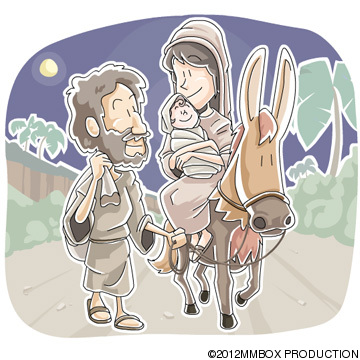
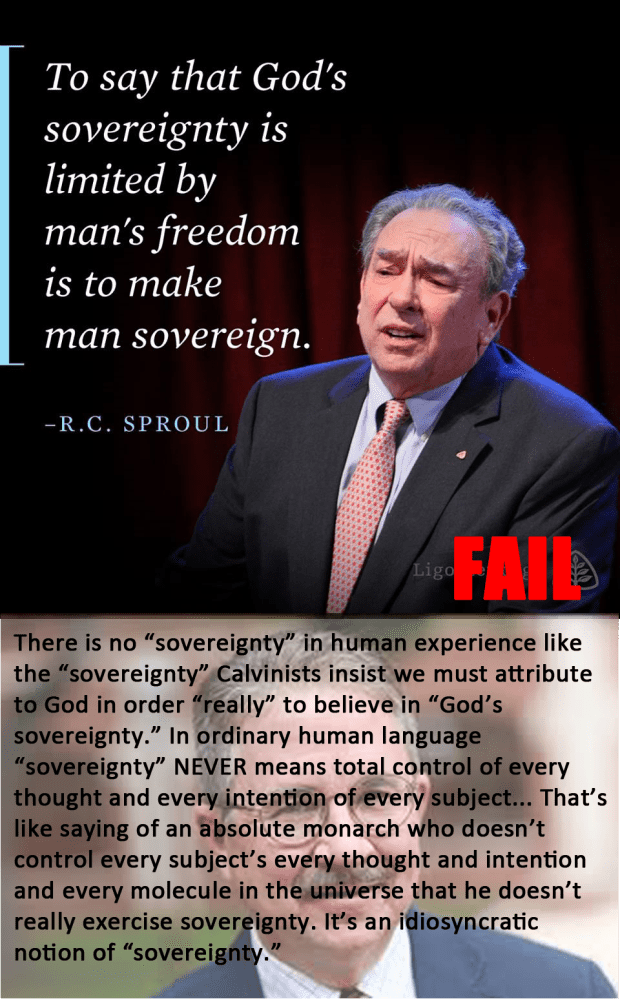
Apologetics Thursday – Predefining God

In a critique of Open Theism, Tim Chaffey lists out several dangers of Open Theism (he is summarizing Richard Mayhue). Number seven reads:

7) Boyd’s position diminishes the Almighty’s deity.

This is a more formal version of a common claim against Open Theism: “if God were to not know the future then He would not be God.”

Darrell Berkley writes on the Facebook group God is Open:

Darrell Birkey I remember years ago when a friend at church asked me. “What if God doesn’t exhaustively know the future?”

Later that day at lunch with friends, I asked the same question and the reply was, “If He didn’t exhaustively know the future… He wouldn’t be God!”.

I responded, “Wouldn’t He just be different than the God of your imagination?”

God made man in His image and likeness. When we try to make God in our image and likeness, we can attribute some very bad things to God.

It is wrong to presume attributes as to what God “must” be like. This is the Dignum Deo fallacy. Because human beings do not have the luxury of creating reality through introspection, our thoughts on what “should be” have zero effect on what is actually. To illustrate:

A man might think: “a perfect wife is kind, sensitive, attractive, and patient”. But if he observes his own wife, it is a mistake for him to assume these attributes on her and then reinterpret all her actions such as to fit these attributes. Someone based in reality will instead observe the behaviors of his wife and then attribute attributes to her based on past experience. Introspection does not lead to truth. Observable evidence leads to truth.

Biederwolf on the Open Theism in 1906

From How Can God Answer Prayer:

3. Suppose we accept the third explanation: the explanation which affirms that God’s foreknowledge and foreordination are not necessarily all-comprehending.

You shrink from an attitude of thought like that toward the Supreme Being. It appears, does it not, to reflect discredit upon His perfection? Yet, let us not be too hasty in our judgment. Many earnest and noted scholars defend the position and strenuously maintain that not only does it not dishonor God, but that it is the only scheme of thought which does not divest Him of the essential attributes of His divinity.

Biederwolf on the Content of Prayers

From How Can God Answer Prayer:

Hence prayer is usually divided into the following component parts: Adoration, Thanksgiving, Confession and Petition. This suggest a splendid order for the express of what is doubtless in the mind of every one as he comes to God, though there can be nothing stereotyped in so vital a matter. Some of the most effective prayers in the Bible are simple, earnest cries for mercy; but the Bible abounds with prayers in which something of the order noted is observed.

Worship Sunday – Brighter Day

By Chris Lizotte

I want to lift my hands and say
Thank You for a brighter day
Thank You for reaching down
And saving me
I want to to have eyes see
Everything You’ve done for me
Thank You for the blood
That was shed for me

And I praise Your name
With the voice You gave
And I thank You for all You’ve done
And for everything I give praise

And I thank You
Yes I thank You (4x)
Yes I praise You
Yes I praise You (4x)

McCabe on God’s Freedom as Basis of Open Theism

From Divine Nescience of Future Contingencies a Necessity Being:

If the infinite One, in all his activities and faculties, is under the reign of necessity, then there can exist but a single universe, the universe of necessities. But if he possess the attribute of freedom, and can act under the law of liberty, then there must be a second universe, the universe of contingencies.

Questions Answered – Praying for Unbelievers

John Piper asks:

Now I would like to turn the question back to my questioner: If you insist that this man must have the power of ultimate self-determination, what is the point of praying for him? What do you want God to do for him? You can’t ask that God overcome the man’s rebellion, for rebellion is precisely what the man is now choosing, so that would mean God overcame his choice and took away his power of self-determination. But how can God save this man unless he act so as to change the man’s heart from hard hostility to tender trust?

Will you pray that God enlighten his mind so that he truly see the beauty of Christ and believe? If you pray this, you are in effect asking God no longer to leave the determination of the man’s will in his own power. You are asking God to do something within the man’s mind (or heart) so that he will surely see and believe. That is, you are conceding that the ultimate determination of the man’s decision to trust Christ is God’s, not merely his.

When people live and operate in a Calvinist mindset, often common sense is quickly discarded. All kinds of random non-sequiturs are assumed into reality and used as presuppositions in arguing against competing worldviews (worldviews that don’t buy into the presuppositions). Free Will theologians do not think people cannot be influenced or should not be influenced. In fact, many Free Will theologians actively proselytize. Asking God to do the same is not only good tactics, but common sense.

Convincing someone to think something is different than forcing them to think something. God, to convince King Nebuchadnezzar to become righteous, morphs Nebuchadnezzar into a kind of man-beast. This is all to nudge Nebuchadnezzar into becoming a more righteous person. This flies in the face of Calvinism, where God could have just predestined Nebuchadnezzar to be more righteous. Instead, man and God desperately act to change hearts and minds.

For that reason, the point of praying for God to assist in converting people is to get God to use His power to help proselytization being effective.

Apologetics Thursday – Does God know and see everything?

By Christopher Fisher

Skeptics Annotated Bible lists “contradictions” between verses where God “knows all things” and God is shown lacking knowledge. The standard Open Theist response is that God knows all knowable, just that events in the future are not able to be known. This answers most objections, but not all.

Alternatively, this response will be from an extreme Biblical Open Theist worldview, claiming God does not know some present knowledge.

SAB lists the following verses for God “knowing everything”:

No thought can be withholden from thee. Job 42:2

The better translation comes from the ESV or the NKJV, “no purpose of God can be thwarted”. This is a general rule of thumb saying that people cannot use their power to overthrow God’s purposes. This does not mean people cannot change God’s mind or God can’t change His own mind based on new developments.

In any case, if Job was talking about God knowing people’s minds (the phrase does not seem uncharacteristic of what Biblical authors could claim about God), the Biblical Open Theists would claim that God has mechanisms for figuring out the minds of people. Specifically, Romans talks about the spirit studying people to know their minds and Proverbs speaks about “eyes” watching people to know their minds.

For he knoweth the secrets of the heart. Psalm 44:21

The Biblical Open Theist claim is that God has mechanisms for knowing. God knows because God sees, God tests, and God does. In this particular psalm, the mechanism to which the author refers is God’s ability to see people’s hidden behaviors. That is the author’s point. God has abandoned His people, and this is perplexing because God can see that they have not abandoned God.

The writer of Psalms 44 is using the entire psalm to stir God to action. The context of the statement is that God would know if Israel had turned to other Gods, and the author claims that Israel has stayed true to God. The author did not assume the future was fixed, but that he could influence God to act. The writer implores God to awake and arise:

Psa 44:23 Awake! Why are you sleeping, O Lord? Rouse yourself! Do not reject us forever!
Psa 44:24 Why do you hide your face? Why do you forget our affliction and oppression?

Reading the psalm shows that the author did not have the same conceptions about God as the Augustinian Christians.

Whither shall I flee from thy presence? If I ascend up into heaven, thou art there; if I make my bed in hell, behold, thou art there. Psalm 139:7-8

This verse has more to do with God’s special watchfulness over King David than general applicability.

The eyes of the Lord are in every place. Proverbs 15:3

Eyes of the Lord are could mean general surveillance, but it would not be unprecedented for “Eyes of the Lord” to mean “angels”. Angels who report back to God are continually watching you.

For mine eyes are upon all their ways: they are not hid from my face, neither is their iniquity hid from mine eyes. Jeremiah 16:17

A general and reoccurring theme in the Bible is that God can see what man does. Man cannot hide from God, and even in secret places can God see what man is doing. God is saying here that He knows what these individuals have been doing. There are plenty of mechanisms to generate this knowledge. Statements like this case been easily taken as strong rules of thumb, and the language need not be extended to knowing ever single detail of ever single second ever.

Can any hide himself in secret places that I shall not see him? saith the Lord. Do not I fill heaven and earth? Jeremiah 23:24

See above.

Thou, Lord, which knowest the hearts of all men. Acts 1:24

See above.

God … knoweth all things. 1 John 3:20

The critical reading steps should be followed on this verse before determining general applicability. The question becomes “in what way and in what context does God know everything.” The context of the quote deals with God knowing if our heart is condemning Christians for not acting more humanely. In the text, God knows our history and actions and therefor can better judge over us.

McCabe on God being Infinite

From Divine Nescience of Future Contingencies a Necessity:

But to call such an abstract infinity, such a contradictory conception by the name of Deity, leads inevitably into incertitude and inextricable confusion. And it was conceiving of God as an infinity in the abstract that led the great Augustine into such erroneous and dangerous conceptions of the divine nature. The Augustinian conception of Deity was that of a universal infinite, that is, of a being infinite in all respects, and unlimited in all Ills attributes. But if God be infinite in every respect, he can neither be qualified nor conditioned in any respect. And if he cannot be qualified nor conditioned in any respect, he cannot be related; he cannot be a Creator, or a Father, or a Revealer, or an object of love, or a hearer of prayer, or a receiver of adoring worship. For who could worship a power too capricious to be limited by goodness? The distinguishing claims of the Augustinian theology are in reference to its logical consistency. But the very moment Augustinian theology completes its own logical processes it turns flatly against itself, and commits suicide. It is regretfully pronounced a veritable “felo-de-se” by myriad’s rigidly reared in the belief of its dogmas. Attributing to God the mathematical or metaphysical idea of infinity logically annihilates him in His concrete personality.

Moltmann is an Open Theist

Jürgen Moltmann, a German Reformed theologian who is Professor Emeritus of Systematic Theology at the University of Tübingen is an Open Theist (although the Open Theist controversy seems to be uniquely American).

From Roger Olson:

At first he was as always a bit reserved, but after perhaps five or six glasses of wine he became downright talkative. (The university hosting the lectures did not pay for the wine! I think the dean paid for it out of his own pocket! Moltmann, of course, did not know that.) I asked him about “open theism.” He asked me to explain it to him which I did. His response was: “But of course! That is part of the kenosis of God!”

VOTD Deuteronomy 7:8

Deu 7:7 The LORD did not set His love on you nor choose you because you were more in number than any other people, for you were the least of all peoples;
Deu 7:8 but because the LORD loves you, and because He would keep the oath which He swore to your fathers, the LORD has brought you out with a mighty hand, and redeemed you from the house of bondage, from the hand of Pharaoh king of Egypt.

Worship Sunday – Praise You in This Storm

Lyrics:

I was sure by now
God, You would have reached down
And wiped our tears away
Stepped in and saved the day
But once again, I say “Amen”, and it’s still raining

As the thunder rolls
I barely hear You whisper through the rain
“I’m with You”
And as Your mercy falls
I raise my hands and praise the God who gives
And takes away

I’ll praise You in this storm
And I will lift my hands
For You are who You are
No matter where I am
Every tear I’ve cried
You hold in Your hand
You never left my side
And though my heart is torn
I will praise You in this storm

I remember when
I stumbled in the wind
You heard my cry
You raised me up again
My strength is almost gone
How can I carry on
If I can’t find You

As the thunder rolls
I barely hear You whisper through the rain
“I’m with You”
And as Your mercy falls
I raise my hands and praise the God who gives
And takes away

I’ll praise You in this storm
And I will lift my hands
For You are who You are
No matter where I am
Every tear I’ve cried
You hold in Your hand
You never left my side
And though my heart is torn
I will praise You in this storm

I lift my eyes unto the hills
Where does my help come from?
My help comes from the Lord
The Maker of Heaven and Earth

I’ll praise You in this storm
And I will lift my hands
For You are who You are
No matter where I am
Every tear I’ve cried
You hold in Your hand
You never left my side
And though my heart is torn
I will praise You in this storm

NT Wright Avoids a Question on Open Theism

From Rachel Held Evens:

From Kurt: Hi Dr. Wright, First, allow me to admit that your writing and speaking has been the most influential thing in my theological, missional, and spiritual journey in the last 10 years. Before I was introduced to your work, I was convinced that Christianity was all about pie in the sky and leaving this world – not redeeming it. Discovering Romans 8 and a God who groans with creation for its ultimate redemption – [re]new[ed] creation – changes everything! For showing me this – along with various other things about the historical Jesus, the apostle Paul, and theology in general – I am truly grateful.

I do have a question for you: I am wondering if you would be willing to “show your cards” when it comes to open theism? Most of my friends who are open theists, Greg Boyd and others, are very influenced by your work. Certainly, nothing you have said seems to contradict such a God of possibilities. In fact, your reading of Abraham and Israel as God’s “plan B” actually helps give us a framework for thinking about such things. Even so, what would your thoughts be on open theism? I realize that you may not agree with this position of mine, but I would be intrigued to hear some your observations. Thanks for your continued ministry to the church!

Open theism is not something I have done a lot with and to be honest (and it’s late at night and I’m busy). I strongly suspect this is one of those classic American either/or questions that is forcing theology into a box. I never use the language of ‘Plan B’, certainly not about Abraham and Israel; in fact I often quote the Rabbi who envisaged God having Abraham in mind from the start. I don’t want to sign a blank check (or cheque as we spell it), especially when it’s written in dollars not pounds. Go figure!

Answered Questions – God’s Relation to Time

Dale asks: How is change related to God?

Bob Enyart responds:

God’s five primary biblical attributes are that He is living, personal, relational, good, and loving, and to be alive requires change. Anything that does not change, like a numeral, or the law of non-contradiction, is not alive. The number 3 (see rsr.org/3) describes the number of persons in the Trinity, and that number does not and cannot change (that is, not the symbol for the number, which is completely mutable, but the number itself). Just because something changes (like the composition of the sun) does not mean that it is alive, thus change is not a sufficient cause for life, but change is a necessary attribute of life. And when it is spiritual, moral, and sentient life that we are talking about, or specifically, God’s life, that change includes His eternal interacting within the Godhead, Father communing with the Son, Spirit affirming the Father, Son loving the Father, etc.)

Apologetics Thursday – Omniscience v Free Will Response

By Christopher Fisher

I was asked via a Facebook group: Refute the argument about the barometer.

My response:

The author is confused. He wants to make a video about free will and then compares the prediction to if it will rain or not (something that is not dependent on free will but by physics). That is a point towards fatalism and NOT what he is trying to prove.

He wants to say “look at this object that predicts x, and does not cause the event.” See, God can predict x and not cause it. But what he fails to take into account is free will. God says “You will cook with people poop”, and God’s prophet says “Howabout I cook with cow poop instead.” and God says “Yeah, do that instead.” Ezekiel 4:15

See also: God Yields Instantly

Olson on the Calvinist Backlash Against Open Theism

Olson writes:

How did that controversy become so explosive? Well, one way was anti-open theists misrepresenting open theism to non-theologians, pastors and lay people, as, for example, belief that “God gives bad advice” and belief in an “ignorant God.” Many of them went directly to denominational conventions and got resolutions passed against open theism by frightening delegates by implying that open theism is a Trojan horse for process theology. (They would sometimes spend more time talking about process theology than open theism and allow the scared delegates to think they are basically the same.)

I’ve often wondered why open theism, of all things, led to such hysteria (and sometimes outright dishonesty) among its critics. One thing I suspect is that many Calvinists realized that if many evangelicals adopted open theism, one of their strongest arguments against Arminianism would be nullified—that Arminianism cannot explain how God foreknows future free decisions of creatures without in any way determining them.

Bowen on Swinburne

From An Atheist Named Swinburne:

More importantly, Swinburne rejects the existence of God, where God is conceived of as being omniscient in the sense that ‘God knows everything that has ever happened and that ever will happen’. Many people, including many Christian believers, believe in such a God. But Swinburne asserts that these many devout Christian believers are mistaken, and that there is no such being.

God is a perfectly free person, according to Swinburne, and a perfectly free person cannot know with certainty what actions he/she will choose to do in the future (COT, p. 177). Perfect knowledge of the future is logically incompatible with perfect freedom; therefore, it is logically impossible for God to both be perfectly free and for God to also have perfect knowledge of the future.

God must either be perfectly free and have imperfect knowledge of the future, or else God has perfect knowledge of the future and does NOT have perfect freedom. Thus, Christians who believe in a God who is both perfectly free and who has perfect knowledge of the future believe in a God who not only does not exist, but they believe in a God who cannot possibly exist, because they believe in the existence of a being with attributes that are logically contradictory.

Worship Sunday – Here I am to Worship

Lyrics:

Light of the world, You step down into darkness.
Opened my eyes let me see.
Beauty that made this heart adore you hope of a life spent with you.

[Chorus]
And here I am to worship,
Here I am to bow down,
Here I am to say that you’re my God,
You’re altogether lovely,
Altogether worthy,
Altogether wonderful to me.

King of all days,
Oh so highly exalted Glorious in heaven above.
Humbly you came to the earth you created.
All for love’s sake became poor.

[Chorus]
Here I am to worship,
Here I am to bow down,
Here I am to say that you’re my God,
You’re altogether lovely,
Altogether worthy,
Altogether wonderful to me.

I’ll never know how much it cost to see my sin upon that cross.
And I’ll never know how much it cost to see my sin upon that cross.
No I’ll never know how much it cost to se my sin upon that cross.

[Chorus]
Here I am to worship,
Here I am to bow down,
Here I am to say that you’re my God,
You’re altogether lovely,
Altogether worthy,
Altogether wonderful to me.
So Here I am to worship,
Here I am to bow down,
Here I am to say that you’re my God,